BEAT REPORTING
Israeli disability news site ‘Shavvim’ looks to establish call center to directly aid those in need
Started by a veteran Israeli journalist with a son on the autism spectrum, the outlet has adopted a 'nothing about us, without us' approach, hiring reports with disabilities
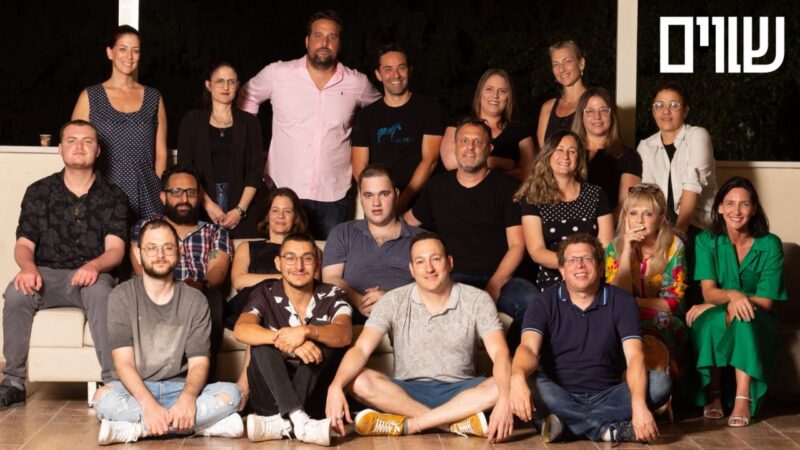
Courtesy/Libat Dvir
The staff of the Israeli disability-focused news outlet 'Shavvim.'




 Add EJP on Google
At the start of this school year, a kindergarten for deaf and hearing-impaired children in the northern Israeli city of Tiberias was without a speech therapist — a problem that could cause serious gaps in their speech development. The situation remained unresolved until the Shavvim news outlet’s Jenny Bello, who is herself visually-impaired, got on the case and began pursuing the story intensively.
“For two months, I followed the story behind the scenes. I was in weekly talks with the Education Ministry’s spokesperson, and they found a speech therapist who started working [in November], and the parents are thrilled,” Bello told eJewishPhilanthropy.
This was just one of many articles that have had a direct impact on the daily lives of people with disabilities in Israel, written by Bello and the other members of the Shavvim website’s 10-person reporting team, all of whom have some kind of disability. The journalists cover everyday disability issues such as special education, child transportation and the national shortages of caregivers and assistants, which are often ignored by mainstream Israeli media outlets that focus primarily on security and politics.
“These are things where I really feel we’re making a change. We’re not just telling stories; we’re really changing reality,” said Bello.
Shavvim, which means “equals,” was founded in 2018 by veteran Israeli journalist Idan Motola, a father of a child on the autism spectrum, and media and digital specialist Yaron Frost, with the goal of giving a public and systemic voice in the media to the community of people with disabilities in Israel. Last month Shavvim received the Golden Heart award at the Israeli Heart festival in Ashdod in recognition of its outstanding and significant contribution to society in general and particularly for people with disabilities. The prize was awarded to Motola by Ashdod Mayor Dr. Yehiel Lasri and Ministry of Social Affairs and Social Security Director General Yinon Aharoni.
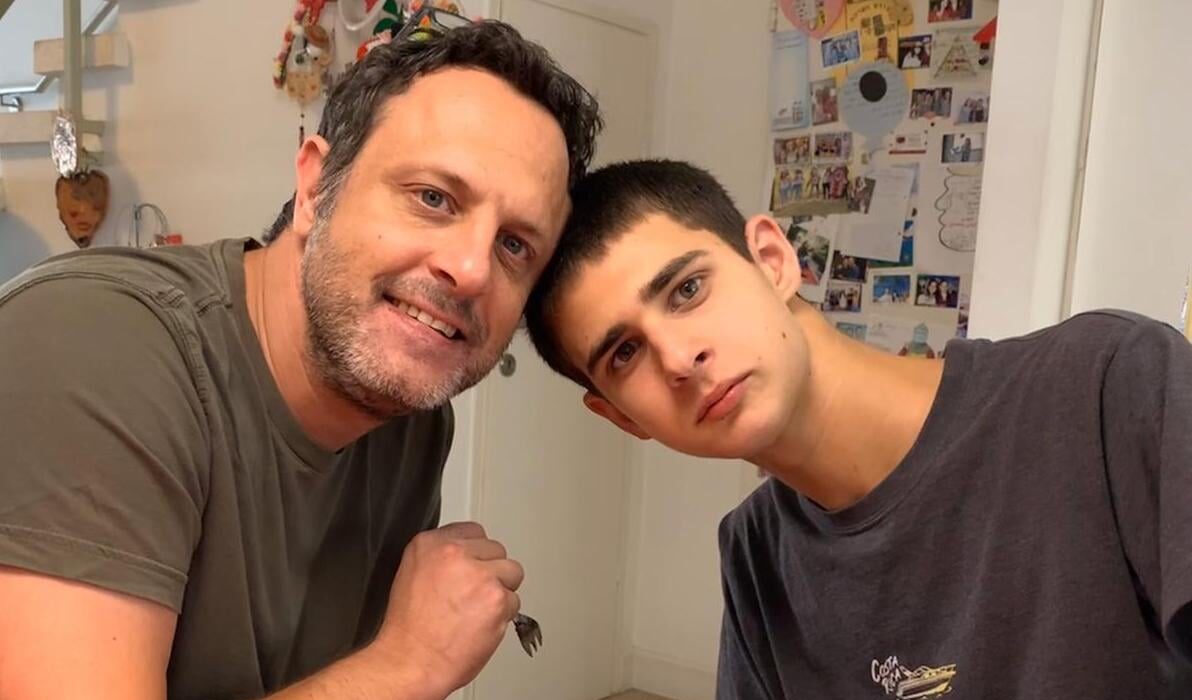
Now Shavvim is looking to harness its extensive knowledge, experience and connections to extend the “Purple War Room” command center that it created in the aftermath of the Oct. 7 terror attacks into a permanent nationwide call center, offering people with disabilities with centralized information, practical assistance and emergency support. During the war, the Purple War Room and the Purple Headquarters call center — run with Israel’s National Lottery and former Knesset member Shirley Pinto, who is deaf and maintained close ties with Shavvim during her tenure — offered assistance to disabled Israelis regarding evacuations, access to protected spaces and essential needs. It was staffed largely by volunteers, including people with disabilities.
Motola said the permanent call center would address the fragmented services offered by the Israeli government and nonprofits, combine salaried staff with trained volunteers and serve as a base for future emergencies. The initiative is projected to cost roughly NIS 1 million ($312,115) annually, with discussions underway in cooperation with Pinto with potential donors in Israel and abroad, including Keren Shalem, which backs initiatives supporting people with disabilities and has already pledged a tenth of the sum Shavvim needs, Motola said.
“It is very complicated. There are many areas of knowledge needed here. We… as a journalistic body, hold a lot of knowledge about the rights of people with disabilities and how to implement these rights. Shirley Pinto also has a lot of that knowledge. It’s clear to us that we’re going to have to train the call center volunteers. It really requires a lot of professionalism, a lot of knowledge. We think we have the ability to do that,” he said.
Motola noted that, according to the Justice Ministry’s Equal Rights Commission, there are about 1.6 million people with disabilities in Israel, constituting about 15% of the population. Following the war with Hamas in Gaza, another 20,000 soldiers and about 80,000 civilians have received initial recognition as disabled — including those suffering from post-traumatic stress disorder, Motola said.
Shavvim believes in the “nothing about us, without us” principle, where people with disabilities can and should write about the issues affecting them themselves, without others as mediators, Motola told eJP. “These people can speak for themselves, and they should speak for themselves,” he said. “We think we’re really doing very important work, in a very innovative model. We don’t know of another media outlet in the entire world that is entirely based on people with disabilities.”
According to Shavvim, over 2.2 million unique users visited their website last year, with an average of 600,000 monthly page views. The news site’s reporting has also directly influenced public policy — such as halting a freeze on disability pensions, fixing pension plan flaws and delaying legislation that the disability community considered problematic, said Motola.
But while the readership is larger, the budget is small, and the goal is to be able to generate enough income so the outlet can hire staff writers with full-time salaries, he said.
Shavvim maintains high professional journalistic standards while making adjustments for each reporter’s disability, Motola said. It has also served as a springboard for talented writers to land jobs in the mainstream media.
A year and a half ago, Shavvim journalist Avichai Chaim, who has cerebral palsy, was hired by the Walla! news site to serve as its health and welfare correspondent, and more recently was also assigned the education beat. Previously, despite having had media experience during his IDF service, Chaim had been unable to get a job in the mainstream media until he began writing for Shavvim, Motola noted.
Other recent initiatives launched by Shavvim include the professional “Shavvim in Employment” journalism academy and a low-cost high-tech training program for injured soldiers and civilians, as well as evacuated families, helping them return to the workforce. The journalism academy provides professional training for promising reporters with disabilities with support from the National Lottery and in collaboration with major Israeli media outlets; the academy has 230 graduates and a 13% employment rate. The high-tech training program, run in collaboration with Cisco, the National Lottery and Ichilov Rehabilitation Hospital, offers high-tech training to injured soldiers and civilians as well as evacuated families, helping them return to the workforce. The program, which costs about NIS 500 ($156) for the students, has produced 190 graduates so far, many of whom have found employment, Motola said.
Shavvim’s vision is focused on the long-term needs of the community, he said.
“Now everyone is very concerned with the war wounded, and they’re very committed to them, but we’ll be here for these people, the soldiers, the civilians, even in five years and another 10 years, when everyone is starting to forget and life is back on track, we will still be there to protect, to be the defenders of the rights of people with disabilities in Israel, and for those who were injured in the war,” Motola said. “That’s our goal, and we know how to do it.”
Related News

EXIT INTERVIEW
Elizabeth Sokolsky, longtime EVP of Birthright Israel, to retire next year

EXCLUSIVE
Detroit-based philanthropists Nancy, James Grosfeld donate $8M to renovate JDC’s Israel campus

PRESIDENTIAL REBUKE
Israel’s Herzog: Mamdani ‘makes no effort’ to hide disdain for Israel, Jews must fight back
ADVANCING A VISION
N.Y. federation donates $1M toward building shared-society center named for peace activist killed on 10/7

MAJOR GIFTS
Center for Jewish History celebrates 25 years with a $25M matching grant