Q&A
Inside Canadian Jewish federations’ push to turn Tel-Hai College into Israel’s newest university
Director-general of Jewish Federations of Canada-UIA Sarah Mali talks to eJP about her group's support for northern Israel's recovery efforts through higher education and informal education
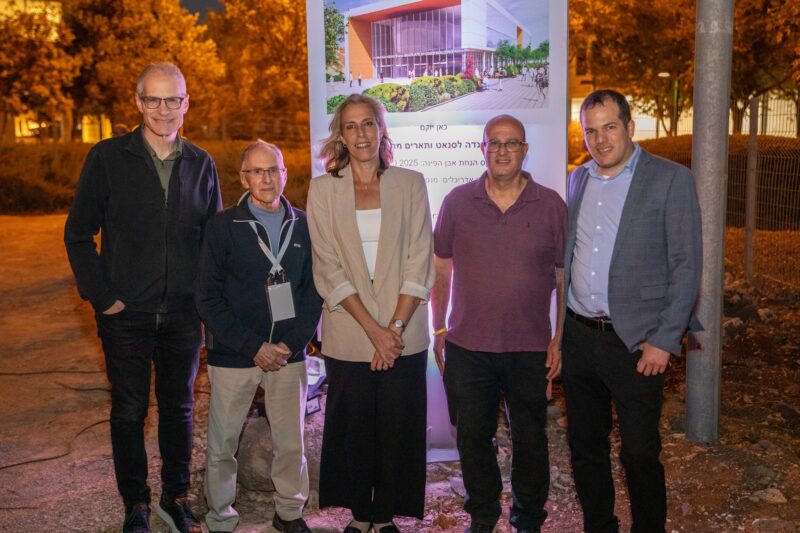
courtesy/Tel-Hai College
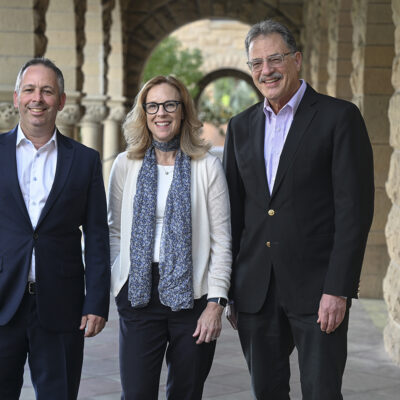
Sarah Mali stands with local leaders from Tel-Hai College — soon to be the University of Kiryat Shmona in the Galilee — and northern Israel at a cornerstone-laying ceremony for the university-to-be on Oct. 29, 2025.




 Add EJP on Google
The plans to convert the Tel-Hai Academic College into a full-fledged university — the University of Kiryat Shmona in the Galilee — have been in the works for years. Located just north of Kiryat Shmona, toward the very tip of the so-called “finger of the Galilee,” the institution has long been seen as a potential economic engine for the region, which for decades has suffered from underemployment, population stagnation and gaps in education, medicine and other key areas.
These issues were exacerbated when, a day after the Oct. 7 terror attacks in southern Israel, the Iran-backed Hezbollah terrorist militia joined in the fray, firing missiles and flying explosive drones into northern Israel. These attacks prompted a mass evacuation from the north, which was pummeled daily for a year, until the Israeli military launched a major ground offensive against Hezbollah in southern Lebanon, ending with a still-holding, albeit tense, ceasefire in November 2024.
The fundamental idea is that a university attracts highly educated faculty members and their families, as well as students, who frequent local restaurants and businesses. Compared to a college, a university also produces more research, which in some cases can be used to found businesses in the area. The overall result is a boost to the local economy.
Despite lingering tensions, the push to turn Tel-Hai College into a university — it will be Israel’s eleventh when it launches in the fall of 2026 — has ramped up in recent weeks. Toward the end of last year, the institution held a cornerstone-laying ceremony, and last week, a deal was finalized that will officially make the university-to-be part of the city of Kiryat Shmona. The Jewish Federations of Canada-UIA, an umbrella group representing all of Canada’s federations, has been involved in these efforts throughout the years, as part of a broader push by the Great White North to strengthen Israel’s north. The group has donated some CAD 25 million ($18 million) to the effort, as well as helping to bring on board other donors. Read more about JFC-UIA’s broader efforts to rehabilitate northern Israel below.
To hear more about these efforts by JFC-UIA, eJewishPhilanthropy spoke recently with the director-general of its Israel office, Sarah Mali, about the push to turn Tel-Hai college into a university, where else her umbrella group is operating in northern Israel and how she has worked with other federations and foundations to make this happen.
The interview has been lightly edited for clarity.
Judah Ari Gross: Let’s start with Tel-Hai College. Of course, this plan has been in the works since before the war to turn it into a university. So when did the Jewish Federations of Canada-UIA first get involved?
Sarah Mali: We were involved in 2006 after the Second Lebanon War. That was when we first did a pan-Canadian allocation to the North. And really we’ve been following and been friends of and supporting Tal Hai since then. And when it comes to Tal Hai, we were looking, with pan-Canadian coalition, to find ways to create opportunities for the young people in the north, for people who had been evacuated and who were debating whether to come back and to potentially attract new families to come live and thrive in the north. We were looking for organizations that had value that would lead to a ripple effect. So it sounds very technical, that a college becomes a university, but the university is really about strengthening young people in their relationship to higher education. It’s about students being able to volunteer in the physically adjacent Kiryat Shmona, which needs strong role models. It’s about young people who have chosen to live and study in the north being champions for the north. And to think of Kiryat Shmona as a university town, which would hopefully have an influx in the next five to seven years of 10,000 students annually, to a city of 23,000 people currently.
For us, Tel-Hai was the meta project, the project that you say, “When this becomes a university, you’re going to have new scientists with their families coming to live and work and learn there. You’re going to have students who are going to have opportunities to ultimately settle in the region and be role models. You’re going to have a beacon for the young people in the area, who have a really low rate of [higher education].” So this is kind of a lighthouse.
JAG: As you said, this is just part of a wider effort to rehabilitate the north of Israel, which, even before the Hezbollah attacks and war in Lebanon, lagged behind the center of the country. And while you’re describing the university project as a lighthouse, it’s also dependent on so many other factors. Academics and researchers aren’t going to want to move there if the schools are bad. They aren’t going to want to move there if their spouse can’t get a good job in the area. They aren’t going to want to move there if there’s no transportation infrastructure to allow them to easily travel to other parts of the country. How do those kinds of constraints play into your work on this? On the one hand, it’s not “your job” to fix these issues, but on the other, if they aren’t addressed, you can’t fully fulfill your goal.
SM: It’s a great question, and maybe I’ll say a few words about how we work. So we’re Jewish Federations of Canada-UIA. We’re effectively the umbrella organization for all the Jewish Federations of Canada in Israel, and their philanthropic dollars come through us. We’re responsible for their direction and control, both for the Canadian Revenue Association to ensure that everything is legitimately and appropriately spent by Canadian revenue standards and charitable objectives, and as part of that work, we have professionals in the field up north, across the country, to do these gap analyses and situate our philanthropy in an ecosystem of entangled pieces. So one of the things that we cannot do is invest in the infrastructure and economy-building pieces because we can’t invest in businesses. Within our philanthropic boundaries, we have to make smart interventions, bearing in mind where other people are.
So, for instance, our professionals were in touch with the government to say, “What kind of infrastructure assets are you planning to put down [in the north]?” so that we’re not living in fantasy land. And there will be a train to the north. We know this, we’ve seen the plans, we know it’s going to happen. We know that there’s going to be an investment in transportation and roads and infrastructure.
And we looked at places where we could be additive and not replace the government. We knew the Ministry of Education has to be the one to rebuild schools. We didn’t have a lot of money. It sounds like a lot of money — initially CAD 20 million, it’s now risen with additional partners to CAD 25 million — but it’s not a lot of money by government standards. So we said, “Where can we be impactful where the government isn’t going to be?” And that was in informal education and foundational support for youth and young people in ways that really raise the bar.
So we looked at programs, we worked with the Habyata Foundation, for example, to build two excellence centers — one for tech and one for science — that kids can go to after school. One of the things that we found in the gap analysis was that families were saying what keeps us awake at night, after security, is our kids and their growth, not just within school, but actually after school, because they’ve been through such trauma, and they have such residual anxiety and fears. We want them to be stimulated, to have access to opportunities that can enrich their lives and create a sense of place attachment.
The other thing we’re looking into is regional schools. There are two regional skill schools that are going to be built in the area. These are regional schools that are going to be at the highest standards, and there will be gaps between what the government can give and how excellent they can be. That’s where our philanthropic money will come in.
And finally, we looked at Kiryat Shmona, which is fundamentally weak in terms of the way in which it supports its young people. We worked with the Israel Association of Community Centers and particularly the community centres in Kiryat Shmona to build a framework that integrates welfare, community and informal education so that kids don’t fall through the cracks. And that was something that came very acutely from Kiryat Shmona, which said, “We need more capacity and more programs to keep and hold these kids.”
We can’t fix the world. We are aspirational and humble. And we want to put our money in places that matter. So that’s a long-winded long way of answering your question about being rooted in the ecosystem, understanding what’s going on and making our philanthropy additive and not replicating existing efforts.
JAG: And how does this work in terms of partnerships with other foundations and other donors focused on this region? How do they factor into this work?
SM: It’s interesting what happened during the war because even though philanthropy is supposed to be lovely and romantic, there’s also quite a bit of competition between philanthropic endeavors. And what happened during the war was actually something quite wonderful. You could see it systemically in Israeli society. People went out of their way to help each other and were much more generous to one another and inclusive and sharing than they would be in regular times. They say there are fewer car crashes during wartime. People are more careful and considerate. We found that in philanthropy as well.
We work within frameworks like the Northern Forum, which is a forum of foundations and federations focused on the north. We worked very closely with Jewish Federations of North America. Keren Hayesod has joined us and given some money towards the project. And there are Canadian foundations and private philanthropists. We’ve been able to capture their imagination by being in conversation about it with them, as opposed to saying, “This is what we’re gonna do.”
JAG: What exactly did that look like? Were you vetting projects for other donors? Matching grants? Mapping the field?
SM: People wanted to join something that feels integrated, that feels connected, that has some kind of integrity. They wanted to do something for kids, for young people, for their growth in the nother. It’s not politics, it’s not quid pro quo. This is close to a 30-year-old relationship that the coast-to-coast communities across Canada have with this small, cozy, somewhat complicated region of Israel’s north, and we want to give love and support to them. It was really that simple.
We created an interconnected model where the university and the city of Kiryat Shmona have synergistic inputs so that they work together to create something bigger. And people were saying, “That makes so much sense, I want to take part in that.” When JFNA saw it, for instance, they said, “We’re going to give you an extra $1 million.”
What was good about that was that philanthropy didn’t splinter. Philanthropy stayed focused on the goal, as opposed to people ingratiating themselves or giving with ego or demanding recognition.
Something very beautiful happened as regards to this. About 18 months ago, I got a phone call from a CEO from a very, very small Jewish community in Canada. And he said, “There’s a woman here, she’s close to 100 years old, and she wants to do something for Israel. She’s awake at night, in the middle of nowhere and she’s worrying about Israel.” And I said, “Why don’t you give to the north? And why don’t you do it to help kids within our age range focus — middle school through high school — with their mental health?” And she ended up giving CAD 1 million dollars for the mental health of kids in Kiryat Shmona.
JAG: Going back to the issue of Tel-Hai College. In addition to the financial support, have the Canadian Jewish federations been looking into academic support? This is a hard time for Israeli academia, which is facing more and more boycotts. Is there an ability for the federations and Canadian Jewish philanthropists to play a role there, or is that outside the project’s purview? If there’s a significant federation donor who also gives to a Canadian university, are they able to encourage that university to partner with Tel-Hai , for instance? Or am I getting ahead of myself?
SM: No, it’s a good idea. It’s been floated. We haven’t got to the programmatic stage yet. It is super complicated, and the environment is antagonistic. But I think that one of the ways to do this work is to focus on people-to-people and the bilateral relationships that could be generative to both sides of the ocean. So when you look at the work that’s being done, the ecological research, Tel-Hai ’s ornithological work in the Hula Valley, they are accepted around the world because their research is unique and so cutting-edge.
JAG: I’m sure that you know that you have your work cut out for you, but one of the things that is so striking is the differences between Israel’s north and its south. You have a town like Sderot, which was under regular rocket bombardment for years and saw multiple wars, but it was able to turn itself into a desirable location that people wanted to move to, while Israel’s north was never really able to achieve that. I remember speaking with the mayor of Kiryat Shmona a few months into the war, and he was saying that before the Oct. 7 attacks, the city had just managed to start stemming the emigration from the city, and now it’s right back to addressing that again. Does it feel like starting almost from scratch?
SM: Philanthropy always has a feeling of [superiority] around it because we’re giving to other people. What we discover when we listen very carefully to the people [in the north], both those who were evacuated and those who held steady because they were just over the evacuation line, they discovered their own resourcefulness and their own capabilities. They discovered that they are, in fact, not as weak and deprived and as victimized and as peripheral as they had thought they were under duress. They actually found their own strength.
And it’s that strength that we want to invest in, so that they can continue feeling and being strong, looking after one another, volunteering, going beyond what they do normally do.
I want to impress upon the readers of eJP that part of our job in philanthropy is to also help support a new narrative for the north, its beauty, its strength, its amazing people, who have a deep attachment to the place and want to make it the best it can be. And they should be worthy of that place, and the place should be worthy of them.
Related News
ADVANCING A VISION
N.Y. federation donates $1M toward building shared-society center named for peace activist killed on 10/7
PRESIDENTIAL REBUKE
Israel’s Herzog: Mamdani ‘makes no effort’ to hide disdain for Israel, Jews must fight back
EXIT INTERVIEW
Elizabeth Sokolsky, longtime EVP of Birthright Israel, to retire next year
EXCLUSIVE
Detroit-based philanthropists Nancy, James Grosfeld donate $8M to renovate JDC’s Israel campus
CLOSING WORDS
In AZM address, Cosgrove links communal ‘orthodoxy’ on Israel to rising anti-Zionism among young Jews