CLAIMS CONFERENCE
Germany to pay more than $1.2 billion in Holocaust reparations in 2026
More than $1 billion allocated for home care for survivors, along with over $200 million for Holocaust education; funding for survivors is expecting to rise in coming years, before dropping off
Ohad Kab/DADA Studio
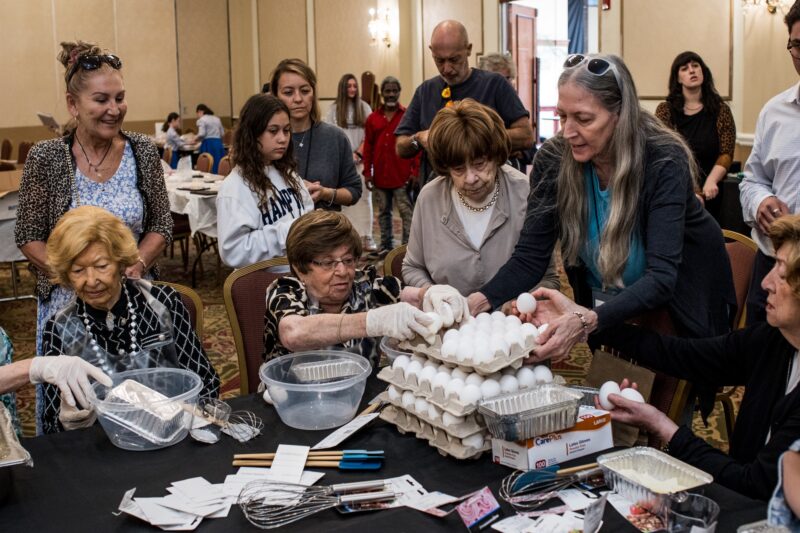
Holocaust survivors make kugel during an annual summer retreated hosted by the Blue Card and Nachas Health and Family Network at the Hudson Valley Resort and Spa in the Catskills on Aug. 19, 2025.




 Add EJP on Google
Germany increased its reparations for Holocaust survivors, providing nearly $1.1 billion for home care for the aging population, following negotiations this summer with the Conference on Jewish Material Claims Against Germany, the organization said on Wednesday. Berlin will also allocate more than $200 million to Holocaust education.
The $1.08 billion allocated for home care represents the largest-ever annual allocation to the Claims Conference and a $30 million increase from last year. Since 2018, the Claims Conference has reported that the average age of survivors receiving home care has increased from 86 to 88.5, with the number of survivors that qualify for full-time assistance doubling alongside it.
“While we are losing survivors at a rapid pace each year, those who remain are older, frailer and in greater need than ever before,” Gideon Taylor, president of the Claims Conference, said, in a statement. “This budget is critical in providing each of them the opportunity to age in place, a dignity that was stolen from them in their youth.”
According to Ambassador Stuart Eizenstat, special negotiator for the Claims Conference negotiations delegation, the need for home care has ballooned since he joined the organization in 2009. The number is expected to rise for the next few years, as older survivors require more and more care, before declining sharply as the survivors die off.
“When I started…the worldwide home care budget 2009 was 34 million euros, or about $40 million. For fiscal year ‘26, it’s going to be [over] $1 billion… I mean, that’s a quantum increase, an enormous increase, and it demonstrates that the priorities of the Claims Conference changed with the changing status of survivors,” he told eJewishPhilanthropy.
The negotiations also saw a $3.5 million increase in funding for Holocaust education, for a total of $204 million over the next four years.
The German government also agreed to extend a hardship stipend program, which provides one-time grants of nearly $1,700 to qualifying survivors, through 2028.
Funding for Holocaust education will support initiatives like teacher training, academic research, as well as mediums with a “greater potential” to reach broader audiences, the organization said in a statement. Those media include film, gaming and virtual reality experiences.
“They are trying to move into the 21st Century. So Holocaust education now includes going on TikTok, and reaching young people where they get their news,” Eizenstat said. “It’s trying to use all the modern technologies to get to younger people. It’s not a static thing at all.”
For the first time, the German government will also be funding home care for “righteous rescuers,” or non-Jews who risked their lives to aid in the escape or hiding of Jewish Holocaust victims. Prior to the most recent round of negotiations in July, while “righteous rescuers” had received monthly pensions, they were not eligible for home care benefits, said Eizenstat.
“We kept saying,’ Look, how can you deny giving non Jewish rescuers? You wouldn’t have a Jewish survivor if it weren’t for them,’” he told eJP.
Related News

MAJOR GIFTS
Center for Jewish History celebrates 25 years with a $25M matching grant

EXCLUSIVE
Detroit-based philanthropists Nancy, James Grosfeld donate $8M to renovate JDC’s Israel campus
CLOSING WORDS
In AZM address, Cosgrove links communal ‘orthodoxy’ on Israel to rising anti-Zionism among young Jews

EXIT INTERVIEW
Elizabeth Sokolsky, longtime EVP of Birthright Israel, to retire next year

MAGICAL EXPERIENCE
Shefa launches psychedelics retreat for Jewish professionals suffering burnout