Opinion
HISTORY'S LESSON
From Soviet shadows to American sunlight: An antisemitism cycle we’ve seen before




 Add EJP on Google
Growing up Jewish in the Soviet Union meant learning early that identity could be both visible, unspoken or both. It sat on the fifth line of your passport, a single word that carried weight far beyond its letters and in one swoop summarized a person’s being going back for generations: Evrei (Jew).
No one needed to explain what it meant. You felt it every time a teacher hinted that certain university programs were out of reach, or when a job interview ended before it began — sometimes politely, sometimes not.

courtesy/Beth Israel
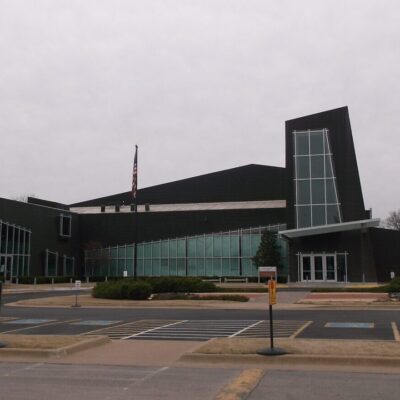
Beth Israel in Jackson, Miss., which was seriously damaged in an arson attack on Jan. 10, 2026.
In the Soviet Union, antisemitism operated quietly, but it was never subtle. It surfaced in tense moments on public transportation and among neighbors in the courtyard, on playgrounds where one could get beaten up while hearing the familiar “beat the Jews, save Russia,” and in cemeteries where broken headstones with Jewish surnames told a story the state media refused to acknowledge existed. These incidents were scattered, rarely investigated, and understood to have wide support. At times antisemitism was declared loudly by the nation’s leaders. When Stalin spoke of “rootless cosmopolitans,” it was understood by everyone who he was referring to. During these decades Jewish families kept their heads low and their opinions to themselves.
Then the Soviet Union collapsed. What followed was a 180-degree turn.
Jewish communities that had once gathered in secret began to organize openly. Hebrew classes filled with students who had never heard the language spoken aloud. Jewish culture, pushed to the margins for decades, emerged with confidence. And in the chaos of the post-Soviet years, being Jewish sometimes even felt like an advantage: access to relatives abroad, exposure to Western ideas, support from Jewish NGOs and a long tradition of resilience provided a foothold in a country that no longer knew its own future or agreed how to interpret the past. Suddenly, young people with the slightest hint of Judaism in their family tree began to openly wear Jewish symbols like the Star of David around their neck. Being Jewish in post-Soviet republics was, believe it or not, respected and even cool.
That transformation felt improbable. It also revealed a larger truth that those who study the subject have long known: Jewish life tends to move through cycles of suppression and reverence.
The United States is now experiencing a rise in antisemitism that many immigrants from the former Soviet Union find painfully familiar. Acts once considered rare have become common. Synagogues face vandalism. Jewish students report harassment on campuses. Online networks spread conspiracy theories that echo old prejudices. And certain media figures hint at “global agendas” or “hidden influence,” careful with their wording yet unmistakable in their implications. Their audiences are large, the scrutiny limited.
To someone seeing these trends for the first time in their own community, they can come as a complete shock. But while these developments are unsettling, they are not the full story.
Jewish history is long. Hostility, while frightening, has never been the final chapter. Societies and political opportunists eventually recognize that blaming Jews for their problems solves nothing. It didn’t ease the Soviet Union’s troubles, and it will not repair America’s divisions now.
Across centuries, Jewish communities have endured cycles of marginalization and resurgence. Antisemitism rises, then recedes. Societies fracture, then correct. The current American moment, while deeply concerning, fits into a larger historical pattern in which fear and prejudice eventually confront the limits of their own force. Scapegoating does not solve economic inequality, social fragmentation or political polarization. It never has.
American Jewish life is unlikely to return to the calm many once took for granted. But that does not mean it is heading toward decline. More often, it shifts into a form marked by clarity, purpose and resilience.
Those who lived through the Soviet Union understand how quickly a hostile environment can change and how unexpectedly renewal can begin. They remember when fear dominated daily life, and they remember when that fear suddenly receded.
The pendulum always moves. Darkness rises, but it also breaks.
History has taught Jews to expect both moments. And it suggests that this country, in time, will emerge into a better one.
Gennady Favel has led communications and marketing for a number of national nonprofit organizations.