Opinion
REAL TALK
What success really looks like in the fight against antisemitism




 Add EJP on Google
Many donors understandably question whether the enormous resources devoted to combating antisemitism are producing results. If antisemitism has existed for thousands of years and is now rising again, why continue to expend tens of millions of dollars to fight it?
The first and most important reason is that surrender is not an option. Across the Diaspora, far too many Jews are being harassed and murdered by extremists who have been radicalized by lies and hate. If the antisemitism and misinformation we confront every day can fuel such threats and deadly violence, letting those bad ideas spread unchecked increases the risk that more of our people will die. In this environment, efforts to change hearts and minds and protect Jewish civil rights are not a “nice-to-have.” They are a must-have for preventing tragedies and saving lives.
A better question is, how should we spend money in order to make the biggest impact? The answer to that depends on how we define our goals and strategies.
If the goal is to eradicate antisemitism entirely, that is, sadly, unrealistic. Antisemitism is a virus that has continually mutated throughout history. Today, it emerges from the far left, the far right, from radical Islamist movements and from ignorance. We cannot eliminate every antisemitic thought from every person’s mind. This ancient hatred has existed for millennia. At times it surges into public view; at others, it recedes into the shadows. Sometimes it is socially acceptable, and sometimes it is broadly condemned.
The massacre on Oct. 7, 2023 and its aftermath have coincided with deep political polarization and fracture over many issues in Western societies. Hostile foreign governments and other bad actors have used hateful propaganda targeting Jews and Israel as a tool to tear democracies apart even further. History reminds us that hatred toward Jews often rises during times of social upheaval, division and strife. We appear to be living through a similar period, with more and more people feeling emboldened to express antisemitic views openly.
This reality does not mean the fight is futile. It means we must focus on what we can control and be clear about what success looks like.
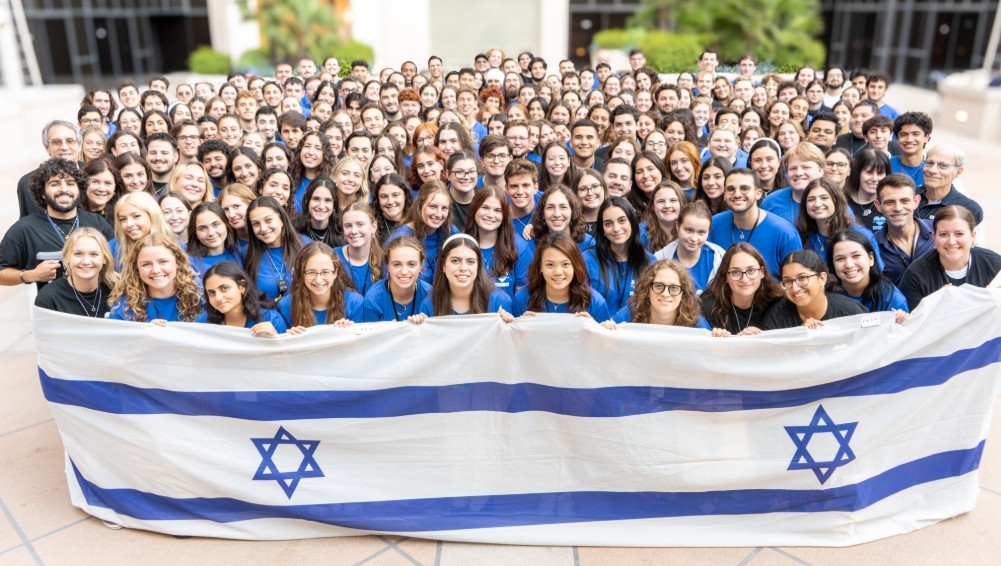
Success begins with empowering Jews to be proud, confident and resilient in the face of hate, and to confront threats head-on, especially young Jews. We must do this through education that strengthens identity, deepens historical understanding and fosters connection. We must provide Jews around the world with a network of Zionist peers, resources at their fingertips and the assurance that when they face antisemitic discrimination, they will never face it alone.
When parents discover that their children are being exposed to anti-Jewish bias or bigotry in K-12 classrooms, we must provide tools and guidance to help them put a stop to it.
When teachers are afraid to teach honestly about Israel, Jewish history and antisemitism, we must give them resources, support and a community of like-minded educators to support them.
When Jewish college students are excluded from campus clubs, targeted in student government, intimidated in dorms or told that Zionists are not welcome in progressive spaces, we must help them challenge that discrimination.
When an employee is fired, harassed or denied opportunities because they are Jewish, we must provide legal support and defend their civil rights.
When Jewish-owned businesses are vandalized, boycotted or targeted simply because they are Jewish or connected to Israel, communities must rally around them.
When grocery stores attempt to impose discriminatory policies targeting only Israeli products, we must organize against such campaigns of hate.
When extremists attempt to capture education systems, government bodies and other institutions, we must mobilize the public to stop them.
When a city council, union, academic department or professional association considers one-sided resolutions that demonize Israel and create a hostile environment for Jews, someone must organize, show up, educate, and insist on fairness.
When social media is weaponized to fuel hatred and violence, we must expose the propaganda, counter it, report it and tell a more powerful story.
Even as we are flooded with requests for support with antisemitic incidents, we must have the capacity to think ahead, innovate and be proactive to take advantage of new opportunities and confront emerging threats.
This work happens every day. Organizations across the Jewish world, including the full variety of departments and strategic work at StandWithUs, are providing legal assistance, helping people who report antisemitic incidents, educating and organizing communities, supporting students, defending civil rights, exposing extremists and helping communities push back against discrimination. These efforts may not eliminate antisemitism, but they dramatically reduce its impact and empower those who are targeted by it.
In the bigger picture, we must do much more to persuade all people of good faith that this is also their fight — because as we know, what starts with the Jews never ends with the Jews. History has shown that antisemitism is terrible not only for Jews, but for entire societies. Everyone has skin in the game. The Nazis poisoned German society with hate and made it systemic, infecting every major institution. This led to the genocide of six million Jews, the murder of millions of others in targeted groups and a world war that claimed 40 to 50 million lives. Preventing similar outcomes today is both achievable and essential.
Like many Jews before us, we are living in dangerous times. The question in front of us is clear. Do we surrender to antisemitism, or do we invest the time, energy and resources needed to overcome this threat? We believe that if we fight back together, as our people have done for generation after generation, we will come out stronger than ever.
We cannot end antisemitism. History teaches us that. But history also teaches us the danger of ignoring or rationalizing the threats that are plainly before us. The great Jewish sage Hillel’s challenge remains as relevant today as it was two thousand years ago: “If not now, when?” And if not us, who will take up this gauntlet? Silence has never served the Jewish people well. We must protect our civil rights. We must strengthen and defend students, support families, educate communities, challenge discrimination and push back against those who seek to normalize hate. That work matters. It saves lives, strengthens democracy and helps ensure that antisemitism never has the final word.
Roz Rothstein and Jerry Rothstein are co-founders and international executive leaders of StandWithUs, a global education and civil rights organization founded during the height of the Second Intifada. Today, SWU supports Israel and fights antisemitism on six continents.