Opinion
HEALING PROCESS
Freedom is only the beginning: What former hostages can learn from Holocaust survivors




 Add EJP on Google
Last week, the world watched as Israeli hostages returned home in helicopters, just one day before the two-year anniversary of the Oct. 7 attacks and the holiday of Simchat Torah. Videos of tearful reunions filled the internet. Families ran to embrace loved ones they feared they might never see again. For Israel and the Jewish people, these moments were both sacred and deeply painful.
The joy of return is immeasurable, yet anyone who has worked with survivors of trauma knows that the real journey begins after the cameras turn off. Liberation does not erase fear. It begins the long, complicated process of healing from it.
Ohad Kab/DADA Studio
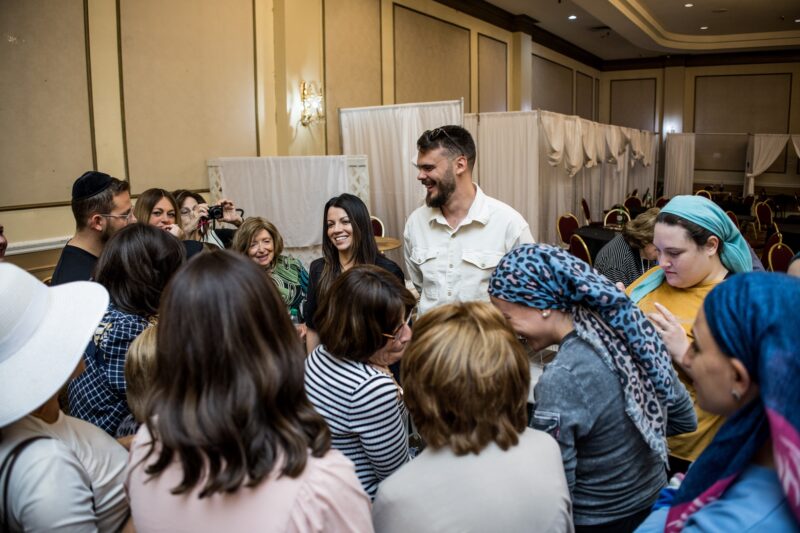
Holocaust survivors meet freed Israeli hostage Andrei Kozlov during an annual summer retreat hosted by the Blue Card and Nachas Health and Family Network at the Hudson Valley Resort and Spa in Kerhonkson, N.Y., on Aug. 19, 2025.
Holocaust survivors have carried the pain of captivity, loss and fear for a lifetime. As Israeli hostages return home, we must draw on those same lessons. Recovery does not end with freedom; it begins there. We need to listen to their stories, surround them with community and ensure they receive the emotional and therapeutic support to rebuild their lives with dignity and hope.
Recent polling shows Israelis consistently prioritized the welfare of hostages and supported agreements tied to their release. The Jewish world has a history of rallying around its most vulnerable, and now that same compassion must guide the next phase of healing, including funding long-term rehabilitation.
Many Holocaust survivors — even those in their 90s or over 100 years old — still face flashbacks and nightmares so many decades after liberation. Their stories remind us that trauma leaves deep marks that time alone cannot erase. For the former hostages, these same wounds may appear in different forms: sleepless nights, survivor’s guilt, fear of loud noises and the constant struggle to feel safe again.
The most important lesson we have learned from survivors is that healing begins with being heard. When someone listens without judgment, the survivor starts to regain control over their own story. That act of listening is not passive. It is care. The newly freed hostages will need that same compassion from their families, their communities and the world.
Community itself is also a lifeline. The Holocaust survivors we serve often tell us that loneliness can hurt as much as memory. Connection is what sustains them: home visits, phone calls, shared meals and community events that remind them they are not forgotten. The same will be true for these hostages. Healing will depend not only on psychological care but also on social support and the reassurance that they are surrounded by love and belonging. For the former hostages, it is vital that they understand the Jewish world is standing by their side to support them across the globe.
There is another lesson too. Purpose gives life back its meaning. Many Holocaust survivors found strength in teaching, volunteering and telling their stories. They chose to build, to nurture and to remember. For those returning from captivity, that same search for meaning will be essential.
At The Blue Card, we have seen that trauma-informed care is not just a phrase. It is an approach rooted in empathy, patience and respect for emotional safety. Health professionals and volunteers must understand how easily trauma can be triggered and how critical it is to create spaces that feel secure and predictable. Every interaction must come with awareness that healing requires time.
Studies show that evidence-based, trauma-focused therapies can deliver meaningful post traumatic stress disorder symptom reduction when survivors receive consistent, long-term support — yet access remains limited worldwide.
The return of the hostages is one of the most emotional moments in modern Jewish history. It coincided with a date that already holds so much pain. But it also offers hope. The hostages’ courage, their families’ strength and our collective responsibility to care for them can become a source of renewal.
Freedom is only the beginning. Our duty now is to help each of them rediscover life, trust and joy. We owe them not just celebration, but care that lasts a lifetime.
Masha Pearl is the executive director of The Blue Card, which provides direct assistance to Holocaust survivors across America.