Opinion
YOM HAZIKARON 5786
‘For me, it’s still yesterday’: Supporting the families of Israel’s fallen




 Add EJP on Google
In Short
On Yom HaZikaron, we remember — but do we act on what we owe the families left behind?
We stop. We stand. We listen to the siren. Across Israel and in Jewish communities around the world, when we mark Yom HaZikaron today we honor those who fell with a depth and seriousness that is real.
And then we move on. Not because we forget, but because memory, on its own, asks very little of us once the day has passed.
Courtesy
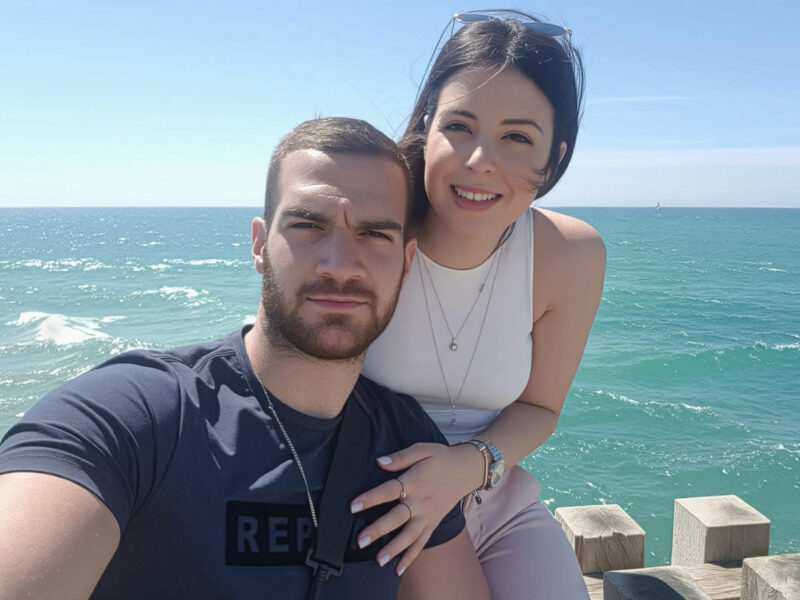
Eliran and Eden Abergel in an undated photo. The couple celebrated their second wedding anniversary the day before he was killed fighting Hamas terrorists in Kibbutz Be'eri on Oct. 7, 2023.
When a soldier is killed, the loss is immediate and visible. But what follows is not.
Omri David was 27, from Karmiel, a deputy company commander in the Negev Brigade’s 9217th Battalion. He was killed in action in Gaza on Nov. 14, 2023.
Eliran Abergel was 29, an Israeli police officer serving in MATPA, the National Enforcement Operations Unit. He was killed on Oct. 7, 2023 while fighting Hamas terrorists at Kibbutz Be’eri.
They are remembered as heroes.
But what follows their loss is not lived in public. It unfolds quietly, in the lives of the people they left behind.
Noam Shrem David, Omri’s widow, describes Yom HaZikaron as a day that “turns the stomach,” and at the same time, brings a kind of relief.
“I am not sad alone,” she says. “I am with the people who loved him.”
“Ultimately, those who truly feel the absence are the family and the friends, who miss him every day. … In all the loneliness, I am not completely alone. And that is not something to take for granted.”
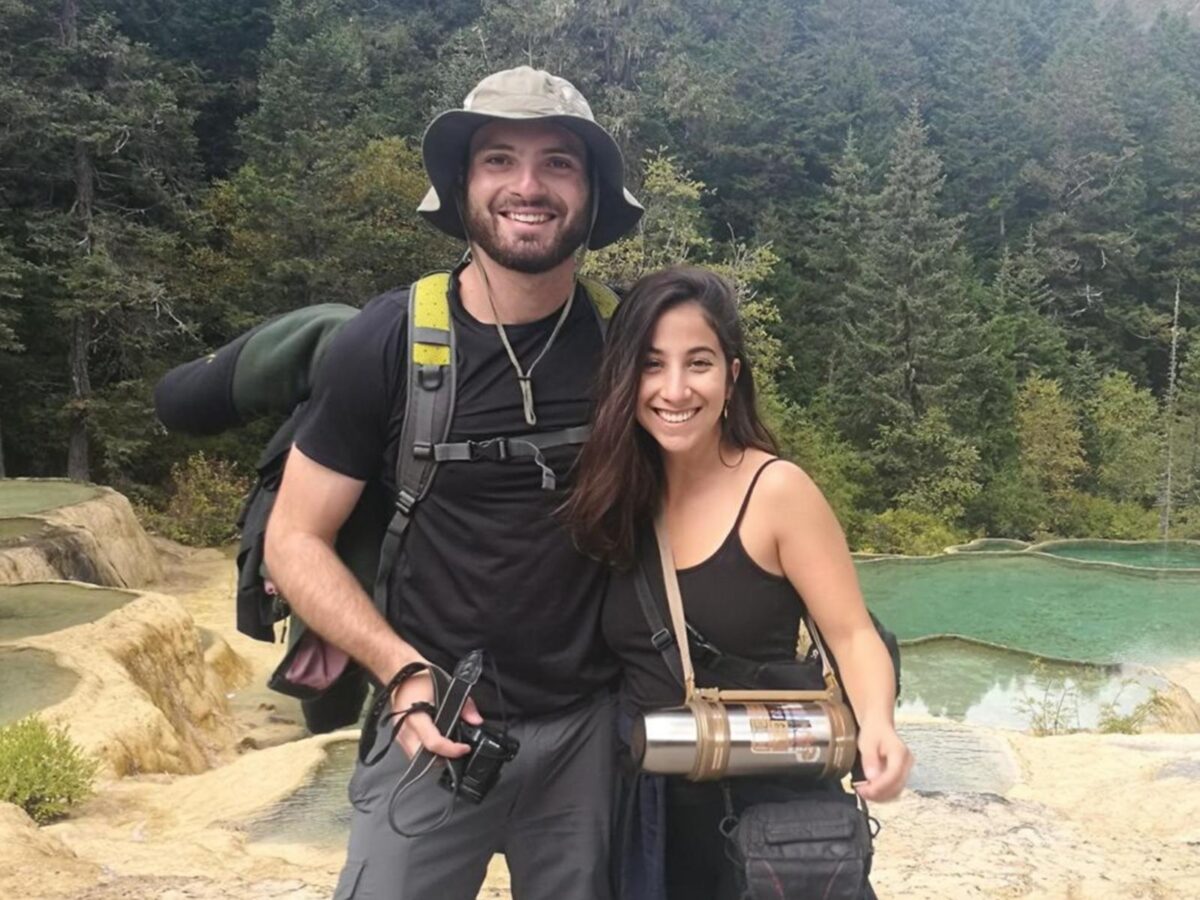
Eden Abergel, Eliran’s widow, describes the distance that opens with time.
In the beginning, she says, everything is close. Raw. Immediate. But as months pass, something shifts — not for her, but for everyone else: “People say time has passed. But for me, it hasn’t. It still feels like yesterday.”
“Every day is a day of memory,” she says. “But at a certain point, it feels like everyone else is closing a chapter.”
For her, there is no chapter to close.
A soldier has given his life. What remains is everyone he left behind. A life that should have stretched across decades ends in an instant. What remains is not only grief, but a void. A presence suddenly gone — from a home, from a family, from every moment that should have included him.
For the widows and orphans, the parents and siblings, loss is not confined to a single day — it continues every day.
For the rest of us, we have developed a collective instinct for how to respond to loss. On Yom HaZikaron, we gather. We stand still. We remember. And then we return to our lives, believing that we have done what was asked of us. That instinct is not mistaken, but the belief that it is enough, is.
If we could ask the fallen what they would want from us, the answer would be simple: Take care of my family.
We are a people with a deeply rooted culture of giving, capable of extraordinary generosity. What is missing is not compassion. It is the internalization of what is required of us and of the fact that there is actually more we can do. It is about deciding, clearly and concretely, that a portion of what we give, consistently and over time, is dedicated to the families of those who gave everything.
And not once, not in response to tragedy, but as an ongoing commitment — structured, sustained and understood as part of what we owe.
That is what it looks like to stand with the families of the fallen.
In the book of Yeshayahu (1:17), we are told: “Ensure justice for the orphan; take up the cause of the widow.” A call to act — to take responsibility.
And this is not a one-time instruction. The call to act for the widow and the orphan is repeated again and again throughout Jewish scripture.
While Yom HaZikaron brings us together in remembrance and gives us a language for honoring those who fell, it is not enough. What follows must be a decision about how we support the families they left behind — not only in the moment, but consistently, over the years and decades that follow.
Because even when wars end, that responsibility does not.
David Metzler is the director of international relations at the IDF Widows & Orphans Organization, a nonprofit that provides lifelong support to the families of Israel’s fallen soldiers and security personnel for over 35 years.