Opinion
JEWISH LEARNING FOR ALL
Building a new pillar of Jewish life: The community beit midrash




 Add EJP on Google
According to Pirkei Avot 1:2, the world stands on three things: Torah, avodah (prayer) and gemillut chasadim (acts of loving-kindness).
Two of these three foundations are thriving in non-Orthodox communities across North America.
There is tremendous creativity in the world of Jewish prayer, as evidenced by resources like Hadar’s Rising Song Institute and gatherings like Let My People Sing. Such hubs nurture current and future song leaders by inspiring them, giving them tools and ultimately broadening the circle of those who are competent and comfortable leading spiritually uplifting, song-filled prayer services. These initiatives are now mirrored in important ways in professional programs and degrees designed to equip clergy to lead at the forefront of this burgeoning interest in Jewish music, at Hebrew Union College, Hebrew College and JTS. All of these efforts make a tangible difference in how Jews experience prayer and in how frequently they choose to make prayer a regular part of their Jewish lives.
Similarly, the Jewish commitment to acts of service, whether in the realm of social justice or in local efforts to act as G-d does and care for the stranger, the sick and the poor (the more direct application of gemillut chasadim), is readily apparent in the wider Jewish community. From the plethora of synagogue and federation committees dedicated to acts of service on the local and national levels, to organizations like HIAS, Bend The Arc, T’ruah and many others that give a particular Jewish voice to issues of universal moral concern, Jews seeking to connect to their people and their tradition through upholding and strengthening Pirkei Avot’s third pillar are in good company.
But what about that first pillar, the pillar of Torah? Sure, the Jewish community has invested in day schools that, while expensive, provide our children and adolescents with an incredible grounding in Jewish education. Additionally, there are more opportunities today than ever before for immersive, graduate-level programs that strengthen one’s knowledge base and can provide the springboard to a lifelong love of Jewish learning. But even the best of those programs, offered by institutions such as Yeshivat Hadar, Pardes and Svara, not to mention academic programs at a host of top-tier universities with Jewish studies programs and departments, are intensive, one- to two-year programs meant to serve as catalysts. They do not provide a long-term Jewish home for the lifelong learner.
Where is the institutional home for those in the non-Orthodox world who want not only to ground their lives but to learn week in and week out in the paradigmatic Jewish spiritual practice of talmud Torah? If there is a synagogue or minyan in every Jewish community, why is there not also a beit midrash?
This absence is a significant one. Consider the spiritual technology at play in the beit midrash. Traditional Jewish learning prizes an open mind, dedication to intellectual pursuits and a commitment to show up. All of us benefit in ways large and small from having a hub of inquiry as a landmark in Jewish life. Many Jews have devoted a great deal of their lives (and livelihoods) to the pursuit of intellectual expertise. They have experience grappling with difficult topics and mastering them in the pursuit of academic achievement, professional growth or both. The beit midrash is their natural Jewish home. Given this, it is all the more notable how few avenues there are for serious, small-scale learning that does not pursue mastery of any particular subject, a certification or a degree.
But the absence of the beit midrash does not just impact the individual; it is a missed opportunity to strengthen community.
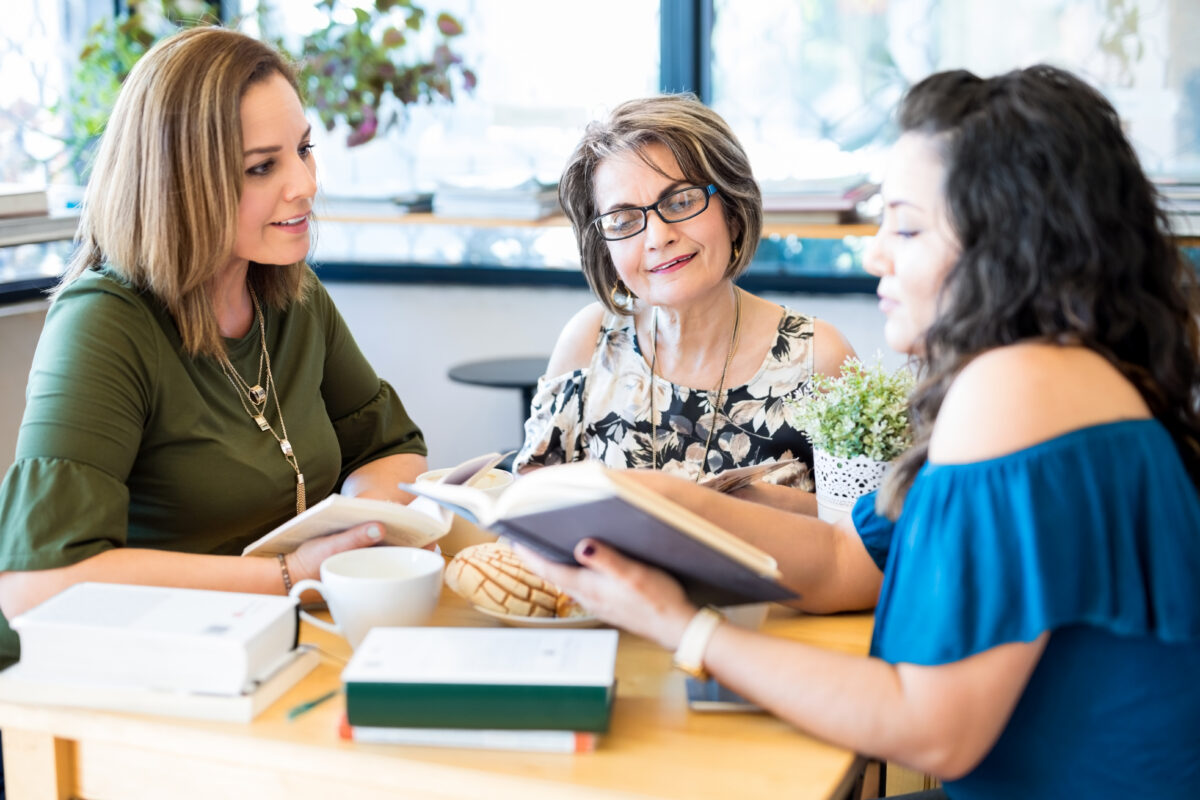
Jewish communities in North America are incredibly diverse across multiple indices — economic, political and religious. And yet, they possess a shared commitment to Torah learning, whether narrowly or broadly defined. In a time of unprecedented polarization and atomization of community engagement, we must invest in any space that has the potential to bridge these seemingly unbridgeable gaps.
This was the vision that drove me to found the Happy Valley Beit Midrash, an in-person, weekly beit midrash open to all that seeks to instill talmud Torah as a ritualized spiritual practice and a core component of 21st century Jewish life.
Gathering each week, through all sorts of New England weather, I have noticed a few things that make this space so vibrant and generative. These components could serve as the backbone of a model for other community batei midrash across North America:
1.) Regularity: To become more than another adult education program, a community beit midrash must meet regularly, no less than biweekly, continuing throughout the year (approximately from Simchat Torah until Shavuot). With such regularity, you can build a foundation for the teacher(s) and the students, that cements the space as a core component of Jewish life.
2.) Chevruta. Each gathering of the beit midrash should model the core spiritual practice associated with traditional Jewish learning: chevruta, or paired learning. There are a growing number of books and articles (and more articles) about the power of this method of study, and the interested student and teacher should be directed to them. In my experience, however, this is a case of learning by doing: model chevruta early and often, helping students acclimate to a decidedly non-Western mode of engagement with texts and their peers, typified by reading aloud and collaborative (or sometimes even combative) analysis about meaning as a feature of learning.
3) Diversity of teachers and learners. What makes a beit midrash a community beit midrash? Saying that the space is open to the community does not matter unless the breadth and depth of your community actually show up. A great way to signal a commitment beyond casual dedication to this value is to have a diverse array of people on the leadership or facilitation team. At the HVBM, for example, we have a growing, rotating cast of facilitators, each with their own background, pedagogical style and personal Torah to share. By avoiding the “sage on the stage” model of teaching through both emphasizing chevruta and consistently rotating who is facilitating, students are reminded by the very form of the beit midrash that all styles, methods and questions are prized.
4) Empowerment. This diversity of teachers and learners directly fosters student empowerment. The way in which HVBM is structured reinforces this goal as well. The majority of the time is spent away from a frontal teaching style, both in chevruta overseen by the facilitator and in the second half of every gathering, where students are invited to guide their own learning with a topic and chevruta of their choosing. I seek to have students leave knowing that, week after week, they are building the muscles of independent Jewish learning nested within a community. This is a set of muscles that they will carry with them, not only back to the beit midrash next week but in the rest of their lives as well.
So what would it take to create a Jewish world where batei midrash like HVBM peppered the landscape of Jewish life? It would require people committed to this vision to help launch such spaces, students eager to engage in the ancient practice of talmud Torah on a regular basis and a group of passionate facilitators ready to hone their own practice in tandem with a cohort of peers spread around the continent.
These ingredients already exist, in spades. If we bring them together, we can fulfill the vision of Pirkei Avot, living out our commitments to prayer and acts of loving kindness in a community where we are connected through Torah.
Rabbi Benjamin Barer is a proud Pardes alum, ordainee of the Rabbinical School of Hebrew College and the founder of the Happy Valley Beit Midrash.