Opinion
SHEHECHIYANU
Blessings revealed: Reflections on Yeshivat Maharat’s Semicha 2025




 Add EJP on Google
They were on the last El-Al flight out of Ben Gurion Airport before the war with Iran began. As the first missiles launched, they were already in the air. They didn’t learn that the war had broken out until they landed in New York early the next morning.
This is how Yeshivat Maharat’s graduation week began. Nine of the 25 graduates had flown in from Israel. Upon arrival in New York, their focus immediately shifted to the urgent need to return home to their families and communities. The idea of a large celebration honoring their years of hard work and study, this sacred moment of semicha (ordination), felt unimaginable.
Maharat/Facebook
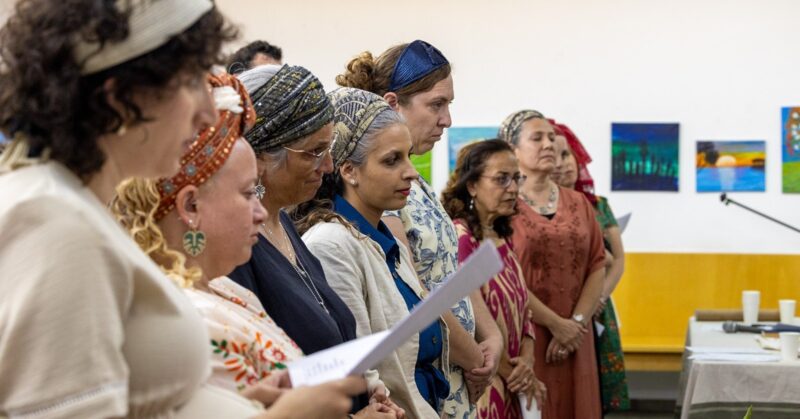
Graduates at Yeshivat Maharat's 2025 Semicha ceremony.
Yet, this was the exact moment that the Jewish people needed courageous rabbinic leaders and to not acknowledge this moment would have also felt unimaginable. We adapted as best we could. We modified the program, adding songs and prayers to reflect the somber mood. I began my speech with these words: “You are entering your rabbinate at a very precarious time for the Jewish people…. But the Torah you taught us tonight, and the paths that you have chosen, are emblematic of the kind of leader our world needs. ”
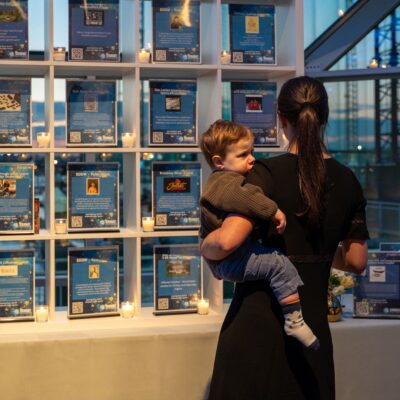
Despite the uncertainty that was all around us, it was a momentous occasion. As the 25th graduate walked under our ritual banner, symbolizing the moment of ordination, we celebrated a milestone: 100 rabbinic leaders ordained by Yeshivat Maharat. How blessed is our community to be able to look to 100 brilliant and compassionate leaders all around the globe who have dedicated their lives to Torah and to serving the Jewish people?
The Gemara in Bava Metzia (42b) teaches: “A blessing is not found in something that is counted. Rather, it is found in something that is concealed from the eye (ha-samui min ha-ayin).”
This is not a prohibition against noticing goodness, but a reminder that true blessing often unfolds quietly. For far too long, female rabbinic leaders have been ha-samui min ha-ayin — concealed from view, not counted, not fully seen.
Now there are 100 Maharat graduates, and each one is a blessing. In a dark and fractured world, these scholars are a force for healing, hope and transformation. They bless their communities with wisdom and our tradition with authenticity and courage. One-hundred women have committed their lives to Torah, to leadership, to community, to Israel and to the hard work of building a more just and holy world. The calling felt by Maharat graduates, and the unique skills they cultivate, are essential today.
Fast-forward to three weeks later, a week after the last Israeli graduates found their ways home, when we celebrated again. This time, Maharat rabbinic graduates gathered for the first time in Jerusalem. Knowing that many of the Israeli graduates hadn’t been able to celebrate with their loved ones, we created an additional ceremony to honor them. It was a moment of healing and pride. They celebrated with friends and colleagues from the very places where they have made the deepest impact, but this time, in Hebrew. Watching these 11 leaders (two Israeli students did not make it to New York) and several earlier graduates, all of whom had spent years immersed in Gemara and halacha, finally receive the recognition they so deeply deserved, was radical and long overdue.
The theme of the evening focused on how Maharat has forged a deep and meaningful partnership between Israel and the U.S. through the lens of Torah. It was a display of what happens when Israelis and Americans work well together: shared values rooted in halakha, mutual commitment to spiritual leadership and a deep belief in the transformative power of women’s Torah learning. Graduates from both countries collaborate not only across oceans but also across communities, building bridges of trust, vision and purpose.
This spirit of collaboration and shared purpose was beautifully echoed in the words of our rosh yeshiva, Rabbi Jeff Fox, who reminded us that “genuine innovation emerges from deep engagement with tradition, not from rejecting it. True religious creativity requires both thorough grounding in classical sources and the courage to venture into truly new territories. It is in the conversation between the texts of our mesora [lived tradition] and the lived experience of the Jewish People and humanity that we all struggle to find our own neshamot, our own souls.”
Just days after this celebration, we rejoiced again when, in a landmark decision, the Israeli Supreme Court ordered the Chief Rabbinate to permit women to sit for the Rabbanut’s halachic exams, an unprecedented step toward gender equality in religious leadership. Two of Maharat’s graduates, Rabbanit Avital Engelberg (’15) and Rabbanit Sarah Segal-Katz (’25) are cited in the brief submitted to the court.
Back at Yeshivat Maharat’s graduation in New York, when I looked at these nine Israelis and the 14 other graduates, the many alumnae in the room and the nearly 600 people in the audience, their faces shining with joy and wonder, I felt immense pride. Pride in the contributions these women have already made and will continue to make in the world.
And I opened my arms and recited the words that is on their klafim, their ordination certificates: “Toreh, torah, b’issur v’heter: You have all been found worthy to be spiritual leaders of the Jewish People in matters of Jewish Law.”
Rabba Sara Hurwitz is the co-founder and president at Yeshivat Maharat and serves as rabba at The Bayit in Riverdale, N.Y.