Opinion
SIDE BY SIDE
A different kind of Israel encounter at camp




 Add EJP on Google
In Short
“Through the Other’s Eyes” gave campers and staff a chance to learn about the diversity of Israeli society and hear perspectives they might not otherwise encounter.
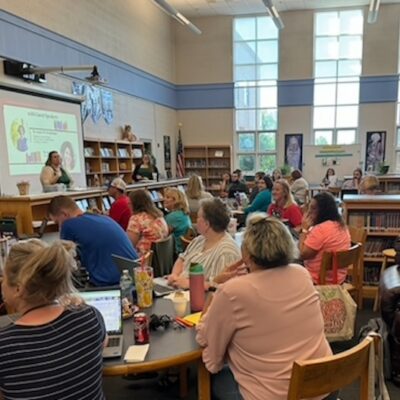
This summer, a group of 32 17-year-old counselors-in-training (CITs) packed the theater at URJ Camp Harlam in Kunkletown, Pa., to hear from two 18-year-olds: Yali, a Jewish Israeli currently serving in the IDF, and Sami, an Arab citizen of Israel. Both Yali and Sami are graduates of “Through the Other’s Eyes,” a yearlong Givat Haviva program that uses photography to bridge Israel’s cultural divides and build personal connections between Jewish and Arab citizens of Israel.
A thunderstorm raged overhead as Yali and Sami spoke about their families, their identities and their photos. They laughed about their shared love of Will Ferrell and disdain for traditional Ashkenazi food. They recounted the joy of Hershey Park’s rollercoasters and their annoyance at the long lines. And they shared sharply contrasting views on the word “Palestinian” and the Israeli Defense Forces.
Courtesy/Foundation for Jewish Camp
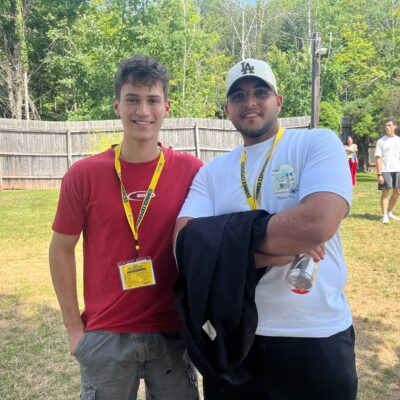
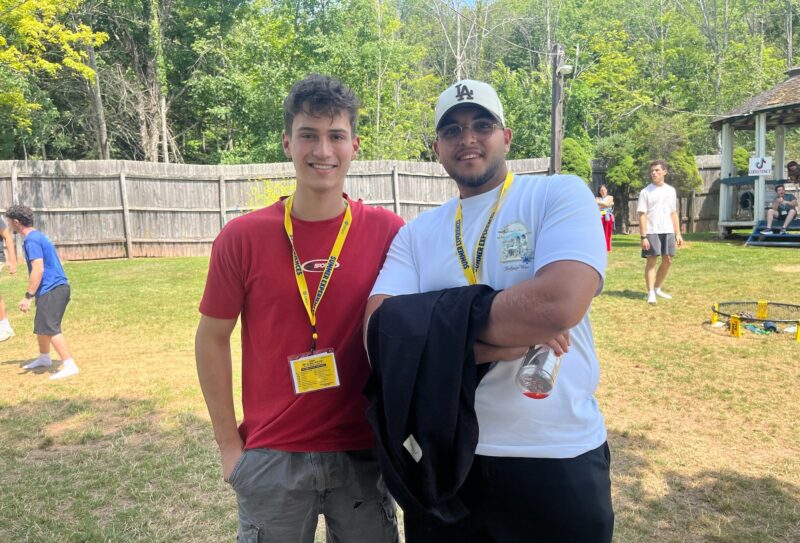
Yali Golan and Sami Asmar at Camp Havaya in South Sterling, Pa., in 2026.
As the 45-minute event neared its scheduled close, the storm strengthened. Lightning held everyone in the theater for 30 more minutes, and then another 30. The CITs remained, riveted — not just listening to Sami and Yali but opening up to them and sharing their own experiences with division, intolerance and cancel culture, especially around the subject of Israel.
For some, simply seeing Sami and Yali side by side — smiling, slapping one another on the back and helping each other translate Hebrew to English, all while describing some of their profound and fundamental disagreements — was almost as striking as anything they heard.
“This was one of the first times I saw an Arab and a Jewish Israeli sit next to each other, talking about their past and how they bond even when they disagree,” one camper said afterward. For these young people, this felt very different from many of their experiences at home, where the “wrong” word could end a conversation before it even began.
This summer, a grant from The Natan Fund enabled Foundation for Jewish Camp to launch a pilot initiative bringing Yali and Sami to three U.S. programs: URJ Camp Harlam, BBYO’s Israel 360 program and Camp Havaya. On these visits, we wanted campers and staff to learn more about the diversity of Israeli society and hear perspectives they might not otherwise encounter. We partnered with Givat Haviva, who have been advancing relations between Jewish and Arab citizens of Israel since 1949.
In many ways, the pilot accomplished what we hoped it would, but some of the most powerful learning was unexpected. Campers learned facts about the demographics of Israel and the degree to which Arab and Jewish communities live largely separate lives and experience Israeli society differently, even though Arab citizens make up 21% of the population. But campers and staff also said that people can stay in relationships across differences, even when it comes to Israel. Hearing an IDF soldier say, “We need to see their narrative to understand their pain,” and someone who identifies as Palestinian Israeli say, “We need to let our disagreements be part of us but not interrupt our future,” stands in stark contrast to the kinds of messages young people typically receive about Israel.
When asked what she would tell someone at home about the visit, one Havaya camper thought of her cousin, her “best friend in the whole world,” with whom she regularly has difficult conversations about Israel.
“She doesn’t understand how anyone can support Israel and I don’t necessarily know how to find the words,” she told us. “But I think that after this conversation… I am so much better equipped to try to explain that to her.”
If we want young American Jews to learn about the diversity of Israeli society and hold hope for a peaceful future, we need to introduce them to people and organizations trying to build that future and give them examples of people who continue to engage despite their disagreements. These are some of the core principles of a new educational framework, Reimagining Israel Education, that FJC played a role in developing and that many educators and leaders are beginning to utilize.
But why take this approach at summer camp?
Last year, FJC convened two “think tanks” to better understand how camps foster connections to Israel — both how they already do it and how they can do it in the future. We learned that camps excel at developing personal, emotional attachments to Israel, especially through meaningful encounters with Israeli staff and campers. We also heard that camps want to provide opportunities to discuss and explore Israel’s complexities but aren’t always sure how.
Givat Haviva and the Natan Fund helped FJC provide camps with exactly that: time with Israelis nearly their own age, bringing perspectives many campers and staff had never heard before. And because it was camp, the encounter did not end when the session was over, nor even when the lightning subsided. In between formal sessions, Sami and Yali found themselves in long informal conversations with campers and staff. They also played soccer and gaga with campers and joined in Shabbat celebrations, dancing and singing alongside the entire camp. By the end of each visit, Sami and Yali were no longer simply presenters at the front of a room. They were people the campers knew and cared about.
That may be one of camp’s greatest strengths: it gives young people the time and space to discover that disagreement does not have to be the end of a relationship. Sometimes, it can be the beginning of a deeper one.
Amy Meltzer is a director of training and talent development at Foundation for Jewish Camp and directed the pilot initiative “Bringing Shared Society to Camp.”