Your Daily Phil: Dorot Foundation to shutter, spend down all its resources




 Add EJP on Google
Good Tuesday morning!
In today’s edition of Your Daily Phil, we examine what sets this year’s Yom HaZikaron apart from those in the past. We get the scoop on the Dorot Foundation’s plans to shutter the organization and allocate its assets by 2034, and interview Rachel Goldberg-Polin about her new book. We feature opinion pieces for Yom HaZikaron: one by David Meltzer about caring for Israel’s widows and orphans, and another by Rabbi Chaim Levine on the genesis of the organization Brothers for Life; plus Yossi Heymann offers a two-pronged model for Israel’s recovery after more than two-and-a-half years of war. Also in this issue: Sarah Sassoon, Micha Kaufman and Bret Lubarsky.
Today’s Your Daily Phil was curated by eJP Managing Editor Judah Ari Gross, Israel Editor Justin Hayet and Opinion Editor Rachel Kohn. Have a tip? Email us here.
What We’re Watching
Yom HaZikaron, Israel’s Memorial Day, will conclude later today as the country moves directly into Yom HaAtzmaut, its Independence Day. A prerecorded official torchlighting ceremony at Mt. Herzl in Jerusalem, meant to mark the transition between the holidays, will air this evening.
The Shul of Bal Harbour (Fla.) will host its annual dinner tonight where it will launch the Rabbi Shalom D. Lipsker Legacy Foundation.
What You Should Know
A QUICK WORD FROM EJP’S JUDAH ARI GROSS
As in every year on Yom HaZikaron, Israel’s Memorial Day, the country came to a halt this morning for two minutes as sirens wailed across the country. These were not the oscillating air-raid sirens that have come to define Israeli life over the past two-plus years, telling anyone who hears it to run for cover, but a flat, unwavering tone calling for those who hear it to stand still.
As in every year, the country’s cemeteries were full of relatives of the 25,644 soldiers, police officers and other security personnel who have been killed defending the Zionist enterprise in the land of Israel since 1860. As in every year, the schoolyards were filled with students and teachers holding ceremonies. In the high schools, they remember the former students and faculty who are among the fallen.
But while the ceremonies and trappings of the day remain constant every year, this Yom HaZikaron is different. While the ceasefire agreements with Iran, Lebanon and Hamas are holding and the military’s safety restrictions on public gatherings have been lifted, the country remains in a state of war. Thousands of Israeli soldiers are still deployed in southern Lebanon — both as Israel prepares to establish a security zone in the area and as the military remains ready to resume active warfare with Hezbollah — and IDF troops are also awaiting the results of ongoing negotiations to disarm Hamas in Gaza.
Of course, for the families of the 170 Israeli service members who have been killed over the past year, this Yom HaZikaron is different.
And then, as in every year, as the sun sets, Israelis will do the unimaginable and perform a full 180, pivoting sharply from the mourning of Yom HaZikaron to the joy of Yom HaAtzmaut, the country’s Independence Day. Though there too, things will be different this year — the celebrations perhaps a bit less jubilant in light of the lingering heaviness of war.
EXCLUSIVE
Dorot Foundation to spend down its endowment, sunset in 2034
The social justice-focused Dorot Foundation will be spending down its assets and shutting down in 2034, representatives from the foundation shared exclusively with eJewishPhilanthropy’s Nira Dayanim, citing “urgent challenges” for the Jewish community and threats to democracy in both the United States and Israel. As of last year, the foundation controlled $158 million in assets.
Time is now: “Given the urgent challenges we face today, this is a time to fully utilize our resources,” Jeanie Ungerleider, who has served as president of the Dorot Foundation since 1994, said in a statement. According to Steven Jacobson, executive director of the Dorot Foundation, political tensions and “challenges to democratic norms” in Israel and the United States are worsening equity and social justice issues, prompting the foundation to increase its investments, specifically in the protection of democratic systems.



LOVE AND PAIN
In new book, Rachel Goldberg-Polin recounts the before and after (and ever after) of her son’s life and death
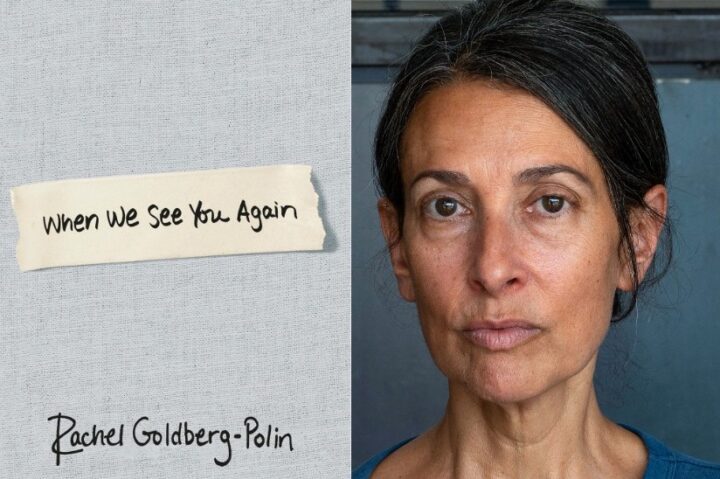
In the months after the death of Hersh Goldberg-Polin at the hands of his Hamas captors, the Goldberg-Polins, who had for nearly a year been the faces of hope and persistence, became the faces of a unique kind of grief — one that they experienced in the public eye. Rachel Goldberg-Polin recounts some of those moments in her new book, When We See You Again, which comes out today, a chronicle of her life before, during and after her son’s captivity and murder, reports Melissa Weiss for eJewishPhilanthropy’s sister publication Jewish Insider.
Writing as therapy: “I don’t think of this book at all as a memoir or a tell-all,” Goldberg-Polin told JI. “It’s like little Tupperware of pieces of a life that was, and then figuring out a life that is, and how do you do this? How do we do this, breathing in a world where we no longer have air?” She had started writing because she found it therapeutic. “I couldn’t bear the intensity of the suffering that I was carrying; [it] was making my knees buckle and my soul buckle,” Goldberg-Polin explained.
Read the full interview here and sign up for Jewish Insider’s Daily Kickoff here.
YOM HAZIKARON 5786
‘For me, it’s still yesterday’: Supporting the families of Israel’s fallen
“On Yom HaZikaron, we gather. We stand still. We remember. And then we return to our lives, believing that we have done what was asked of us. That instinct is not mistaken, but the belief that it is enough, is,” writes David Metzler, director of international relations at the IDF Widows & Orphans Organization, in an opinion piece for eJewishPhilanthropy.
Care enough to commit: “If we could ask the fallen what they would want from us, the answer would be simple: Take care of my family. We are a people with a deeply rooted culture of giving, capable of extraordinary generosity. What is missing is not compassion. It is the internalization of what is required of us and of the fact that there is actually more we can do. It is about deciding, clearly and concretely, that a portion of what we give, consistently and over time, is dedicated to the families of those who gave everything. And not once, not in response to tragedy, but as an ongoing commitment — structured, sustained and understood as part of what we owe. That is what it looks like to stand with the families of the fallen.”
RECLAIMING LIFE
Israel and the Jewish People remember their sons and daughters
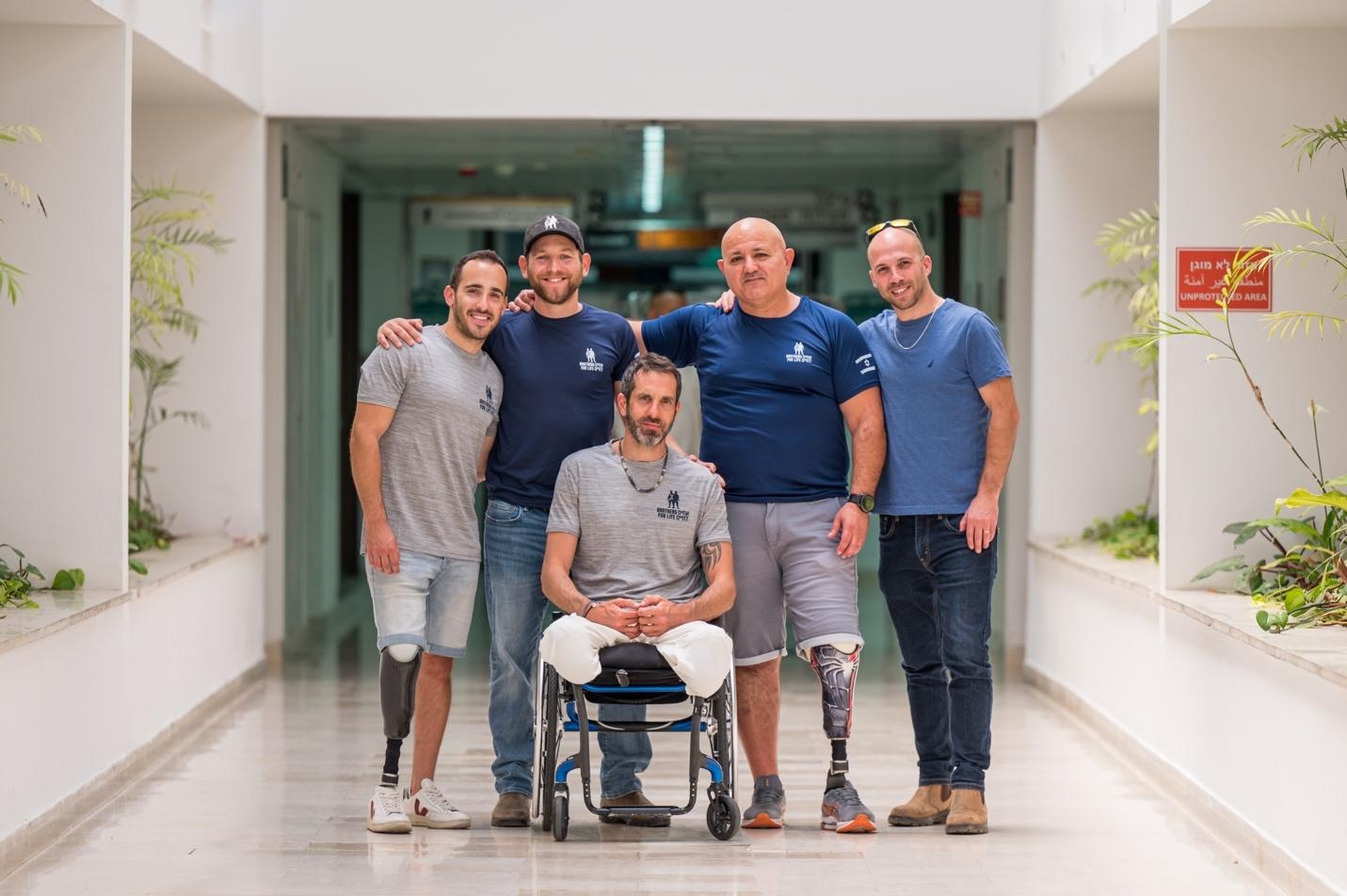
“Twenty years ago, during the Second Lebanon War, I walked into Rambam Hospital in Haifa to visit newly injured soldiers,” writes Rabbi Chaim Levine, co-founder and president of Brothers for Life, in an opinion piece for eJewishPhilanthropy. “I came with four friends, and we were accompanied by Gili Ganonyan, a young soldier who had been shot through the neck by a Hamas terrorist a year and a half earlier. He was no longer in rehabilitation, but he carried his injury with him into every room.”
An aha moment: “As we moved from bed to bed, the soldiers we met were withdrawn, in obvious pain and in no position to receive visitors. Then Gili began to speak. He told them, simply, that he had been where they were, in that same bed, facing the same pain and uncertainty. He pulled down his collar to show them where the bullet went through his neck. The shift was immediate. Faces that had been closed, suddenly opened. There was a level of trust and connection between them that I had never seen before. You could literally see hope brighten their eyes. In that moment, something became clear.”
A PATH FORWARD
Use Israeli bureaucracy to drive Israeli recovery
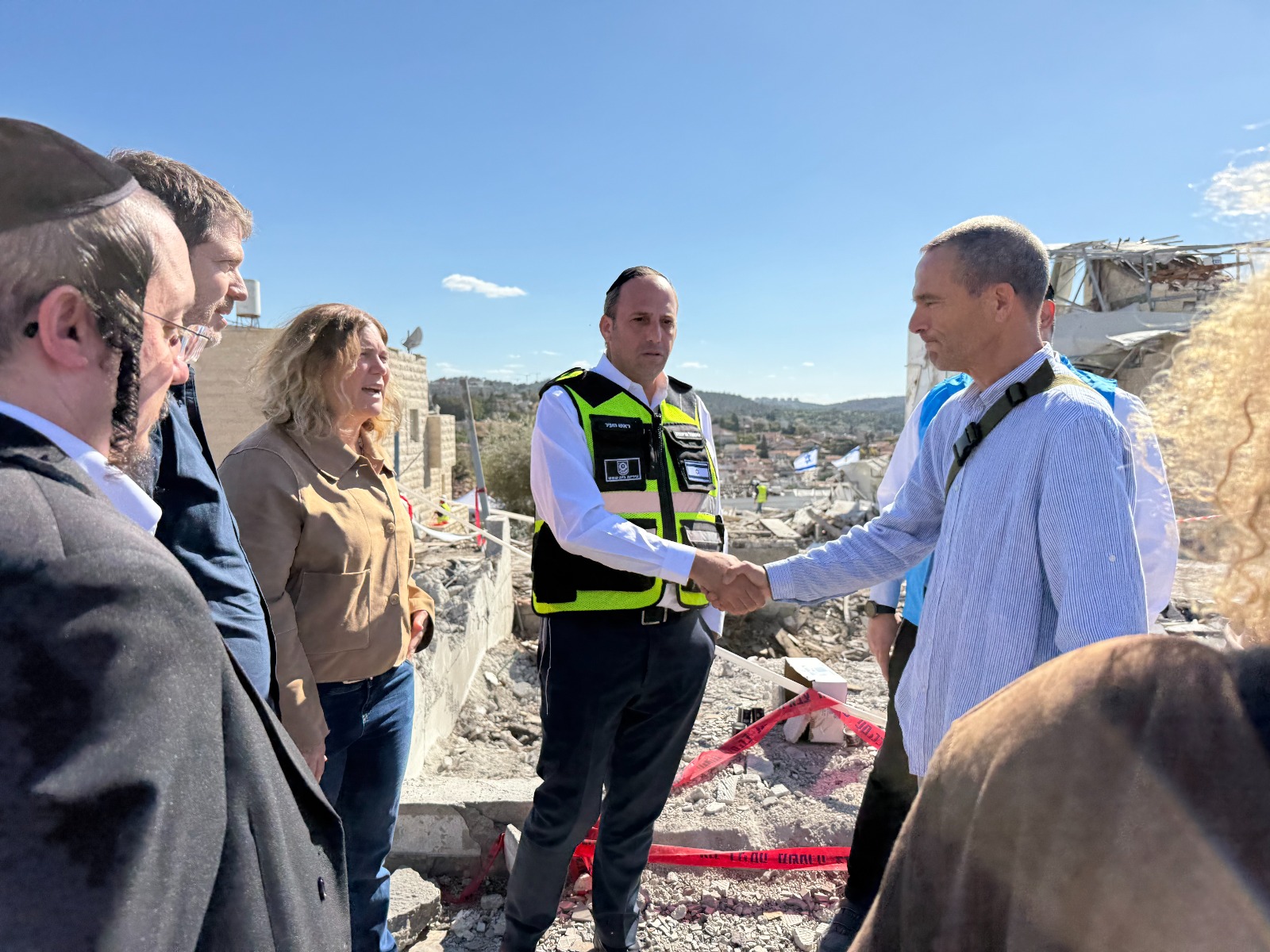
“With fragile ceasefires in place, Israelis head toward Independence Day with a strained sense of hope. After more than a month of missiles raining down across the country, we are ready for the next chapter, but we don’t fully grasp the extent of the healing that’s needed and what rebuilding will require,” writes Yossi Heymann — who leads the American Jewish Joint Distribution Committee’s Israel-based emergency response efforts and its division supporting older adults in Israel — in an opinion piece for eJewishPhilanthropy. “
What Israelis need: “Israel runs on bureaucracy. While we Israelis possess a knack for bucking those systems, today we need to use those systems to our advantage to heal and rebuild. … During the previous war with Iran, my organization developed and refined two complementary models designed for aiding the hardest-hit Israelis, grounded in how cities actually function. One model stabilizes the municipality fast, and the other works to ensure the most vulnerable households do not have to navigate recovery alone.”
Worthy Reads
The Cost: In the Times of Israel, Sarah Sassoon explores the painful tension between the profound love for her sons serving in the IDF and the steep historical cost of maintaining a Jewish homeland. “The cost of this land that bears the towering pines and cedars is steep. We pay with our children’s blood. So why is it we came to Israel?… I wanted to be part of Jewish history. ‘How can you go? Your boys will have to serve,’ people said. Our boys were small. Who was thinking of the army? When my oldest son’s draft letter arrived… I tried to hide my tears as we drove along Paratroopers Road to Ammunition Hill, to drop off our son for his first day as a paratrooper. I thought I understood the cost of return. I had taught Ezra and Nehemiah. I held onto one image: the Babylonian exiles returning and rebuilding the walls of Jerusalem with a hammer in one hand and a sword in the other.” [TOI]
Doubling Down: In London’s Jewish News, Rabbi Naftali Schiff calls for a pivot toward inspiration and proactive education as the primary response to external threats like arson attacks and internal pressures like school closures. “If our message to the next generation becomes one primarily of fear, of the harm some wish to do to us, of how we must constantly defend ourselves, then we risk hollowing out the very identity we are trying to preserve. Jewish continuity has never ultimately depended on how well we defend ourselves, but on how deeply we understand ourselves…. We need to raise a generation of young Jews who are not defined by the hostility around them, but by the richness within them. Young people who feel connected to our story, to our people, to our purpose. That kind of identity is not easily shaken.” [JewishNews]
The Missiles That Bind: In the Jewish New Syndicate, William Daroff and Betsy Berns Korn, respectively the CEO and chair of the Conference of Presidents, argue that “a shared civilian battlefield” is the “new reality” tying Israel to Gulf states in the wake of the war with Iran. “The experience no longer divides along national lines. The same missile that sent a family in Tel Aviv to a shelter sent a family in Abu Dhabi to do the same. The geography differs. The fear does not. The ceasefire quiets the sirens for now, but it does not erase what people across the region now understand.” [JNS]
Word on the Street
Due to mounting budget issues, the Jewish Federation of Greater Harrisburg (Pa.) may be forced to shut down its Early Learning Center, leaving the program’s future in doubt…
Jewish Insider speaks with officials from the Israel advocacy group J Street about its about-face regarding American support for Israeli missile-defense systems…
Israeli Consul to San Francisco Marco Sermoneta was heckled and protested by Israeli expats at a Silicon Valley Yom HaZikaron ceremony after claiming that criticism of Israel and the IDF legitimizes antisemitism…
A new Aspen Institute report commissioned by philanthropist Laurie Tisch reveals that youth soccer in the New York-North Jersey area is becoming an inaccessible, travel-dependent system — as “soccer deserts,” permit scalping, and skyrocketing costs disproportionately bar low-income families and girls from local play…
Fiverr CEO Micha Kaufman is redirecting his personal wealth into “civic entrepreneurship,” building private “glamping” youth villages to reform education and bypassing state gaps in the Israeli periphery…
Inside Philanthropy examines a major pivot by billionaires John and Mary Tu, who are scaling from modest community grants to eight-figure commitments. As their Kingston Technology fortune grows, the couple is prioritizing high-impact gifts to California’s health care and higher education sectors…
Vanity Fair interviews Oz Pearlman, the Israeli American mentalist and White House Correspondents Dinner host, as he prepares to get into President Donald Trump’s mind …
The Real Deal profiles Israeli billionaire Idan Ofer, tracing his aggressive pivot from a $35.5 billion shipping and energy empire into the heart of Manhattan real estate…
Wall Street Journal spotlights Rabbi Debbie Israel — also known as the “Little Rabbi” — who transformed a childhood nickname into a late-career reality by earning her ordination at age 65, following a career in Jewish media and nonprofit leadership…
More than 150 Jewish leaders, including many Orthodox rabbis, condemned an Israeli soldier who was photographed using a sledgehammer to destroy a statue of Jesus in a Christian Maronite village in southern Lebanon; the Israel Defense Forces has launched a criminal probe into the matter, which has been condemned by Israeli military and political leaders…
An Australian man who mimicked the terror attack at a Hanukkah celebration at Sydney’s Bondi Beach weeks after the deadly shooting and made antisemitic comments was sentenced to a year in jail; the man’s attorney said, “What he did say was antisemitic but he didn’t go out of his way to be an antisemite”…
Jim Ball, co-founder of the Boston Jewish Music Festival, died last Wednesday at 78…
JoAnn Oppenheimer Gore, a former board member of Las Vegas’ Jewish Community Center as well as the Jewish National Fund, died this week at 91…
Transitions
Pic of the Day
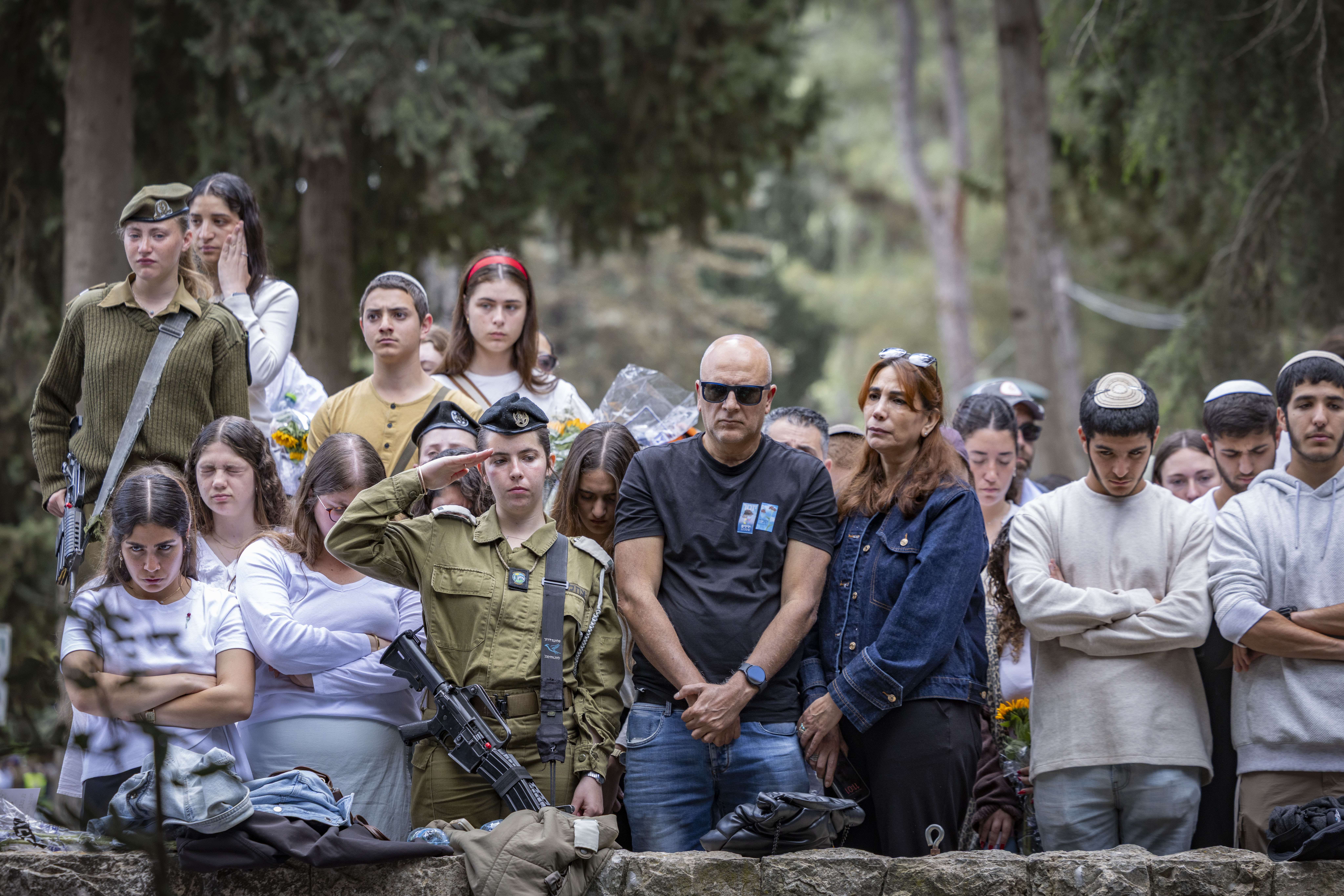
Israelis stand at attention today in Jerusalem’s Mt. Herzl military cemetery as a two-minute siren sounds across the country to mark Israel’s Memorial Day, Yom HaZikaron.
Birthdays
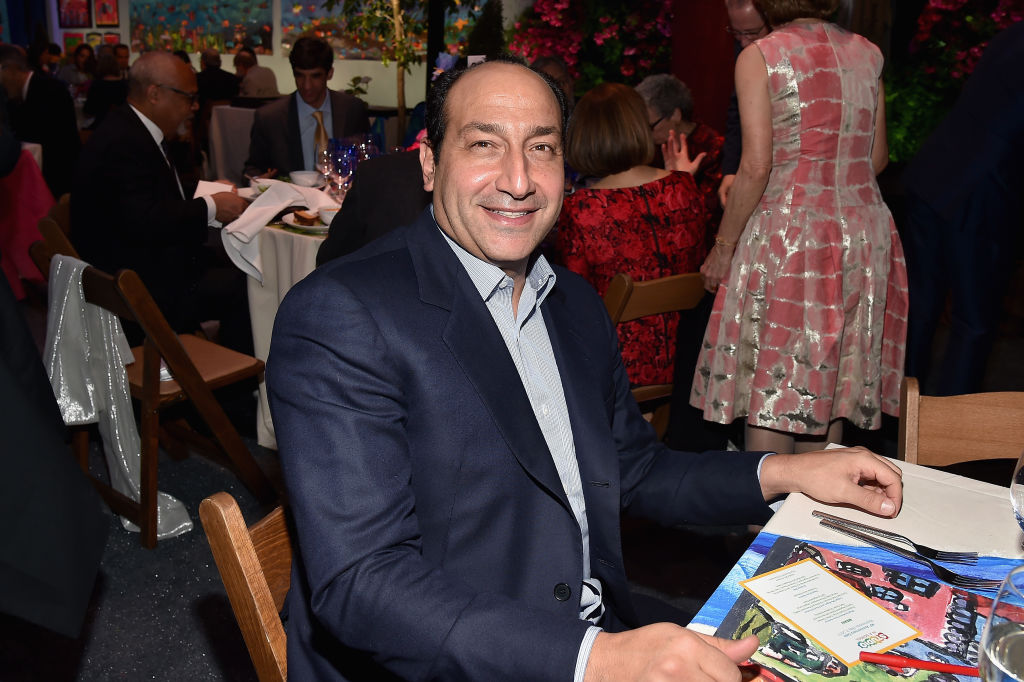
Art collector and dealer, who together with his father and brother are reputed to own $1 billion of art including over 1,000 pieces by Andy Warhol, Alberto “Tico” Mugrabi turns 56…
Comedian, screenwriter, film director and actress, she returned to Broadway in 2018 after a 60-year hiatus, Elaine May turns 94… Art collector and museum trustee in Chicago, he is a retired attorney, Don Kaul turns 91… President and executive director of the Ben and Esther Rosenbloom Foundation, Howard Rosenbloom turns 87… British chemist and emeritus professor at the University of Cambridge, Sir Alan Roy Fersht turns 83… Award-winning folklorist, author, poet and editor of dozens of books, Howard Schwartz turns 81… Former lieutenant governor of Connecticut, Nancy S. Wyman turns 80… Southern California-based interior designer, Marilyn Weiss… Emergency physician in Panorama City, Calif., Dr. Joseph Edward Beezy… Founding director of Microsoft’s long-running research program on quantum physics at UCSB, an early winner of a MacArthur genius fellowship (1984), Michael Hartley Freedman turns 75… Rabbi, psychologist, writer and editor, Susan Schnur turns 75… Professor emeritus at George Mason University Law School (now known as Antonin Scalia Law School), he lectures frequently at Federalist Society chapters across the country, Michael Ian Krauss turns 75… Australian barrister who is a minister for local government following 31 years as Mayor of Botany Bay, Ron Hoenig turns 73… Rabbi at Temple Ner Simcha in Westlake Village, Calif., Michael Barclay turns 63… Ukrainian-born industrialist, now also an Israeli citizen, he co-founded the Genesis Prize and the Genesis Philanthropy Group, Mikhail Fridman turns 62… Chicago-based lobbyist and attorney, Scott D. Yonover… International breaking news reporter at The New York Times, Ephrat Livni… Founder of I Was Supposed to Have a Baby (IWSTHAB), an online community geared toward Jewish women experiencing infertility, Aimee Friedman Baron… Pulitzer Prize-winning investigative reporter for The New York Times and best-selling author, Jodi Kantor turns 51… CEO of Unistream, Ifat Bechor… Head of customer success at SnapStream, Eric Weisbrod… Retired actress and voice actress, her career included the voice of Regina “Reggie” Rocket on Nickelodeon’s “Rocket Power,” Shayna Bracha Fox turns 42… Investor relations officer at Gryphon Investors, he is a past president of the Berkeley Hillel, Robert J. Kaufman… Once the top-ranked collegiate female tennis player in the U.S. and currently the head women’s tennis coach at the University of Oklahoma, Audra Marie Cohen turns 40… Salesforce marketing and cloud consultant at Jackson Family Wines, Joshua Gibbs… Outfielder for MLB’s Texas Rangers, he is a two-time World Series champion and a two-time All-Star, he played for Team Israel in the 2013 and 2023 World Baseball Classics, Joc Pederson turns 34… Writer, magazine editor and actress, she was the founder and editor-in-chief of the since closed online Rookie Magazine, aimed primarily at teenage girls, Tavi Gevinson turns 30…