Opinion
BOUND BY BLOOD
How blood drives strengthen the communities that host them




 Add EJP on Google
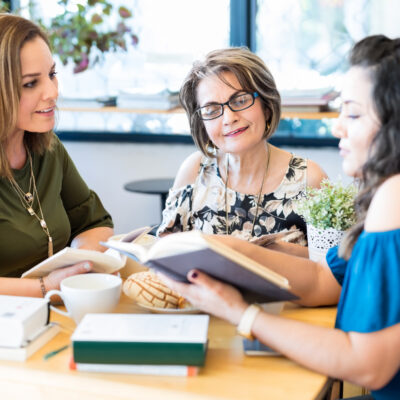
Blood drives have a unique feature that most volunteer efforts do not: After donating, every donor must sit down for at least 15 minutes to recover. This pause is medically required, but at the blood drives I coordinate for American Friends of Magen David Adom in partnership with Blood Centers of America, we treat that time as an opportunity to connect.
The canteen table becomes what feels like the most eclectic Shabbat table you’ve ever experienced; it’s magical, and emotional. Teens and seniors, religious and secular — all nosh on snacks while chatting about why they came. I’ve heard people say they are terrified of needles, but showed up anyway because a sibling or friend had leukemia and needed transfusions. Others come because they survived an accident or illness and want to give back. The conversations are so intense because after donating, people sit down feeling proud, a little vulnerable and open. They have just done something lifesaving, and that changes the tone of everything that follows.
Rachel Orloff
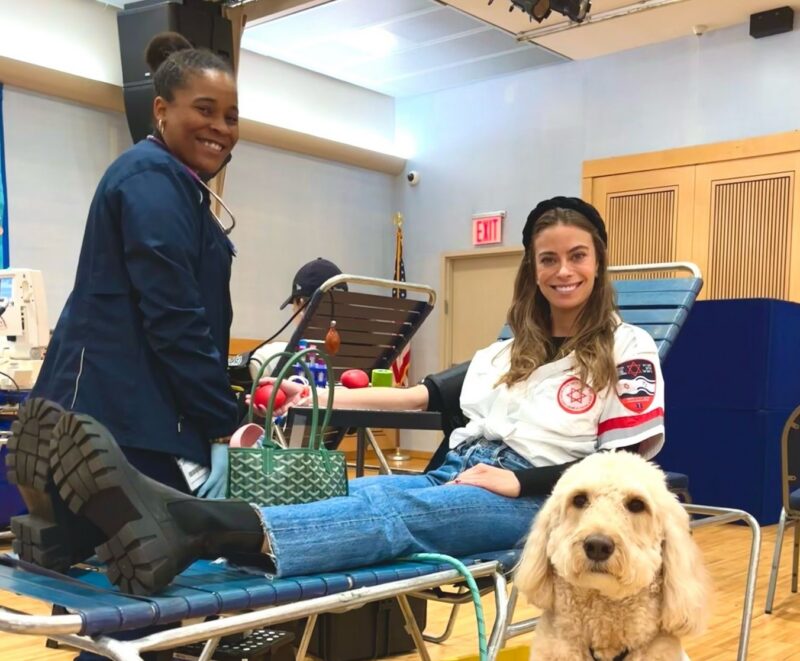
A woman draws blood from a donor at a Friends of Magen David Adom blood drive in an undated photo.
The United States continues to face a serious blood shortage. Our blood supply never fully recovered after the COVID-19 pandemic. According to the New York Blood Center, an affiliate of Blood Centers of America, the largest umbrella nonprofit of independent blood centers in the United States, only about 3% of Americans donate blood, even though many more are eligible. Every day, hospitals depend on donated blood for surgeries, trauma care, cancer treatment and chronic illness. When blood is not available, care is delayed or denied.
Blood builds bridges
Community blood drives matter because they meet this urgent medical need while also strengthening the communities that host them — something rare and needed.
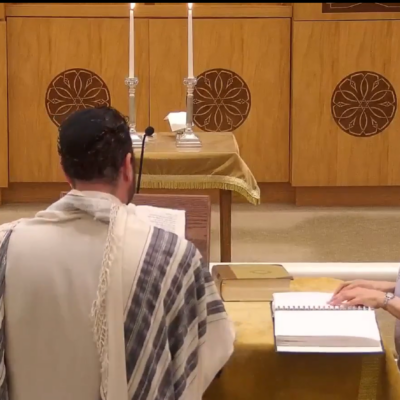
Community blood drives bring together people who might never otherwise cross paths. I have seen Reform, Conservative and Orthodox synagogues place their logos on a single blood drive flyer. I have watched non-Jews walk into a Modern Orthodox day school because a friend or colleague invited them to a blood drive there. I have worked with an African-American church in Milwaukee that hosted a drive after welcoming a rabbi to speak from its pulpit.
One of the most powerful examples took place in Texas, where a young Christian Zionist organizer helped bring Christians, Jews, Muslims, and Hindu supporters to a Texas Israel event that included one of our blood drives. People arrived with different identities, beliefs and reasons for coming, yet sat at the same canteen tables after donating blood and sharing stories — about Israel, family illness, gratitude for survival, or hope for the future.
At many of our drives, alumni of the Magen David Adom Overseas Volunteer Program sit at the canteen tables and share their experiences serving on ambulances in Israel with first responders of all faiths, ethnicities, races and languages, working together to save all lives in Israel. Blood donors with very different backgrounds find themselves bonding over a mutual love of Israel and its values, talking about freedom and loss and sharing their gratitude for being able to give back in such a meaningful way. At this moment, as Israel remains at war with Iran, these interactions are especially powerful.
While blood collected in the United States serves local needs, MDA and Blood Centers of America maintain a contingency agreement that allows blood to be sent to Israel in the event of an emergency so severe that Israel is unable to collect blood from its residents. In the middle of a war, it’s an insurance policy we’re relieved to have.
Anonymous giving at the highest level
Blood donation is anonymous by design. Donors rarely know whose life they save, and recipients almost never know who helped them. I once asked a surgeon if someone whose life was saved because of a blood transfusion could personally thank the people who had donated the blood.
“There’s absolutely no way to know who donated,” he said.
Jewish tradition has long taught the value of anonymous giving, or matan b’seter. This practice is considered the highest form of charity because it preserves the dignity of both the recipient and the giver.
Blood donation embodies that value completely. There is no ego or credit attached. The person whose life is saved may look nothing like the person who rolled up their sleeve. For example, children with sickle cell anemia — a painful disease that disproportionately affects African-American children — often depend on repeated transfusions and highly specific blood matches. While most matches come from people of similar backgrounds, in some cases matches can come from other donors with completely different backgrounds from them. They may never meet, never know each other’s names, yet they are connected in the most fundamental way.
At a time of rising antisemitism, deep division around Israel and a persistent U.S. blood shortage, community blood drives are a simple yet powerful way to model Jewish values in action while strengthening the communities that host them. Synagogues, schools, JCCs and other community organizations should seize this opportunity to lead. Giving blood is a shared responsibility and one of the most meaningful blessings we can offer one another right now. Hosting a blood drive is a transformative way to support the broader public while deepening connection at home.
Alison Gardy is the director of external and partner relations at American Friends of Magen David Adom.