Opinion
Building the next table: Shaping the culture of communal leadership




 Add EJP on Google
A baseball. A ring. A handmade menorah. A specially-designed shirt for cancer patients. A Holocaust survivor’s story.
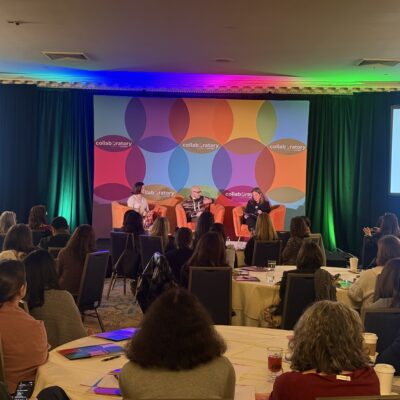
These were just some of the items participants brought with them to the kickoff of the Conference of Presidents of Major American Jewish Organizations’ new Ambassadors Young Leadership Program. Each participant was asked to bring a physical “artifact” that helps explain a bit about them, their story, their worldview — something that shaped them and how they think.
What followed was one of the most powerful moments of the gathering. One by one, participants shared deeply personal stories connected to family heirlooms, meaningful experiences, even their own inventions. In doing so, they transformed a group of relative strangers into a cohort bonded by trust, vulnerability and curiosity. In just a few hours, the room became something more than a convening: it became a community.
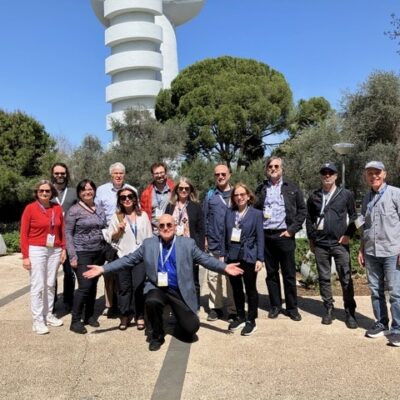
That moment set the tone for the Ambassadors Program, which we officially launched last week with a three-day convening in New York City.
This new initiative comes as a response to the increased polarization we see as a country and as a people. One of the greatest challenges plaguing the Jewish community is the inability to speak across differences of opinions and worldviews. The Conference of Presidents, which convenes leaders across the political and religious spectrum, is uniquely positioned to address this challenge. Imagine if the incoming presidents of our diverse member organizations had pre-existing relationships and friendships. The potential change in the tenor of conversation and how the organizations would relate to each other could have a monumental impact on the entire American Jewish community.
Designed as a 13-month leadership development initiative, the Ambassadors Program will guide rising lay leaders from Conference of Presidents member organizations as they grow into more impactful communal roles. Participants complete the program with enhanced leadership skills, a deeper understanding of the American Jewish ecosystem and a greater appreciation for the diversity of the community they serve. Participants will also connect with top lay and professional leaders across the community to better understand the many paths leadership can take.
The inaugural cohort has 17 participants, all between the ages of 30 and 40 and already serving in leadership roles within their nominating organizations. Each has committed to continued involvement in their organization for at least the next five years and to engaging pluralistically across differences of thought. Each Conference member organization was given the opportunity to nominate a participant, and they are: Rom Ben Eliyahu (Israel American Council); Zoe Bernbaum (Anti-Defamation League); Michelle Bernstein (American Jewish Joint Distribution Committee); Brian Cook (United Synagogue of Conservative Judaism); Lauren Gilbi (American Sephardi Federation); Erin Horwitz (Jewish Women International); Adam Jacobs (JCC Association of North America; Robyn Lamont (HIAS); Ivonne Mosquera Rodriguez (NA’AMAT USA); Tamar Remz (Hillel International); Sam Rubin (Union for Reform Judaism); Jordan Sachs (American Israel Public Affairs Committee); Lisa Schnaubelt (American Jewish Committee); Steven Senft (Alpha Epsilon Pi); Shoshana Simones (Hadassah, Women’s Zionist Organization of America); Stephanie Torkian (Iranian American Jewish Federation); and Jason Zenner (Jewish National Fund).
During our kickoff program we also spent time introducing the Ambassadors to the Conference — what we do, our history, and we relate to their organizational work. We grounded the work in Talmudic texts on leadership led by Rabbi Menachem Creditor, Scholar-in-Residence at UJA-Federation of New York, and we introduced demographic data showing the shifts within the American Jewish community. Participants engaged in small group discussions regarding “The Surge” and its impact on their organizations and peers.
Throughout the weekend, what stood out most were the ambassadors themselves. Though diverse in background and ideology, they bonded quickly and engaged fearlessly, even when conversations required discomfort or vulnerability. Several participants shared that it was the first time they had ever had meaningful dialogue with someone from an organization politically different from theirs. Many remarked on how quickly trust formed and how deeply connected they felt in just two days.
Indeed, a core focus of the kickoff was viewpoint diversity. Working with speaker and educator Simon Greer, participants explored how they engage those with fundamentally different perspectives and how communities balance integrity, pluralism and belonging. Simon Klarfeld furthered these ideas as he introduced The Constructive Dialogue Institute and the Institute’s virtual Perspectives Program for Jewish organizations, designed to foster constructive dialogue. These conversations will continue throughout the year, including through chevruta-style learning partnerships designed to deepen relationships and tackle difficult topics.
This fellowship is not only about developing future leaders. It will help the Conference to better understand the needs of this generation. In addition to leadership training, participants will take part in regular listening sessions with the Conference chair, ensuring that emerging leaders’ voices and insights inform communal priorities. At the conclusion of the program, participants may apply for microgrants to support collaborative projects between member organizations and will join an alumni network dedicated to sustained collaboration.
It’s not lost on me that as I finish writing this article, Ran Gvili, the final hostage, has been brought home. This week our dog tags and yellow ribbons were removed. A collective sigh of relief was felt among Jewish communities around the world and with it change. We are no longer counting the days, minutes, and seconds of captivity. It also means we are in a new reality — for Israel and for the diaspora. We cannot go back to where we were before Oct. 7, 2023, we must continue the unity within our community that has brought us all closer together and more collaborative in the 843 days since. In a way it’s fitting the Ambassadors program just launched, because this group of incredible young leaders has committed to continuing that unity and that collaboration.
As the American Jewish community navigates a new post–Oct. 7 reality, unity and collaboration are not luxuries — they are necessities. The Ambassadors Program launched at a moment when the stakes could not be higher, and its participants have committed to carrying forward a culture of shared purpose and respectful disagreement. By investing in these emerging leaders now, the Conference of Presidents is building a table that will shape Jewish communal leadership for years to come.
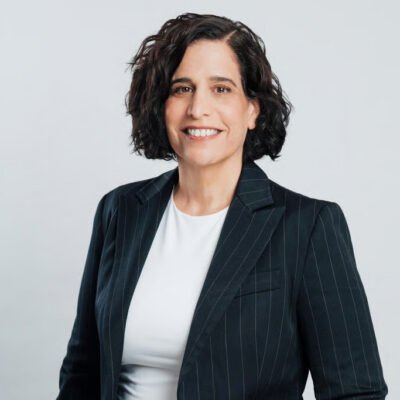
Stephanie Hausner is the chief operating officer of the Conference of Presidents of Major American Jewish Organizations.