Opinion
PATHWAYS TO HEALING
The power of asking expansive questions




 Add EJP on Google
I was an exuberant young rabbinical student, excited for the chance to teach second grade at Congregation Beth Elohim in Brooklyn, when I made the sort of mistake you only make once.
A longtime camp person but inexperienced with formal classroom management, I asked my charges a question with only two possible answers: “Do you want to go work on your Hebrew?” The classroom of equally exuberant 8-year-olds, who had already spent their whole day at school, all shouted “NO!” — the kind of no that trailed on until they fell onto the carpet in a pile of giggles. I learned that day that how we ask a question can yield answers quite limiting or boundlessly expansive.

Adobe Stock
Such moments make me recall others like them, like when a woman at shul sat down next to my husband and I one summer night and asked right away, “Do you have kids?” — with no way of knowing we were on year three of what would become a four-year fertility journey. Or when I asked a young adult, “What do you do for a living?” just as the economy had shifted and he had been laid off. Or the time I met a young woman for coffee and asked a question that made major assumptions about her Jewish identity; I don’t remember my precise question or her answer, but in my gut I knew I had gotten the moment very, very wrong.
Getting it wrong — whether I was asking or being asked — often caused discomfort, disconnection and sometimes grief. Those moments deeply informed my work today as a rabbi whose mission is to bring more healing and well-being to the world.
I’ve built a multifaceted rabbinic career, with meaningful work in congregational life alongside outreach to those who have unbundled their lives from mainstream Jewish institutions. I run a b’mitzvah program in a Reform synagogue where I serve fully on their clergy team; I write and teach on big life questions that push people to discuss what often feels undiscussable; I offer pastoral care in social media forums; and I run a Jewish learning initiative called Modern Jewish Couples. Launched with the generous support of Combined Jewish Philanthropies, the Covenant Foundation and the Natan Fund, MJC runs wedding education workshops, trains clergy and educators and cultivates cohorts for couples, expectant parents and Jews-by-choice. MJC’s vibe mixes Rashi with Rihanna, Sara Bareilles and Song of Songs, and teaches in a way that makes no assumptions about who knows what or who identifies how. We move beyond the binary “Are you Jewish? Yes or no?” to asking “How does Judaism show up in your life?” — a question relevant both to people raised Jewish and those who love them. While Instagram targets wedding couples and soon-to-be-parents with ads about all the gear needed for that stage in life, MJC focuses on the stuff of the soul: the joys and the sorrows inherent in life cycle moments and the daily act of being a holy human.
A core element of the MJC’s spiritual framework centers on expansive questions — who, what, when, where, why — offering a non-judgemental, expansive scaffold for relationship building. Through this sacred lens, when I return to each of those prior moments of asking the wrong question, here’s how I rephrase them today.
Instead of “Where do you live?” I ask, “Where is home for you?”
Instead of “Do you have kids?” I ask, “Who is in your family?”
Instead of asking the classic and often alienating Jewish continuity question of whether couples want kids, I ask them, “How do you envision the next five years of your life?”
Instead of “What do you do for a living?” I ask, “How do you spend your days?”
Instead of assuming if someone is Jewish or not, I avoid high context Jewish questions about camp, or synagogue affiliation, inquiring instead: “Share with me about your upbringing, your identities, your heritage?” or “How does Judaism show up in your life?”
When couples meet with me for the first time, I ask, “Why are you getting married?” They almost always say, “No one has ever asked us that before.”
These questions often yield a pause, sometimes a request for clarification, and I think some measure of relief. Asking expansive, open-ended questions is easeful, even disarming, for folks who assume since I’m a rabbi that I want to know if they keep kosher or hear about the last time they went to services. These reframed questions show genuine curiosity, reduce bias and assumptions, and minimize the weight of societal expectations. They are provocative but gentle, and they yield really interesting conversations.
I owe a lot to those wild 8-year-olds in Brooklyn, as well as to the many people who have been my gracious teachers — especially when I made mistakes in their presence.
In this time of great grief and sorrow, it feels impossible to talk to each other, much less to truly hear one another. And yet, as we prepare to sit around our Passover seder tables, essential questions await us: Who are we? Who do we want to become? With whom do we want to walk the path? And how can this year be different from all other years? May we bring expansive curiosity, deep compassion and the willingness to truly listen — no matter the answer. As a people for whom asking good questions is a hallmark of identity, perhaps how we ask can deepen trust and, I pray, bring a measure of healing to our fracturing world.
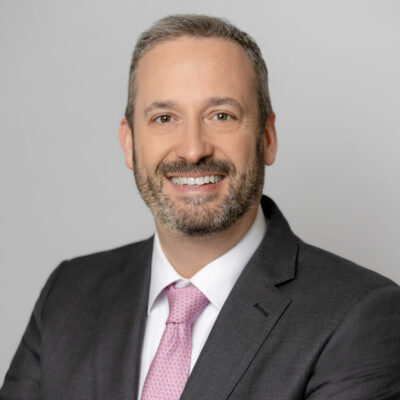
Rabbi Jen Gubitz is a rabbi and writer in Boston. She is the founder of Modern Jewish Couples and a rabbi at Temple Shalom of Newton in Newton, Mass.