Your Daily Phil: Israel opens first School of Prosthetics as war-related disabilities rise




 Add EJP on Google
Good Wednesday morning and Hanukkah sameach!
In today’s edition of Your Daily Phil, we examine the challenges facing the Australian Jewish community as it struggles to get the local government to address antisemitism. We report on Jewish Federations of North America’s recent acquisitions of BaMidbar and the Blue Dove Foundation, and on the launch of Israel’s first School of Prosthetics and Orthotics amid a rising number of war-related disabilities. We feature an opinion piece by Sandra Lilienthal and Rabbi Jeffrey K. Salkin about embracing the countercultural nature of Judaism, and one by Rabbi Jesse Paikin about changing up the community’s approach to preparation for the rabbinate. Also in this issue: Alex Ryvchin, Emma Lazarus and Elie Hassenfeld.
What We’re Watching
United Hatzalah is holding its annual Miami gala tonight.
Jewish members of Congress are also hosting the annual Capitol Hill Hanukkah party this evening.
Across town, the Israeli Embassy in Washington is hosting its annual Hanukkah reception tonight.
What You Should Know
A QUICK WORD WITH EJP’S JUDAH ARI GROSS
In the wake of Sunday’s terror attack at a community hannukiah-lighting event at Bondi Beach in Sydney, Australia, the local Jewish community finds itself in an increasingly untenable position. After two years of heightened antisemitism in Australia, including the firebombing of a synagogue with congregants inside and culminating in this week’s deadly attack, the country’s Jewish community has deep, justified grievances with its own government, which has been unable — or unwilling — to protect it over the past two years, or even to embrace it now after its worst-ever tragedy.
In what one local Jewish leader described to eJewishPhilanthropy as “insane” and “completely bizarre,” Australian Prime Minister Anthony Albanese has yet to meet with Jewish survivors of the Bondi Beach shooting — the deadliest terror attack in the country’s history — even as he has found time to meet with Ahmed al-Ahmed, the Muslim man who disarmed one of the terrorists before being shot multiple times. (Albanese told local media today that he has spoken with relatives of survivors, and he has met with Jewish communal leaders since the attack.)
Yet the criticism against the Australian government coming from Israel, which has its own issues with Canberra — particularly related to its recent recognition of a Palestinian state — puts the local Jewish community in the position of appearing to have closer loyalties to a foreign government than its own.
These tensions, between the Australian Jewish community’s desire for support from Israel and world Jewry and its need to address local antisemitism on its own, were on full display yesterday during a special discussion in the Knesset’s Committee for Immigration, Absorption and Diaspora Affairs. Three representatives from the Australian Jewish community addressed the session: Rabbi Yaakov Lieder, the uncle of Rabbi Eli Schlanger, who was murdered in the attack; Jillian Segal, the government’s special envoy to combat antisemitism; and Rabbi Benjamin Elton, who leads Sydney’s Great Synagogue.
“The federal government in Australia is not doing enough to root out antisemitism. Jews are afraid to live in Australia,” Lieder said, addressing the committee over Zoom in Hebrew. He also called for Israel to recognize those killed and injured in Sunday’s attack as “victims of terror,” which would provide them with Israeli state benefits. He was assured that this would be done soon, under a 2023 government decision that expanded Israel’s definition of “victims of terror” to include non-Israeli Jews killed in antisemitic attacks abroad.
Addressing the committee, Segal said that she was pushing for the immediate implementation of a plan that she had prepared to address antisemitism in Australia, which was presented to the government this summer. “That is the ‘ask’ now,” she said. “Although [the government] condemns antisemitism — of course, they condemn it — but they will absolutely implement the plan because it has to affect all parts of society. And that is what people are calling for, what the Jewish community is calling for, what I’m calling for, and we expect the government to respond in the affirmative. But we are still waiting.”
Elton reiterated the call for the Australian government to have a “swift and comprehensive response to [Segal’s] antisemitism reports, which has been lacking, and to take responsibility for the protection of Australian Jewish citizens.” Referring specifically to the Israeli government, Elton said that Australian Jewry needed “moral support” and “proper forms of diplomatic encouragement,” but warned against Israeli officials intervening directly. “I don’t think we want or need diagnoses from far off of exactly what the problem is and exactly what the solution is, because that is very rarely known by foreign governments. There is the expertise here in Australia, by Jillian Segal and other Jewish communal bodies in the [Australian] states and nationally, who have analyzed the problem and have begun to develop solutions to it,” he said.
MERGERS AND ACQUISITIONS
JFNA acquires mental health groups BaMidbar and Blue Dove Foundation as they shuttered
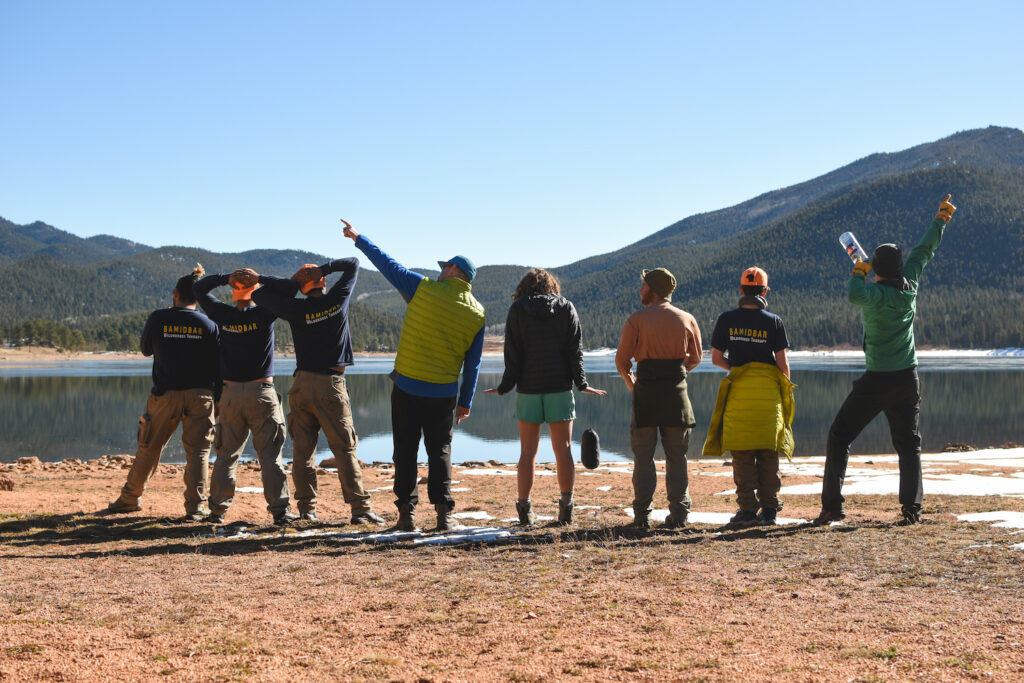
Jewish Federations of North America announced yesterday that it was acquiring both the teen mental health nonprofit BaMidbar, which launched in 2016, and The Blue Dove Foundation, which was founded in 2018 as a tiny volunteer-run mental health nonprofit in Atlanta. Both organizations will be integrated into the federation’s BeWell initiative, which helps communities support the mental health of teens and young adults ages 12-26, reports eJewishPhilanthropy’s Jay Deitcher. The acquisition comes weeks after BaMidbar, which announced it was shuttering in August, laid off its final employee.
More than a crisis: Both BaMidbar and Blue Dove were described as victims of their own success, raising awareness about the importance of mental health at a time when larger organizations were not focused on it, only to find themselves struggling to raise money for their activities once those larger groups entered the field. Indeed, a lot has changed since both organizations launched: the world suffered through the COVID-19 pandemic and witnessed the deadliest day for Jews since the Holocaust, and with these experiences came an increased awareness of the importance of mental health. BeWell was born in 2022 at a time when people were isolated due to the pandemic. “We were calling it a [mental health] crisis in ‘22,” Shira Hutt, executive vice president of the Jewish Federations of North America, told eJP. “I don’t know what the next level up is from crisis, but the needs are great.”



REHABILITATION NATION
Israel’s first school of prosthetics opens amid rising number of war-related disabilities
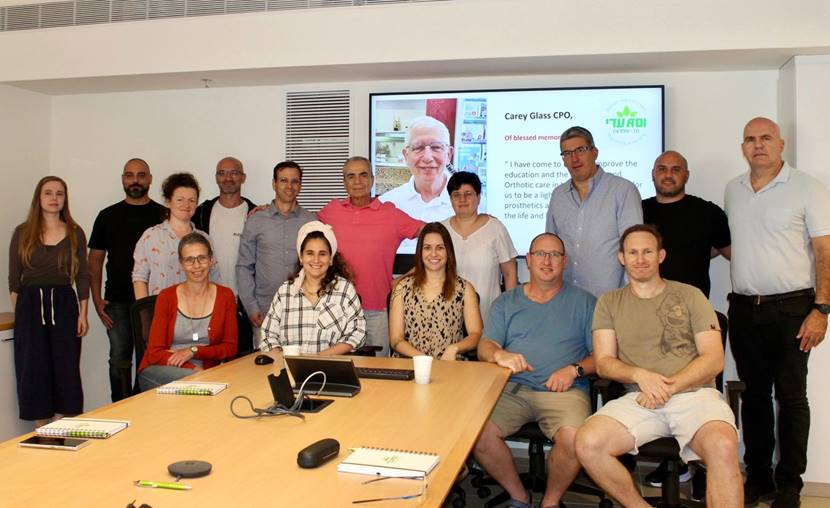
Over the past two years, the number of people in Israel requiring prostheses has jumped more than 10%, from 18,000 before the attacks to more than 20,000 today. In light of both the growing need and the scientific advancements, this month, the ADI Negev-Nahalat Eran Rehabilitation Village opened Israel’s first School of Prosthetics and Orthotics — part of a deliberate push to transform Israel into what some are calling “Rehabilitation Nation” in response to the increased needs for rehabilitation of soldiers and civilians, reports Rachel Gutman for eJewishPhilanthropy. “Despite the great need, Israel has never had any formal educational programming for certified prosthetists and orthotists,” Siev-Ner told eJewishPhilanthropy. “But this school changes all of that.”
‘Our core brand’: The ADI Negev program was developed in partnership with Ben-Gurion University and funded by Israel’s Health Ministry, Jewish Federations of North America and Jewish National Fund-USA. “The war created a huge, dramatic need that pushed the entire Israeli health-care and rehabilitation system to the frontier of knowledge around the world,” said Gidi Grinstein, the founder and president of Tikkun Olam Makers (TOM), which creates open-source plans for objects that assist people with disabilities. “There is a need for Israel and the Jewish people to make a contribution to humanity that is distinctly Jewish. Our insight: The core brand of the Jewish people is the way we take care of the poor, the vulnerable, the weak, the widow, the orphan,” he said.
COUNTERCULTURAL JUDAISM
After Bondi Beach, reclaiming difference in an age of sameness

“The Maccabees resisted cultural erasure of the ways of Torah in the face of Hellenism. Had they failed, Judaism might have faded in its cradle. This is the urgent task for Judaism today: to reclaim our countercultural vitality — not by rejecting the world but by engaging with it, with confidence in who we are,” write Sandra Lilienthal and Rabbi Jeffrey K. Salkin, co-founders and co-directors of Wisdom Without Walls, in an opinion piece for eJewishPhilanthropy.
Kedoshim tihiyu: “This capacity to be different is embedded in the word kadosh — to be holy means to be distinct, set apart… The greatest danger to Judaism today is not secularism, and it’s not even antisemitism. It is cultural absorption — the slow sandblasting of distinctiveness. American Judaism, in all its versions, must reclaim this countercultural stance if it hopes to flourish. The persistence and resurgence of antisemitism underscores the urgency of this task. Even as Jews gathered on Sunday to light candles celebrating resilience and continuity, lives were shattered by hatred and violence. Such moments force us to confront a difficult truth: Jewish difference has always carried risk, but relinquishing that difference has never brought safety.”
A RENEWED VIEW
Rabbinical training doesn’t have a pipeline problem — we have a preparation problem

“For two millennia, the rabbinic imagination has shaped the world far beyond the beit midrash. That is why the questions now confronting seminaries, funders and Jewish institutions surfaced by Atra’s recent empirical research on the U.S. rabbinate carry stakes far beyond institutional maintenance. They ask whether our preparatory systems can cultivate the depth and imaginative power the rabbinate has always carried,” writes Rabbi Jesse Paikin, director of Rabbanut North America at the Shalom Hartman Institute of North America, in an opinion piece for eJewishPhilanthropy.
Beyond training: “The study’s implications require us to articulate a contemporary theory of rabbinic formation, not merely adjust the mechanics of training. This change will not be accomplished by tinkering with recruitment, fieldwork or scholarships alone. It requires vision and a philosophical culture that treats the student as a moral and spiritual agent, not a bundle of competencies. Rabbinic preparation isn’t a checklist; it’s the slow, iterative work of learning to think in Torah, learning to speak with authority that isn’t arrogance, and learning to hold ethical complexity. We can keep focusing on the pipeline — counting heads, tracking shortages, predicting decline — or we can focus on formation with a renewed picture of the rabbinic role itself: capacious enough to reflect contemporary Jewish life, and rigorous enough to sustain the weight that Jewish communities still place on their leaders.”
Worthy Reads
Who We Are Now: In The New York Times, Alex Ryvchin, the co-chief executive of the Executive Council of Australian Jewry, mourns those killed in Sunday’s terror attack in Sydney, as well as the sense of communal security that no longer exists for Australian Jews. “Now we have suffered a loss that is impossible to measure or articulate. It is a loss felt nationally for a country that is forever changed. It is a loss felt communally for a way of life defined by pride and open observance that no longer exists. And it is a loss we feel individually for the friends and relatives who died in our arms from hideous wounds inflicted by high-powered shells used for hunting game. … My community will never recover from this, I am sure. My rabbi, my friend, Eli Schlanger lived by a mission of being proud of who he was as a Jew. The annual Hanukkah event he hosted on the beach was the ultimate evidence of our acceptance, the proof that we were safe in our acts of community pride. That is all gone now. And with it, a man who had shown us the way.” [NYTimes]
Worried in the Windy City: In the Chicago Tribune, Alderman Debra Silverstein of Chicago’s 50th Ward gives examples of disturbing testimony shared at a recent public hearing by Chicago residents targeted in antisemitic attacks, including a man who was shot while walking to his local synagogue on Shabbat. “Antisemitism threatens not only Jewish Chicagoans but also the integrity of our city itself. [Mayor Brandon] Johnson has the power to act — by creating a task force, mandating training, dedicating detectives and demanding schools to teach about modern antisemitism. The Jewish community is not asking for special treatment. We are asking for equal protection and a city that stands firmly and without hesitation against hate.” [ChicagoTribune]
Speak English: In The Chronicle of Philanthropy, Matt Watkins highlights the need for plain, easily understood language when discussing public safety. “On one end of the spectrum, politicized and blaming rhetoric depicts entire communities as threats. … On the other end, nonprofits and public safety advocates often rely on academic or technical language that may be accurate within their discipline but are indecipherable to most people. … These words turn harm into academic categories and make urgent experiences sound abstract and remote. When such detached and bureaucratic language seeps into public messaging, people quickly disengage, posing challenges for public safety programs that rely on resident buy-in. … When organizations choose words that carry weight and truth, they help rebuild the fragile bridge between fear and safety, between danger and dignity, between the world as it is and the world we need.” [ChronicleofPhilanthropy]
Songs of the Season: In ARC Magazine, Stuart Halpern spotlights lesser-known Jewish-themed works in the famed poet Emma Lazarus’ oeuvre — among them, Hanukkah poems. “Before she had Lady Liberty ‘lift my lamp beside the golden door’ as she welcomed those ‘huddled masses yearning to breathe free’ — to quote ‘The New Colossus,’ inscribed on a plaque at the Statue of Liberty — Emma Lazarus drew inspiration from earlier bearers of light. In 1882, she published two poems celebrating the Maccabean warriors whose courage is commemorated every year on Hanukkah… Lazarus discerned the need for Jewish political renewal and the protection of her coreligionists’ liberties. Inspired by George Eliot’s proto-Zionist Daniel Deronda (1876) and horrified by a wave of pogroms in Russia, she sensed the need for modern Maccabees to arise. The ‘Feast of Lights’ (1882) depicts the menorah as a metaphor for the splendor of the Maccabean spirit she sought to write into existence.” [ARC]
Word on the Street
Australian police charged Naveed Akram, one of the suspects in the Sunday terror attack in Sydney, with 15 counts of murder in addition to dozens of other offenses, including committing a terrorist act; Akram is in stable condition at a Sydney hospital after spending two days in a coma…
Additional stories of bravery have emerged from the Sydney terror attack, apart from that of Ahmed al-Ahmed’s heroism, including Boris and Sofia Gurman, who temporarily disarmed one of the gunmen before being shot dead, and Reuven Morrison, who threw bricks at the shooters before he too was killed…
Saying she “understands” the anger against her and the Australian government, Jacinta Allan, the premier of the Australian state of Victoria, pledged an additional $1.2 million (AUS 1.8 million) for security at Jewish communal events and summer camps…
Weeks after the Coast Guard commandant personally called lawmakers to reassure them that swastikas and nooses would remain banned hate symbols within the service, the Guard quietly broke its pledge and diminished the severity of such displays to “potentially divisive” instead — the very language that had prompted outrage from lawmakers and the Jewish community, Jewish Insider’s Marc Rod reports…
The NYPD is investigating an incident in which a group of Orthodox Jewish men were harassed, and one assaulted, on a subway car after video of the confrontation was posted to social media; police are also investigating as a hate crime a separate incident, also filmed, in which a visibly Jewish man was stabbed while walking down the street in Brooklyn’s Crown Heights neighborhood…
On his podcast, Ezra Klein interviews GiveWell CEO Elie Hassenfeld, starting off with a discussion about Hassenfeld’s time studying Talmud before and during college…
The Jewish Journal spotlights JIMENA’s latest report on Sephardi and Mizrachi experiences at Jewish day schools in Los Angeles and New York, finding that while institutions are striving to be more inclusive, additional efforts are still needed; read eJP’s coverage of the study here…
Warner Bros. Discovery is expected to reject Skydance Paramount’s hostile takeover bid due to concerns over financing; Jared Kushner’s Affinity Partners, which had provided some backing to Paramount in its effort, withdrew its support for Paramount’s bid…
The widow of a security officer who was killed in a mass shooting at the Park Avenue building housing the headquarters of the NFL is suing the league, the real estate firm that owns the building and the building’s security company over their failures to prevent the attack, in which philanthropist Wesley LePatner and two others were also killed…
Actress Sydney Sweeney wore a gown by Israeli designer Galia Lahav to the premiere of her new film, “The Housemaid”…
Norman Podhoretz, the longtime editor of Commentary magazine and influential conservative thought leader, died yesterday at 95…
Herbert Halperin, a Washington-area businessman and philanthropist who supported the Israeli Tennis and Education Centers Foundation, died last Wednesday at 96…
Pic of the Day
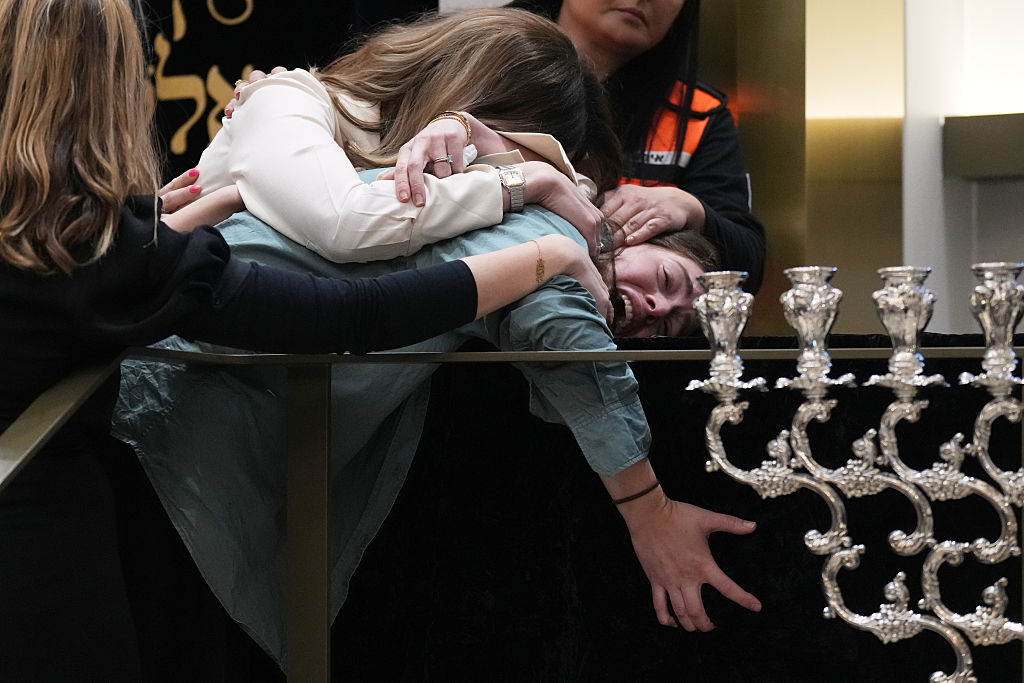
Family members grieve at the coffin of Rabbi Eli Schlanger, one of the victims in the Bondi Beach mass shooting, during his funeral today at Chabad of Bondi in Sydney, Australia. The British-born rabbi led the Chabad for nearly 20 years.
“When those animals that look like humans try and destroy us, the hope is that we will become dormant, we’ll go down and be afraid,” Schlanger’s father-in-law, Rabbi Yehoram Ulman, said in a eulogy. “That’s not the answer,” he continued. “We can never, ever allow them not only to succeed, but every time they try something, we become greater and stronger.”
Birthdays
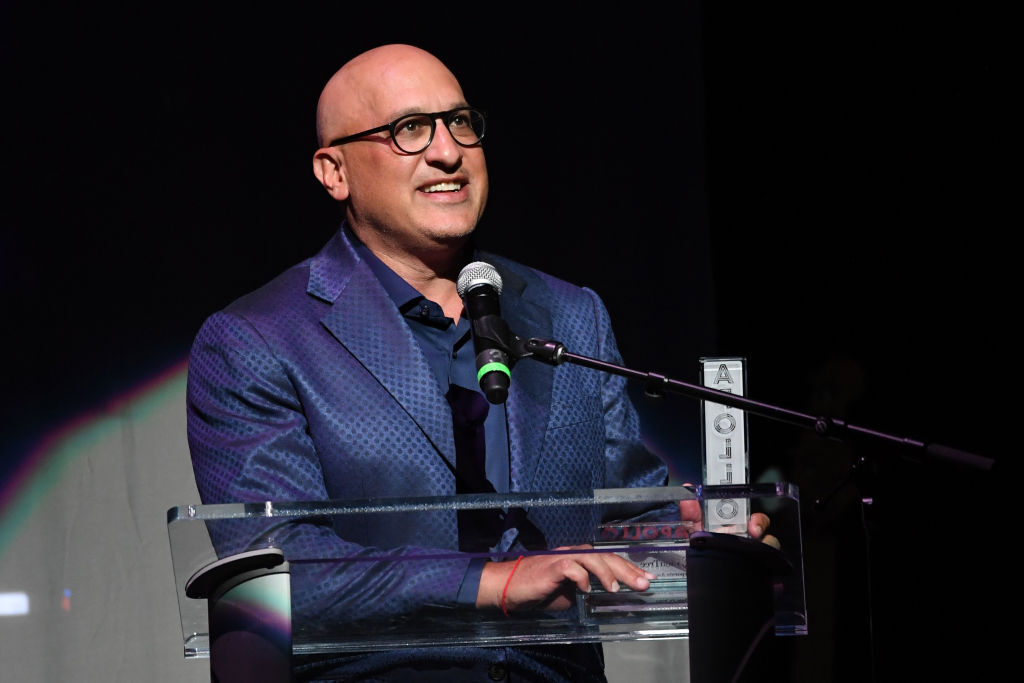
Founder and CEO of LionTree LLC, Aryeh B. Bourkoff turns 53…
Retired attorney and vice chair of the American Jewish International Relations Institute, Stuart Sloame turns 86… Former CEO of multiple companies, including the San Francisco 49ers and FAO Schwarz, Peter L. Harris turns 82… Vice president of strategic planning and marketing at Queens-based NewInteractions, Paulette Mandelbaum… Professor of Jewish history, culture and society at Columbia University, Elisheva Carlebach Jofen turns 71… Retired chair of the physician assistant studies program at Rutgers, Dr. Jill A. Reichman turns 70… Former Israeli ambassador to the U.S. and senior foreign policy advisor to prime ministers Sharon, Barak and Netanyahu, Danny Ayalon turns 70… Longtime chairman and CEO of HBO, he now heads Eden Productions, Richard Plepler turns 67… Israeli film director, screenwriter, animator and film-score composer, Ari Folman turns 63… Former president of Freedom House, now the director at Voice of America, Michael J. Abramowitz turns 62… Chief of the General Staff of the IDF until this past March, Herzl “Herzi” Halevi turns 58… Pastry chef, television personality and cookbook author, Jeffrey Adam “Duff” Goldman turns 51… Israeli former soccer goalkeeper, then on the coaching staff for the national team, Nir Davidovich turns 49… CEO of the New Legacy Group of Companies, he is also founder and chair emeritus of Project Sunshine, Joseph Weilgus… Co-director of New Public, Eli Pariser turns 45… Grammy Award-winning songwriter and musician, Benjamin Goldwasser turns 43… Senior writer at National Review and author of Unjust: Social Justice and the Unmaking of America, Noah C. Rothman… Director of foundation partnerships at the UJA-Federation of New York, Julia Sobel… National correspondent for Vanity Fair and author of the 2018 book Born Trump: Inside America’s First Family, Emily Jane Fox… State general manager for Maryland at Entyre Care, Daniel Ensign… Actor, singer-songwriter and musician, he starred in the Nickelodeon television series “The Naked Brothers Band,” Nat Wolff turns 31…