Friday, May 25, 2012

Moishe House Rocks: Looking Back and Moving Forward

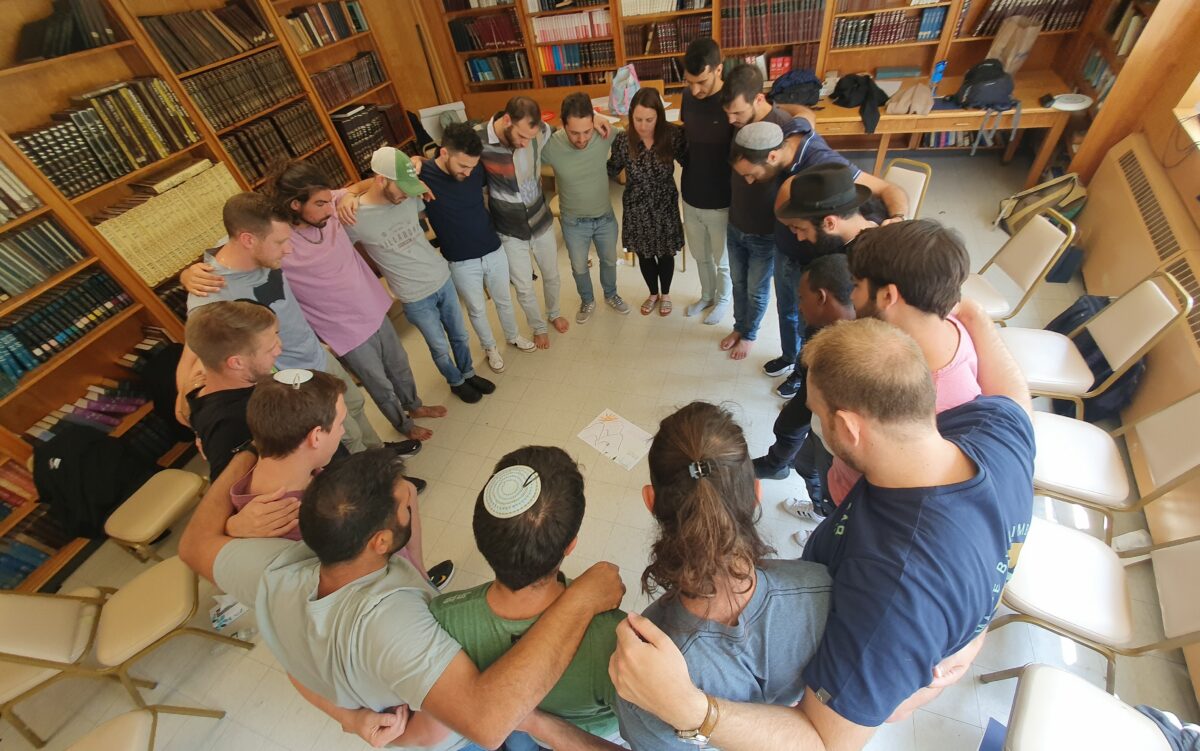
[This is the third in a series updating the award recipient projects of the Jewish New Media Innovation Fund.] by David Cygielman When Moishe House and G-DCAST first started brainstorming about a possible collaboration more than a year ago, there was a lot of excitement but not a totally clear direction on what type of project would emerge. We both knew that we wanted to do something that would reach the larger, global community and provide easy and accessible “how to” steps related to Jewish ritual, but we were not sure exactly what it would look like. Sarah Lefton, G-DCAST’s Executive Director and Producer, and members of our Moishe House team had some exciting and extensive brainstorming sessions where we hashed out all the possibilities that could come from this collaboration. … Continue Reading

U.S. Holocaust Museum Wins Storytelling Award

During last week's NTEN Conference - the preeminent conference for nonprofit professionals - the United States Holocaust Museum won Best Video Storytelling with “Yes, That’s My Father“, a stirring narrative about history, memory and personal closure. "Separated from his father just days before liberation at Mauthausen, Sol Finkelstein did not know his father's fate. He wrestled with guilt, worrying that he might have had a chance to save him. Contacted by Sol's son for help, staff at the Holocaust Museum discovered the date and place of Sol's father's death. They also discovered that, unlike most Holocaust victims, Sol's father had received a proper burial." … Continue Reading

Lessons to Be Learned: Kony 2012

Kony 2012 is a film created by Invisible Children, Inc. The film's purpose is to promote the charity's 'Stop Kony' movement to make indicted Ugandan war criminal Joseph Kony internationally known in order to arrest him in 2012. The video has spread virally - 80 million on YouTube alone - created controversy, and perhaps ignited passions not seen in kids and young adults in generations. Here is some general background from Wikipedia on the video, and two articles worth noting: from today's The New York Times: Backlash Aside, Charities See Lessons in a Web Video It has galvanized young Americans, inspired a flood of donations and stirred a backlash from critics. But for some in the nonprofit world, the reaction to the unprecedented success of an advocacy video about the murderous African … Continue Reading

Addressing the Donor Digital Divide: The Wired Wealthy vs The Dinosaur Donors

by Autumn Walden With the rise of philanthro-technocrats like Bill Gates, Pierre Omidyar, and Jeff Skoll, it’s easy for many of us in the philanthropic and nonprofit sector to get caught up in the digital wave of web 2.0 technologies. The explosion of web 2.0 tools such as blogs, videos, mobile messaging, and social networks has forced many nonprofits and foundations to improve the way they appear to and interact with supporters online. However, we can’t assume that all donors fall into the category of the “wired wealthy” (Convio, Sea Change Strategies, Edge Research, 2008), who donate an average of $10,896 online each year, spend an average of 18 hours per week on the web, and pay bills/do banking online. Let’s not forget about those practicing what Renata Rafferty refers to as … Continue Reading

If You Film It, Will They Come?

by Ephraim Gopin Background: This past Sunday, Bank Leumi, Israel's second largest bank, cancelled their 2 million Shekel YouTube/Facebook contest for nonprofits in Israel - in mid-contest. The basic rules were the same as last year: NPOs were encouraged to sign up and submit a promotional video. Over 15 days, people could "Like" their favorite video/s on the Bank Leumi YouTube channel. At the end of the contest, the top vote-getters would receive a monetary prize from Bank Leumi. The entire premise of the contest was challenged already last year by many and the debacle of cancelling the contest in the middle this year may spell the end of this type of contest here. I'd like to look at this contest from the view of nonprofits; specifically, what were they thinking by entering the … Continue Reading

How Storytelling and Video Can Strengthen Your Organization

by Abby Mintz Think back to a story you recently heard that really made you laugh. Now think of one of the most inspiring stories that you’ve been told. What makes these stories meaningful and memorable? The content, absolutely. But it is more likely how they are told that makes you think of them time and time again. Day schools are full of funny and moving stories. Often they remain untold. And those stories that are told seem to lose those inspiring and interesting tidbits that keep our attention. Too often they tell us about the school and what the school did, when what we really want to hear about is the child or the family or the funny or moving situation. At See3 Communications and the Avi Chai Foundation we believe that by becoming better storytellers day schools can better meet … Continue Reading

Moishe House Rocks Demystifies Jewish Ritual in Cartoon Videos

[This is the first in a series of follow-up posts describing the projects of the 2011-2012 Jewish New Media Innovation Fund Award Recipients.] by Abigail Pickus When David Cygielman co-founded Moishe House, he was responding to a very real and pressing need: the glaring absence of community young Jews feel once they graduate from college. So in 2006, he launched the first Moishe House - a communal place for young post-college Jews to live and create community. There are now 38 Moishe Houses in 14 countries, including in Beijing, Warsaw and Capetown - with new houses set to open in the former Soviet Union, New York, Los Angeles and San Francisco. “I see Moishe House more as a vehicle than an organization,” said Cygielman from its Oakland, California, headquarters. “It’s a way to … Continue Reading

Ages-Old Jewish Thought Goes Post-Modern

by H. Glenn Rosenkrantz It’s a bit of a no-man’s land for a very 21st century medium, and the Jewish educational and theological communities are noticing. The first two entries in a series of animated shorts by video artist Hanan Harchol examining Jewish thought and teachings are now ricocheting through social networking sites, and making the rounds virally through old-fashioned email. Here is Repair, the first segment that delves into teshuvah, the Jewish imperative and framework for fixing one’s relationship with others and oneself. Next is Landlord, a short presenting the Jewish perspective on giving and receiving forgiveness. It’s no accident that these first two installments, part of a larger series, are debuting now. As Jews worldwide mark the High Holidays, these themes … Continue Reading

The People of the Video Camera

Tami Warshawsky recognized the power of video while she was in high school. When she graduated from college, her first job was producing promotional and training videos for a chemical corporation. Today, as Director of Marketing and Communications at Solomon Schechter Day School of Metropolitan Chicago, a Pre-K - 8th grade Jewish day school, Warshawsky is recognizing once again the unique opportunities that video offers to bring the school’s mission to life. She is regularly posting videos to her school’s YouTube channel - videos that she produces herself using a flip video camera and software that is available on her Mac. “There are so many extraordinary opportunities that Schechter offers children and families, from the strong dual General and Judaic Studies curriculum to our visual … Continue Reading

Bibi on Israel’s Summer of Protest

Bibi's got a new dance and it's called the shake! A video by Noy Alooshe: … Continue Reading