POLLS OPEN
World Zionist Congress opens new vote on power-sharing agreement after previous one fell apart over nomination of PM’s divisive son to top role
Delegates have 48 hours to vote on the new deal, under which Rabbi Doron Perez would be named WZO chair for a half-term, followed by Likud's Yaakov Hagoel
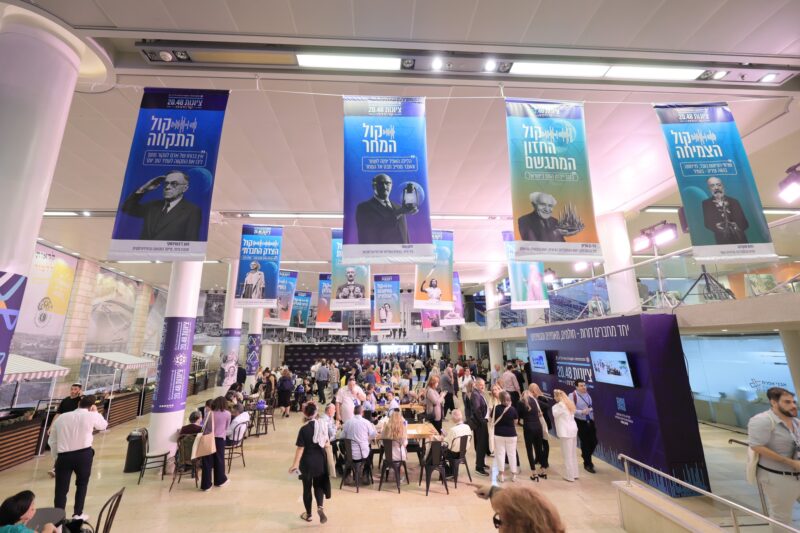
COURTESY/WZO
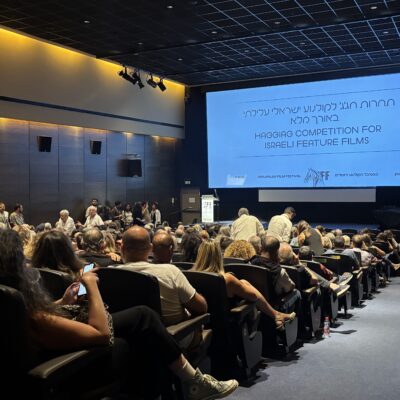
Delegates walk around the Jerusalem International Convention Center during the 39th World Zionist Congress on Oct. 28, 2025.




 Add EJP on Google
The World Zionist Congress opened voting on Sunday on a power-sharing agreement between the center-left and center-right blocs that would potentially see the center-left bloc forfeit a top position in the World Zionist Organization in order to block Prime Minister Benjamin Netnayhu’s divisive son, Yair, from receiving a senior role within the organization.
Under the new arrangement, Rabbi Doron Perez, the chair of the religious Zionist World Mizrachi movement and the father of Capt. Daniel Perez, who was killed in the Oct. 7 attacks and whose remains were held captive by Hamas until last month, would be named chair of the WZO for the first half of the five-year term. The role would then be given to current WZO Chair Yaakov Hagoel, of World Likud.
The original deal was tentatively accepted on Wednesday, until the Likud team negotiating the agreement, led by Culture Minister Miki Zohar, announced that the younger Netanyahu would be named the head of a WZO department, a senior position with benefits similar to that of a government minister. For the center-left bloc, this was a nonstarter, and the agreement was put on hold. The congress passed a resolution to halt voting and extend itself by two weeks to leave more time for a new power-sharing arrangement.
The vote on the new power-sharing arrangement opened on Sunday at 2 a.m. ET and runs for 48 hours, during which time the more than 740 delegates will be able to vote on it virtually.
A WZO official, who is part of the center-left negotiating team, told eJewishPhilanthropy on Sunday that the new agreement would effectively block Yair Netanyahu from receiving a senior position at WZO.
“This vote is essentially on one thing: Yair Netanyahu,” the official said, speaking on condition of anonymity.
Yair Netanyahu is considered a highly divisive figure in Israeli society, frequently attacking his father’s political opponents, often in vulgar terms. He has also allied with far-right figures around the world. In the wake of the Oct. 7 attacks, the prime minister’s son, who primarily lives in Miami, faced further criticism as he remained in the United States, even as other Israelis rushed back to the country to serve in the military or otherwise contribute to the war effort.
Though Perez would be named WZO chair under the agreement, the World Mizrachi leader came out against it on Sunday morning as the proposal was released, calling for the vote to be delayed.
In a statement to the congress, Perez said that the “one-sided” agreement would threaten to drive a wedge between the Israeli government and the World Zionist Organization and the other National Institutions. “Such a situation raises serious concerns about the future of the institutions, which I am deeply concerned about,” Perez said.
The WZO official said that the Prime Minister’s Office has been pushing Perez and Mizrachi to delay the vote.
The new agreement puts to a vote the appointments of Perez and Hagoel, as well as the appointment of Yizhar Hess — head of the Conservative movement’s Mercaz Olami party and the main negotiator of the center-left bloc — as vice chair of the WZO. In addition, it nominates 33 representatives to the so-called Zionist Executive, the main decision-making body of the Zionist movement.
The agreement leaves open two positions on the Zionist Executive for World Likud. The WZO official said that the understanding is that within World Likud, there is not enough support for Yair Netanyahu to be selected and that even if there were, Likud’s nominees would still need to be approved by a congressional vote, which the center-left would block if Netanyahu were one of them.
“If people want to close the door on Yair Netanyahu, they should vote for this agreement,” the WZO official said.
Under the original deal, Perez would have been named WZO chair for the first half of the term, followed by a representative of the center-left Yesh Atid party. Similarly, the leadership of the Keren Kayemeth LeIsrael-Jewish National Fund, which controls more than 10% of the land of Israel, would have been split between the two blocs, with a Yesh Atid representative leading the organization for the first half, followed by a representative from the Likud.
This arrangement for KKL is still tentatively part of the new agreement, though it may still change and will not be voted on, the WZO official said.
If it goes through as is, Yesh Atid would have effectively given up its rotation at the helm of the World Zionist Organization in order to block Yair Netanyahu’s appointment.
Unlike most political bodies, the World Zionist Congress is not designed as a “winner-take-all” organization, with a ruling coalition and an opposition. Instead, the congress allocates positions within the so-called National Institutions — WZO, KKL-JNF, the Jewish Agency for Israel and the Keren Hayesod fundraising organization — largely based on the shares of seats that different factions have earned in the elections held every five years. In general, the leadership of the organizations goes to the larger faction, with lower-ranking positions going to the smaller one. Such was the case in 2020, when the Likud gained control of both the WZO and KKL-JNF.
The 39th World Zionist Congress opened last Tuesday. The main voting sessions for the congress were initially scheduled for Thursday, but they were moved up to Wednesday due to a large Haredi anti-enlistment protest that has also been scheduled for Thursday in Jerusalem, which would have made it difficult for delegates to arrive or leave Jerusalem’s International Convention Center, where the congress was held.
The initial agreement had represented a victory for the center-left camp, which was able to negotiate better terms, despite being slightly smaller than the center-right, due to a schism within the Likud, which leads the center-right coalition. This was made possible, in part, because of support from the non-elected Zionist institutions with voting rights who pushed back against an attempt by right-wing parties to take full control of the National Institutions.
The schism within the Likud centered around competition between two main camps within the party, one represented by Hagoel and one by Zohar, a close ally of the prime minister. Zohar appeared to have won out, though the dissolution of the initial agreement reopened the power struggle.
Related News

MAJOR GIFTS
Center for Jewish History celebrates 25 years with a $25M matching grant
CLOSING WORDS
In AZM address, Cosgrove links communal ‘orthodoxy’ on Israel to rising anti-Zionism among young Jews
PRESIDENTIAL REBUKE
Israel’s Herzog: Mamdani ‘makes no effort’ to hide disdain for Israel, Jews must fight back
EXIT INTERVIEW
Elizabeth Sokolsky, longtime EVP of Birthright Israel, to retire next year

MAGICAL EXPERIENCE
Shefa launches psychedelics retreat for Jewish professionals suffering burnout