Opinion
FROM TK LOSS TO TKO
We need to invest in Jewish ECE like Jewish life depends on It




 Add EJP on Google
In Short
Universal transitional kindergarten and thriving Jewish early childhood education programs do not have to be locked in a zero-sum game, but that will require intentional philanthropy, cross-sector collaboration and a willingness to invest upstream.
When a Jewish preschool closes, it can change the trajectory of engagement for Jewish families and weaken a Jewish community. Families lose a vital entry point into Jewish life, as these preschool years, for many of them, are the only formative stage to begin their involvement in the Jewish community. But following a closure, instead of entering Jewish communal life, celebrating Jewish holidays and building lifelong Jewish friendships, families end up choosing a more proximate non-Jewish preschool. The implications are far reaching. These families are less likely to join synagogues, send kids to Jewish camps and enroll in Jewish day schools. Jewish early childhood education is not peripheral to continuity, it is foundational. It’s time that the Jewish community’s investments in Jewish early childhood education (ECE) reflect this reality.
In an increasing number of states around the country, we’re seeing what happens when this infrastructure of Jewish life is destabilized. The expansion of no-cost universal transitional kindergarten (TK) — a well-intentioned public investment designed to increase access, equity and affordability for families — is gaining momentum nationally and is reshaping the early childhood landscape. For many families, particularly those facing financial pressure, choosing free public TK over tuition-based private preschool is entirely rational. But as four-year-olds leave Jewish preschools in growing numbers, the consequences are both broad and deep.

Courtesy/EarlyJ
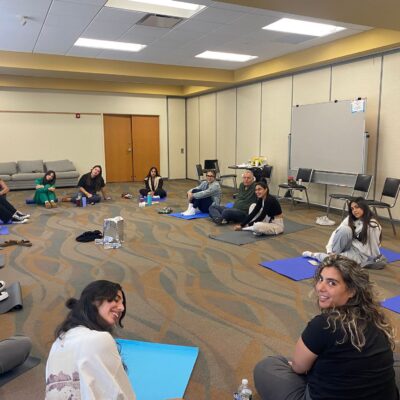
Students at a Bay Area preschool supported by EarlyJ.
When a classroom for that age cohort is forced to close, the entire preschool budget quickly becomes unsustainable due to the significant loss in enrollment; families with children from birth to age four are all affected when the financial pyramid that sustains ECE is destabilized. Budgets rapidly fall out of alignment, triggering a cascading crisis: staff layoffs, program contractions and, in some cases, permanent preschool closures. When a Jewish early childhood program closes, a central gateway to Jewish life disappears with it. Families lose their first point of connection, relationships dissolve and the everyday rituals, values and sense of belonging that anchor Jewish communal life are weakened before they ever have a chance to take root.
For Jewish early childhood programs — and Jewish day schools that depend on that pipeline — universal TK presents not just competition, but an existential challenge.
To be clear, this is not an argument against universal TK: expanded access to early learning is a public good, and for some children and families TK can be a strong fit. But philanthropy must grapple with the unintended consequences of this policy shift, particularly for mission-driven, community-based institutions that were never designed to compete with “free.”
Of course, Jewish preschools have a strong value proposition, offering a fundamentally different early childhood experience. Smaller class sizes, lower teacher-to-child ratios, deep expertise in early childhood development and full-day, year-round schedules aligned with working families’ needs are core features of many of these programs. Just as importantly, Jewish preschools integrate Jewish values, rituals, language and communal belonging into daily life. For many families, this is where Jewish identity first becomes lived and meaningful, woven into the rhythms of childhood.
With universal TK here to stay, the question for Jewish philanthropy is not whether this policy will change, but whether our investment strategies will adapt quickly enough to protect essential communal infrastructure. There are viable paths forward if funders and day school leaders are willing to act urgently, collaboratively and creatively:
- Jewish day schools and philanthropists can make targeted TK-year scholarships at Jewish preschools. In collaboration with Jewish ECE, day schools can create a pipeline where scholarships begin at TK and continue into Jewish day school. This support will end up increasing day school enrollment and strengthening the entire community. These subsidies, supported by other philanthropists as well, can help narrow the cost gap between free public TK and tuition-based Jewish programs, preserving family choice while sustaining enrollment at a critical age.
- Expand and support “flip TK” models. In this approach, children attend public TK during the school day and enroll in Jewish preschools for afternoon and extended care. Rather than competing with TK, Jewish preschools become partners in meeting families’ real needs. Many public schools cannot meet demand for extended care and families already pay for these hours. When Jewish preschools are accessible and well-supported in this role, families remain connected to Jewish environments, relationships and routines. We are piloting this model in Northern California on the premise that collaboration instead of duplication can strengthen the overall ecosystem.
- Form partnerships and advocate to increase access. In some states, mixed-delivery models allow private preschools to apply for public early education funding while maintaining their unique mission and culture. Jewish communal leaders and funders should explore whether similar pathways can be expanded locally, advocate for equitable access to extended care funding and push for employer-supported childcare benefits that include Jewish early childhood programs.
- Invest intentionally to make Jewish preschools even stronger. Even at this early stage of life, parents want excellent education for their children. EarlyJ grants support preschools in offering Hebrew language classes, strengthening Hebrew instruction overall and helping bridge the gap between Jewish day schools and Jewish ECE by integrating STEM into early childhood education. Other funders should step up with targeted investments that make their local preschools more attractive to parents.
- Invest broadly in Jewish ECE. Quite simply, we all need to rise to this challenge and help open more preschools, expand access to more families and offer infant and toddler programs so families can enter early rather than going somewhere else.
None of these solutions will succeed in isolation. They require coordination among foundations, federations, synagogues, Jewish day schools, local leaders and the Jewish preschools. They also require a shift in how Jewish philanthropy categorizes early childhood education: not as a preparatory stage or optional service, but as essential communal infrastructure worthy of sustained, strategic investment.
Access and affordability should not come at the cost of Jewish continuity or quality care. Universal TK and thriving Jewish communities are not mutually exclusive, but aligning them will not happen by default. It will take intentional philanthropy, cross-sector collaboration and a willingness to invest upstream.
The cost of inaction is clear. When Jewish early childhood programs disappear, the communities they anchor are weakened. The opportunity before us is equally clear: With thoughtful investment and leadership, we can ensure that Jewish early childhood education remains a strong, vibrant gateway into Jewish life, even in a changing public education landscape.
Jewish early childhood education is an enterprise worth sustaining. The time to act is now.
Sharona Israeli-Roth is the founding president and executive director of EarlyJ.