Opinion
ROAD TO RECOVERY
Trauma among youth: The quiet emergency in Israel, and the role of Diaspora giving




 Add EJP on Google
I came to Israel this summer expecting a 10-day work trip with ELEM, the Association for At-Risk Youth, visiting programs that serve at-risk youth across the country. I did not expect those 10 days to stretch into 20, nor for them to be punctuated by missile sirens and the looming threat of Iranian strikes. I never imagined I would be racing to the safe room several times a day, often startled awake in the middle of the night by the blaring Red Alert siren, each time consumed by fear of where the next missile might strike.
I was deeply grateful when my dear friend, the CEO of ELEM in Israel, and her family opened their home to me, offering comfort and warmth in those frightening days. Yet even there, I saw the fear in their children’s eyes as they experienced something no child should ever endure; and it showed me how essential community is, because no one should have to face such moments alone.
American Friends of ELEM
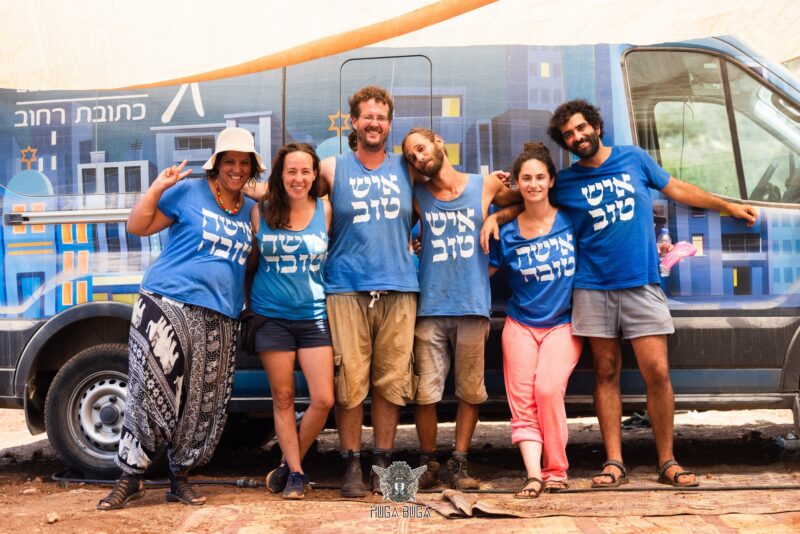
ELEM staff and volunteers step into Israel’s trance party scene to identify youth in distress.
This is Israel’s quiet emergency.
Even before Oct. 7, 2023, thousands of young Israelis — Jewish, Muslim, Christian, Druze and Baha’i, immigrants, LGBTQ+ and more — were already navigating trauma, neglect and instability. The Oct. 7 terror attacks and the war that followed pushed many of them to the breaking point. These youth have lost homes, family members, friends and any sense of security. For too many, the trauma is ongoing, and the path to healing feels impossibly out of reach.
Homelessness, emotional and sexual abuse, neglect, domestic violence, substance use, school dropout, prostitution and trafficking, mental health crises, family rejection, immigration stress, social isolation — there are young people in our beloved Israel struggling with these issues and much more. Many at-risk youth face multiple overlapping risk factors and the war has only worsened their situations, heightening the need to provide them with immediate assistance.
American Friends of ELEM stands alongside Israel’s most vulnerable youth, helping them feel seen, heard and safe. As the American partner of Israel’s leading nonprofit for at-risk youth, we support more than 13,000 young people each year across 40 cities.
Since Oct. 7, 2023, providing mental health services and safe shelters has become essential to Israel’s future. Recent studies paint a sobering picture: Research published in April by the Israel Journal of Health and Policy indicates that nearly 30% of Israeli young adults are showing signs of post-traumatic stress, and more than 40% are suffering from anxiety or depression. As of 2024, 83% of children in Israel were experiencing emotional distress in the aftermath of the Oct. 7 attacks, according to a study by the Israeli Pediatric Association. According to the chairman of ELEM, former Minister of Education Rabbi Shai Piron, before the Oct. 7 attacks the at-risk youth population accounted for 10% of Israeli teenagers; but since the start of the war, ELEM has become relevant for more than 60% of the country’s youth.
In the shelters I visited this summer, these numbers were no longer abstract. I saw them in every teen who had fear in their eyes. Many were homeless and had been living on the streets of Israel prior to finding ELEM, carrying invisible wounds long before a single siren sounded.
And yet, I also witnessed something else: resilience.
Resilience is not the absence of trauma. It is the ability to move through it, to find meaning in the chaos and to begin again.
I met Sapir, a graduate of our Alma program for girls and young women at fatal risk. “I used to use my hands for violence,” she told me. “Now I renovate homes. I dream of becoming an interior designer.” That is what healing looks like.
At Orshina, our program for boys who have survived sexual violence, we see this resilience every day. These young men are often overlooked. 1 in 5 boys between the ages of 13 and 18 experience sexual violence in Israel, yet most never seek treatment. After the Oct. 7 attacks, their trauma deepened. One teen told us, “The war time was so scary and sad to me, especially in the beginning. I was so happy the staff and youth were there to comfort and accept me.”
This is what makes our work different. We do not wait for youth to ask for help. We go to them. We show up in shelters, on the streets and at festivals. We build relationships, one conversation at a time. When a young person feels safe, supported and connected to a larger community, healing becomes possible.
And community is the key.
The events of Oct. 7 shattered not only lives, but entire support systems. Some of our own organization’s most painful losses were at the Nova Festival. Nine of our volunteers were there that day; three were killed. An off-duty volunteer was also murdered with her family at Kibbutz Be’eri. These were anashim tovim, good people who believed that no young person is beyond hope. We honor their memory by carrying their mission forward.
In the weeks following the attacks, ELEM supported more than 300 displaced youth across northern and southern Israel. We kept our homeless shelters open under rocket fire. We set up emergency outreach vans. We launched trauma programs in hotels, kibbutzim and schools, anywhere teens were relocated. These efforts continue today.
But we cannot do it alone.
We as a collective must invest in the mental health and long-term well-being of Israel’s next generation. Trauma cannot be healed with short-term aid. It requires consistent, culturally aware, community-based support. A safe place to sleep. A hot meal. Someone who listens. A mentor who shows up again and again. These are the things that restore dignity and help rebuild lives.
As members of the global Jewish community, there is much we can do. If you are a funder or serve on a philanthropic committee, make youth trauma recovery a central focus of your Israel portfolio. If you work in a Jewish organization, partner with professionals on the ground who are already doing this work. If you sit on a board, push this issue onto the agenda. If you are a mental health or education professional, consider offering your expertise. If you lead a synagogue, camp or school, share these stories with your community.
This crisis demands long-term investment, not just an emergency response. We must show up not just in times of war, but in the long, quiet months of recovery. The young people of Israel deserve to be seen, supported and given the tools to heal.
Liora Attias-Hadar is the CEO of American Friends of ELEM.