Opinion
PEOPLE POWER
The stories we carry, the future we build




 Add EJP on Google
In Short
Together, Jewish Parent Academy and JewishERGs point to a single truth: Jewish leadership is rising wherever underrepresented Jews choose to stand up.
On Oct. 7, 2023, the world changed. For many Jewish families in America, it was a wake-up call, but for those of us who grew up in the shadow of Soviet erasure, the attacks didn’t just ignite fear: they activated a core memory, one of forced silence and invisibility.
But something else happened in the wake of the Oct. 7 attacks, too. People showed up; and not just to watch and listen, but to stand up and act. It was in this period that a little-known grassroots movement 10 years in the making found itself more essential than ever.
That movement is Jewish Parent Academy.
Born in a Brooklyn living room 10 years ago, JPA began as an experiment when a handful of Russian-speaking Jewish, or RSJ, parents gathered because we were raising children who asked questions we didn’t know how to fully answer: questions about Judaism, Israel, tradition and identity. We are the so-called “1.5 Generation,” raised with a deep understanding of Jewish fate but very little exposure to Jewish learning. We came to JPA searching; we stayed because we found something we hadn’t even realized we’d lost.
JPA’s model is simple and scalable. It empowers parents through high-level Jewish learning, cultural context and community support. For a population that was once considered “unaffiliated,” JPA revealed a truth our institutions are only now recognizing: RSJs were never uninterested; they were underserved.
Today, JPA has thriving chapters in Brooklyn, Manhattan, Long Island, Westchester, New Jersey as well as Palo Alto, Calif., with Bergen County, N.J., and more on the horizon on the West Coast. More than a program, JPA has become a blueprint for scalable community-building founded on intellectual curiosity and unwavering Zionism. It fills a void for Russian-speaking Jewish families who never saw themselves reflected in mainstream American Jewish life. JPA makes Jewish identity accessible, relevant and deeply rigorous. Its faculty includes some of the most respected Jewish thinkers in the world such Michael Paley, Joseph Telushkin, Daniel Gordis, Arna Poupko-Fisher, Gil Troy, Rachel Fish, Zvi Gitelman, Gila Fine and many others.
JPA graduates don’t just learn: they lead — and not just in their professional lives, but in Jewish advocacy as well. Over the past decade, alumni have organized community events, staffed Jewish communal organizations, joined local civic boards, strengthened their synagogues, advocated for Israel and helped their children find Jewish life on campus.
Many RSJs stepped up in the painful days and months that followed in unprecedented ways, mobilizing thousands across the country to support Israel. They marched in the Israel Day Parade for the first time, educated their neighbors, joined weekly walks for the hostages and spoke up in school districts, local governments and corporate spaces.
I know this, because I am one of them.
By the end of my JPA cohort in 2019, I’d signed up my husband, recruited 10 friends and created JPA’s Instagram account. A year later, I was asked to join the board. JPA equipped me with tools necessary to hold intelligent conversations on controversial topics and empowered me to challenge the status quo.
In 2021, a Jewish man was beaten outside the New York Public Library, steps from the corporate headquarters where I worked at the time. My company, a major firm with more than 70,000 employees, said nothing, so I emailed my manager. What I didn’t realize at the time was that hundreds of Jewish colleagues had done the same. Within months, our collective push led to the creation of the firm’s first Jewish employee resource group. Today, that small group grew to over one thousand members which I was proud to co-lead. This employee resource group led me to find other leaders, eventually stumbling upon JewishERGs. JewishERGs is the world’s largest network of Jewish corporate leaders, representing more than 400 leaders across 220 global companies, where I’m now a proud part of the leadership council. Together, we represent over 32,000 Jewish employees worldwide.
In an era when antisemitism is surging from campuses to conference rooms, JewishERGs helps Jewish professionals choose visibility over silence. Their tenacity mirrors what JPA has fostered for a decade: empowered, educated leaders ready to step forward in their communities, workplaces, and families. They are educating colleagues, confronting bias, advising leadership teams on corporate response to antisemitism, creating workplace spaces where Jews can stand tall and ensuring that Israel-related misinformation does not go unchallenged. This is a form of Jewish courage unique to our generation and absolutely essential in a climate where misinformation and bias are on full display in the name of “justice.”
For me, JPA and JewishERGs represent two ends of the same spectrum: home and work, identity and action, learning and leadership. They are building the infrastructure that ensures our children and colleagues are never again invisible. Together, they form the infrastructure that allows Jews to stand visibly and confidently in every part of their lives. In a world where the truth of what happened on Oct. 7, 2023, is already being distorted, this visibility matters. The stories we are lifting up today echo the lessons our parents whispered about, the losses they never fully spoke of and the reason many of them fled the Soviet Union to begin with.
JPA and JewishERGs recently joined forces for the first time. Together, we set out to answer a question that has only grown more urgent in the past two years; What does it mean to be responsible for one another?
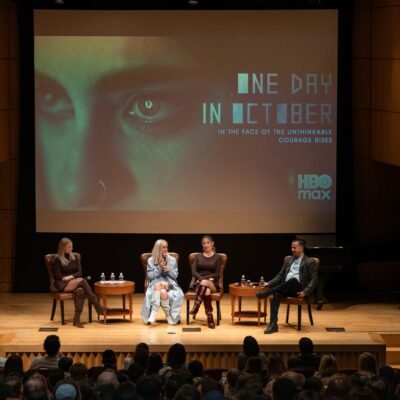
On Dec. 3, JPA and JewishERGs brought “One Day in October,” a powerful seven-episode anthology miniseries based on harrowing true stories of heroism and resilience from the Oct. 7 attacks, to a wide New York audience that included JPA alumni, JewishERGs professionals, film producers, bloggers, influencers and friends of friends who chose presence over comfort, truth over distance and courage over silence. Created by the visionary team of Daniel Finkelman, Oded Davidoff, Chaya Amor, Aviv Ben-Shlush, it is the first scripted depiction of that day, transcending politics, nationality and religion to highlight universal human narratives of love, loss, courage and survival.
As Elie Wiesel taught us, “To forget the dead would be akin to killing them a second time.” In a moment when truth is fragile and memory is contested, the series serves as a testament; and the full-to-capacity theater at the Center of Jewish History in New York bore witness. The evening was an act of defiance — a refusal to forget, to stay silent or to let others tell our story for us.
Margarita Lyadova, host of the popular “People Jew Wanna Know” podcast, led a thought-provoking and emotionally charged discussion led with the creators of “One Day In October” and Oct. 7 survivor Sabine Taasa, who lost her husband, Gil, and son Or on that fateful day. We explored themes of truth, authenticity and responsibility in storytelling, the responsibility of the view and the inner experience of survivors. The Taasa family has suffered unimaginable loss, but Sabine’s extraordinary strength pushes her to persevere, to look to the future and to view her own survival as a miracle. Her clarity, courage and refusal to succumb to despair moved the entire room.
It was extremely powerful to see the mix of people in the room. For instance, one of our colleagues brought three non-Jewish friends: one who works in fashion, one in the arts and one for an international nonprofit. After the screening, all three said that this was the first time they fully understood the magnitude and reality of the Oct. 7 attacks. That moment captured exactly why these events matter. When we widen the circle — when we bring in people who might not otherwise engage with these stories — we create understanding. We build allies. We strengthen the foundation of support Israel desperately needs right now. This is how change happens, one room, one conversation, one new set of eyes at a time.
Jewish continuity is not abstract. It is built by everyday people, people like Sabine with an unshakeable commitment to life, and parents, employees, friends and neighbors who choose to learn, to engage, to create and to lead. The heroes are not only the ones on the stage and screen, but also the ones sitting in the audience, committing to carry the truth forward. The screening wasn’t just an event, but a commitment and a reminder that responsibility for one another is not a slogan, but a covenant. When put in practice, we show up, we listen, we learn and we continue to share the truth boldly and unapologetically.
The RSJ community, once seen as peripheral to American Jewish life, is now recognized as one of its greatest assets: fiercely committed to Israel, deeply connected to Jewish peoplehood, and ready to take responsibility for the future. The next decade of Jewish life will depend on people willing to create spaces of belonging — at home, at work and in the public square. That starts with each individual, so if you’re reading this, I encourage you to start a conversation. Take a class. Bring sufganiyot to your corporate holiday party. Gift an HBO Max subscription to a friend who wouldn’t otherwise watch “One Day In October” on their own. Tell your child the story your grandparents or parents couldn’t tell you.
If Oct. 7, 2023, taught us anything, it is this: Jewish resilience is not inherited; it is learned, practiced and lived. The Jewish community must now invest in models that work and replicate them boldly by expanding culturally fluent Jewish education, supporting grassroots leadership, elevating RSJ voices as central, not peripheral, strengthening Jewish spaces in corporate America and ensuring that the stories of that unthinkable day in October remain part of our communal consciousness as stories of resilience, not victimhood.
We are the last generation raised with living memory of Holocaust survivors and the first generation raising children in a world where Jewish identity is contested in real time. That gives us a unique responsibility and a narrow window. As JPA enters its second decade and JewishERGs continues to expand, our work is no longer about filling gaps. It is about building the future — a future where Jewish identity is not a footnote, but a foundation; a future where Jewish professionals do not shrink at work, but lead; a future where our children grow up proud, informed, and connected; and a future where the stories of Oct. 7, 2023, are taught with honor and truth.
Jewish continuity will not be secured by institutions alone. It will be built by people: parents, employees, neighbors and peers who choose to learn, engage, speak up and support one another. We are no longer waiting for permission to lead. We are already doing it. Will the broader Jewish institutions now recognize that this is not a niche story, but a blueprint for our collective future?
Learn with us. Create with us. Lead with us. Stand with us.
Am Yisrael Chai.
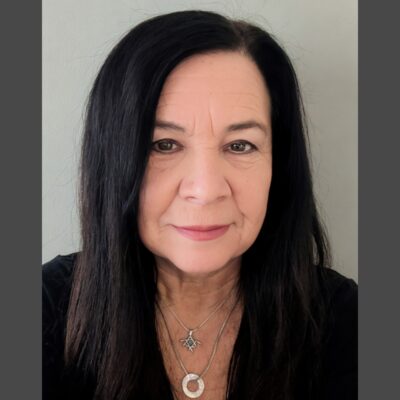
Alla Aronov is a senior operations and project leader in financial services and a committed advocate for Jewish engagement, continuous learning and positive Jewish representation. She serves on the board of Jewish Parent Academy, helping expand its national footprint and strengthen Jewish identity within RSJ communities. A co-founder and former leader of PwC’s Jewish ERG, she joined the JewishERGs Leadership Council in 2025.