Opinion
BLINDSPOT
The hidden cantor: Why members of our clergy are missing from the picture




 Add EJP on Google
I open a government form, and the cursor hovers over the title field. A little dropdown menu appears: Mr., Mrs., Ms., Dr., Reverend, Pastor, Rabbi. I scroll, waiting to see my own title appear. It never does. There is no “Cantor.” No “Hazzan.” It looks like a small omission, but it lands with weight. I exist in the world as clergy, but the world does not always know what to call me.
That same feeling washed over me when I read the newest study on the American rabbinate, a serious piece of research by Atra on the state of rabbinic leadership in the United States. It explores burnout, changing roles and the pipeline for future rabbis. Important work, thoughtful and needed. Yet once again, cantors are nowhere to be found. Not as a category. Not as a data point. Not even in a footnote. We simply do not exist in the frame.
Courtesy
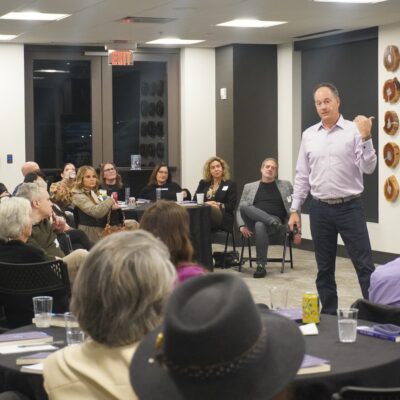
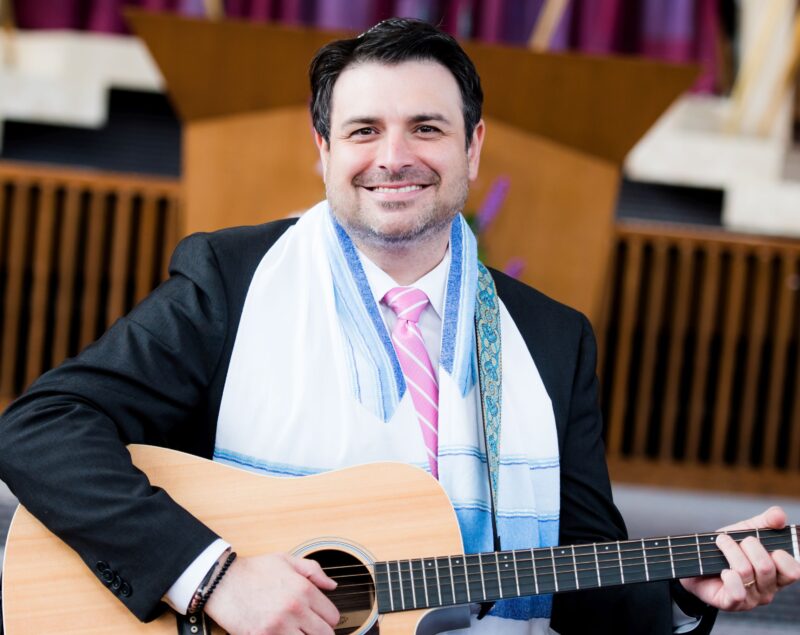
Cantor Vladimir Lapin of Congregation Mishkan Or in Beechwood, Ohio.
When I search for my title on a form and cannot find it, I am reminded of something deeper. Cantors often live in the blind spots of Jewish institutional life. We are central to the work, yet absent from the language that describes it. In my daily life as a cantor at a large congregation in the suburbs of Cleveland, I lead prayer, teach Torah, officiate at weddings, funerals, baby namings and unveilings. I sit with families in crisis. I learn the stories of people who have returned to shul after long absences. I prepare nervous thirteen-year-olds for b’nei mitzvah and help adults sound out their first alef bet. I hold a community’s music, memory and emotion, often in the same service. None of this is unusual. It is simply what cantors do. And there are a lot of us.
The Cantors Assembly, the Conservative movement’s professional arm for cantors, has approximately 600 members serving congregations across the globe, primarily in North America. The American Conference of Cantors, which represents ordained and certified Reform cantors, has historically represented over 500 cantors in North America and internationally. Together, these two organizations alone account for on the order of a thousand professional cantors. That figure does not include unaffiliated cantors, part time cantors in smaller communities, or those in other movements.
In other words: we are not a quirky side note. We are a large, organized, professional clergy body. Many of us are fully ordained, with graduate level training in liturgy, education, pastoral care and Jewish text. We do not simply “sing the services.” We create the spiritual arc of prayer, shape communal ritual, teach at every age level and show up whenever people are most vulnerable. Cantors are not assistants. We are not musical accessories to rabbinic leadership. We are clergy. Fully trained. Deeply formed. Called to serve.
When a major study examines Jewish clergy and only counts rabbis, it does more than overlook a few colleagues. It distorts the actual landscape of Jewish spiritual leadership. It ignores that in many congregations the cantor is the consistent face of clergy over many years. Senior rabbis retire, associate rabbis come and go, but the cantor may remain, holding institutional memory, musical identity and long-term pastoral relationships.
It also ignores the growing number of congregations where cantors serve as sole or primary clergy, especially as rabbinic pipelines shrink and budgets tighten. Recent reporting has noted that both Conservative and Reform movements now have a growing list of synagogues led by cantors in roles previously reserved only for rabbis. If we do not count cantors, we will never really grasp where communities are turning for leadership. This invisibility has practical consequences: If studies on burnout and clergy well-being do not include cantors, then our needs are never fully addressed in communal planning. If strategic conversations about “the future of clergy” mean only “the future of rabbis,” then budgets, training programs and support structures will continue to overlook an entire track of professionals who carry a substantial share of the same burdens.
It also has emotional consequences. When I see only “Pastor” or “Rabbi” in a dropdown list, or only “rabbis” in a major report on Jewish leadership, there is a quiet message underneath. You are real clergy. You count. You are central. And you, cantor, are something else.
Here is what I know from my own life and from my colleagues. We are not something else. We are often the first clergy person a child trusts, the person a grieving spouse calls, the one a young adult seeks out when they are not sure what they still believe. We are the ones whose voices people carry in their heads when they hum a Jewish melody while walking the dog or sing Mi Shebeirach in a hospital hallway. We are the ones who, week after week, translate liturgy into lived spiritual experience.
I am not arguing for hierarchy. I am arguing for visibility. I want communal research that tells the truth about who actually leads and sustains Jewish life. I want surveys that ask about cantors, not just rabbis. I want forms that recognize cantor as a title of real clergy. I want our young people, who might feel a pull toward this sacred musical path, to see that it is not an “extra” but a full, respected vocation. The next time someone scrolls through a dropdown menu and cannot find “Cantor,” I want them to pause and wonder why. The next time a major study of clergy comes out, I want its authors to ask a simple question: Where are the cantors in this picture, and what do we lose if we leave them out?
I am here. My colleagues are here. We have always been here — often in the front of the room, sometimes in the background, but always holding the soundscape and soul of Jewish prayer.
It is time for the hidden cantor to be seen, counted and taken seriously as clergy. When that happens, our understanding of Jewish leadership will not only be more accurate; it will be more whole.
Cantor Vladimir Lapin serves Congregation Mishkan Or in Beachwood, Ohio. He is a board member of the American Conference of Cantors and co-chair of the Debbie Friedman School of Music Alumni Association.