Opinion
FUND DIFFERENTLY
Whoever shapes the frameworks shapes the future of Jewish life




 Add EJP on Google
In Short
If the Jewish community wants to shape the outcomes of the next decade, it must begin by investing in the infrastructure that will make those outcomes possible.
Last month, two juries delivered landmark verdicts against major technology companies — decisions some have called Big Tech’s “Big Tobacco moment.” But those rulings did not begin in a courtroom. They were the product of years of investment in independent research — work that made new legal arguments possible, credible and ultimately persuasive.
In a recent op-ed in the Chronicle of Philanthropy, my former Knight Foundation colleague A.J. D’Amico makes a compelling case: Breakthroughs like these are not the result of isolated projects, but of sustained investment in research ecosystems and institutional infrastructure. Philanthropy, he argues, too often funds individual studies while underinvesting in the academic and institutional capacity that makes those studies — and their downstream impact — possible.

elenabs/Getty Images
That insight has urgent implications for the Jewish community.
As anyone reading this understands too well, we are living through a period in which legal, educational and cultural frameworks are rapidly evolving on questions of Jewish identity, Zionism and antisemitism. Court cases, campus policies, K–12 curricula and public discourse are all being shaped by ideas that did not emerge overnight. They are the result of decades of scholarship, teaching and institutional validation.
Consider a recent federal appeals case involving MIT, in which claims of a hostile environment for Jewish students were evaluated through existing legal and academic frameworks. Whatever one thinks of the outcome, the case illustrates a deeper reality: Courts do not generate their own intellectual tools. They draw on the frameworks available to them — frameworks shaped and legitimized within the academy.
In fact, some legal scholars have begun to identify what they describe as an emerging “anti-Zionism exception” in civil rights law — an argument that certain forms of discrimination may be treated differently when framed as opposition to Zionism. Whether or not one agrees with that characterization, the development itself underscores the point: Legal doctrines do not arise in isolation. They reflect the underlying scholarship and conceptual frameworks that courts have available to them.
This dynamic extends beyond courts and policy. As observers across the political spectrum have noted, we are living through a broader vacuum in which the frameworks people rely on to make sense of complex issues are fragmented or underdeveloped. In that environment, influence accrues not simply to those with better arguments, but to those who operate within systems that produce and legitimize knowledge over time.
And yet, for too long, the Jewish philanthropic ecosystem has largely focused its resources downstream — on advocacy, programming and rapid-response efforts — while comparatively underinvesting upstream in the institutions that produce the knowledge those efforts rely on.
This is not a failure of commitment. It is, in many ways, a reflection of how philanthropy tends to operate: prioritizing visible, near-term impact over the slower, less visible work of building fields, institutions and intellectual capacity.
The Jewish community has, of course, invested heavily in universities and higher education more broadly. According to a report released last year, Jewish philanthropists are among the most significant contributors to major institutions, and giving to education remains one of the largest areas of charitable investment in the United States. But funding institutions is not the same as shaping the intellectual frameworks those institutions produce. In practice, philanthropic giving, Jewish and otherwise, often prioritizes visible, institution-level support — buildings, endowed programs and general operating funds — over the more targeted, long-term investments required to develop new fields of study, research agendas and scholarly pipelines that shape how issues are understood in law, policy and public discourse.
The gap in intellectual investments also shapes culture. The ideas that originate in universities do not remain confined there; they move outward into media, education, professional training and public life. When certain frameworks gain legitimacy within the academy, they often become the default language through which broader society understands complex issues. The result is not an absence of investment, but a mismatch: significant support for institutions, alongside comparatively less investment in the intellectual infrastructure that determines how ideas — and ultimately outcomes — take shape within them.
A small but growing number of philanthropic leaders are beginning to think differently. Rather than funding only discrete projects, they are supporting the development of new academic fields and institutional capacity — investments designed to operate over decades, not grant cycles.
What would it mean to invest this way at scale?
It would mean building legal scholarship that courts can rely on, including emerging efforts to establish Jewish legal studies as a recognized field within the academy. It would mean supporting new areas of inquiry — such as the critical study of anti-Zionism — that generate rigorous, peer-reviewed frameworks rather than ad hoc arguments. It would mean investing in independent, shared data and research capacity to inform policy and public debate, rather than relying on fragmented or episodic evidence. It would mean developing talent pipelines that place scholars, lawyers, policymakers and educators in positions of long-term influence. And it would mean ensuring that rigorous ideas are translated into classrooms, media and public understanding so that they do not remain confined to elite institutions.
None of these are quick wins. All of them are prerequisites for lasting impact.
The distinction matters.
Courts rely on law review articles, expert testimony and established legal frameworks. Policymakers depend on research institutions and credible academic fields. Educators draw on curricula shaped by scholarly consensus. Culture, too, is downstream of these same processes — absorbing and amplifying the ideas that have already been validated within elite institutions. Without sustained investment in these upstream domains, even the most effective advocacy efforts are constrained by the limits of the underlying knowledge base.
In other words, if we want to influence outcomes, we must invest in the conditions that make those outcomes possible.
This does not mean abandoning project-based funding or urgent communal needs. The Jewish community will always require strong advocacy organizations, responsive programming and rapid mobilization in moments of crisis. But those efforts cannot substitute for the long-term work of building intellectual and institutional capacity.
As debates over antisemitism, Israel and Jewish identity intensify across campuses, courts and public discourse, the frameworks that shape those debates are being solidified in real time. The question is not whether those frameworks will exist — it is who will build them, and whether they will be rigorous, pluralistic and grounded in serious scholarship.
Philanthropy has a choice. It can continue to prioritize visible, short-term interventions, or it can invest in the less visible but far more consequential work of field-building: supporting academic centers, funding multiyear research programs, developing new areas of scholarly inquiry and ensuring that ideas are translated into education and practice.
The former produces activity. The latter produces influence.
The lesson from other fields is clear. Legal and policy breakthroughs do not emerge fully formed; they are the culmination of years — often decades — of investment in research, institutions and talent. If the Jewish community wants to shape the outcomes of the next decade, it must begin by investing in the infrastructure that will make those outcomes possible.
Not just more programs, not just more advocacy, but the systems that allow both to endure.
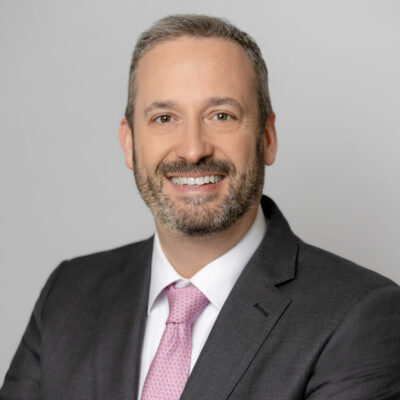
Rebecca Dinar is the executive director of the Samson Charitable Fund.