Opinion
Post-adrenaline leadership




 Add EJP on Google
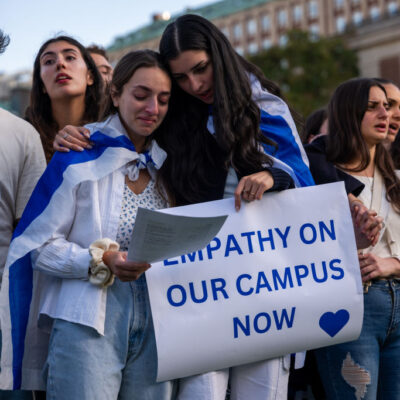
In Israel, there’s a ceasefire, however shaky, in place. The hostages who remain alive are home. Campus antisemitism continues to poison campuses, but the large-scale mass demonstrations have largely ended, with fewer, more extreme individuals taking more extreme action on a less frequent basis.
None of this is the wide-ranging success or complete victory we might have been hoping for, but it’s drawn the immediate post-Oct. 7 era to a close. This period saw two parallel surges: a surge in antisemitism, and a surge in Jewish engagement. These jumps — one for bad, one for good — have spurred us to action and powered many Jewish professionals through the past two years, with the sharpness and hard angles of the moment simultaneously electrifying and triggering us.
At some point, the adrenaline was bound to wear off, and this sustained (if unsustainable) rush had to end. Yes, we’re all still agitated and vigilant — and with good reason — but in a more generalized, pervasive way, with fewer acute and unpredictable rushes and spikes in energy.
What remains is the original sense of purpose Jewish campus professionals had prior to the Oct. 7 attacks. This work is no less important and essential than it was on Oct. 6, 2023 — and even more so, for obvious reasons — and we now have the opportunity to be a part of this next stage in shaping student experiences.
This transition is, for some and in some ways, a bit disorienting. In the face of ongoing challenges, the past two years have honed our sense of purpose and imbued our work with a surplus of meaning. It has been both more challenging than most of us imagined it could be and more rewarding than what most of us imagined it could be.
Some of us might experience it as burnout, but to me, it’s more like dislocation or displacement from where we’d been existing professionally and personally. Yes, this work itself is, always has been and always will be critical and needed. This significance was easy to bear in mind when we were up at 10 p.m. keeping students safe from antisemitic mobs roving campus; it’s harder to recall at the same hour of the night when we’re responding to a batch of emails about swag branding.
To quote Rabbi Sandy Sasso, “At the heart of what it means to be a Jew is to ask questions”; but right now, part of me is the child who doesn’t know how to ask. Here are some initial thoughts as a senior Jewish campus professional.
Renewing purpose and meaning
The mundane but necessary aspects of Jewish campus life — shopping for bagels, shlepping chairs and the like — never disappeared, but they were eclipsed by pressing concerns. How might we renew our sense of purpose in these aspects of Jewish life? With our adrenaline spent, what keeps us in this work and powers our personal and professional investment, as well as that of others?
Students have swept through our doors as part of the surge of engagement; in many cases, though, they are exhausted from simply being Jewish in this current world. They yearn to know Jewish experiences beyond encounters with antisemitism, whether learning about it, fighting it or enduring it. How do we continue to incorporate advocacy and combatting Jew hatred into our work while also celebrating Jewish joy and instilling robust and resilient Jewish identity that goes beyond reacting to adversity?
Finally, our stakeholders — family members, donors, Jewish professional colleagues in other fields and others — have been along this journey with us, supporting students and staff who have grappled with the direct implications of Judaism and Jewishness on campus. How do we help them appreciate these “Yes, and” pivots and the ongoing necessity of their involvement and commitment, even if and when communal attention expands or turns elsewhere?
Zooming out
We’ve been acting from a place of urgency for so long that it will take some effort to shift to ongoing intentionality and planfulness. It’s not that we’ve ignored long-term strategies, but it’s been necessary to focus on the uncertainty of the next day or the next hour, and the next year has felt distantly far off. Complicating matters, there are still unanticipated crises that regularly flare up, disrupt our schedules and demand our attention. How do we reorient towards imagining, dreaming and painting the big picture?
Many of our constituents are eager to learn our thinking and the next stage in our organizational efforts and evolution. How do we respond to questions about what’s on deck when we have one foot in the post-Oct. 7 world and are working to catch up on the present?
Leading forward
Those of us who manage more than just ourselves have to grapple with what it means to exercise leadership in a post-adrenaline environment. This requires uncovering dormant or new motivations for our staff, students and external stakeholders and stoking those. Moreover, with burnout both common and real, there’s a balance to be struck between providing space to recharge and pushing forward. What does it look like to ensure that adaptations based on ever-changing circumstances flow through our entire organization?
None of us works in a vacuum, and bonds forged through shared distress and trauma are often durable and resilient. That said, without the pressure of urgency and a shared mission of immediate importance, what’s the glue that holds teams and cohorts together?
I don’t have full-fledged answers to many of these questions, but I’m wrestling with them as we look towards the future and try to figure out how we, as Jewish campus professionals, plot a course forward.
Rabbi Seth Goren is the CEO of Hillel Ontario and has been working with Jewish college and university students and young adults for nearly two decades.