Opinion
GIVE IT A REST
From burning out to burning brighter: A framework for serving those who serve




 Add EJP on Google
In Short
In North America and Israel, the level of burnout in Jewish human services is no longer episodic, but structural, and structural problems require systemic solutions
Resilient Jewish communities depend on the resilience of the professionals and the lay leaders who serve those communities. As president and CEO of the Network of Jewish Human Service Agencies, I work with more than 180 agencies across the U.S., Canada and Israel, which collectively serve over two million clients annually. Network member agency professionals often recount how the work they do to support and to strengthen individuals and communities often leaves them feeling depleted by the end of the day. This work has always been emotionally complex, but the weight has only grown heavier in recent years.
Here in North America, rising mental health needs, antisemitism and political polarization demand more from Jewish human service provider agencies than at any time in recent memory. At the same time, our colleagues in Israel report a level of professional exhaustion and burnout, magnified by two years of war with Hamas and global isolation, that is threatening the capacity of the social service sector.

Mary Long/Getty Images
The result in both North America and in Israel is a level of burnout that is no longer episodic, but structural. And structural problems require systemic solutions.
Better together
One of the most pressing needs we hear from network member agencies is for more systemic support. Generous funders are crucial to making opportunities available, and we always seek to continue expanding avenues to prioritize personal well-being. Jewish human service leaders can support professionals and the lay leaders who serve their organizations by creating consistent spaces for personal gathering and supporting ongoing opportunities for collaboration.
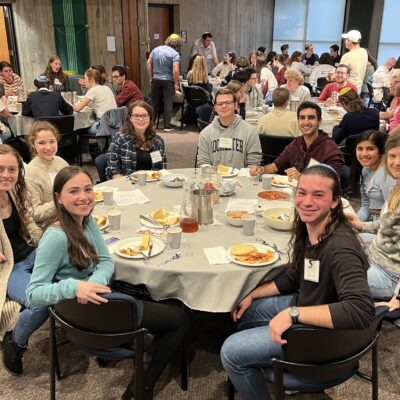
The network regularly convenes over 40 online affinity groups — known as NETGroups — which connect professionals and lay leaders working in common disciplines within network member agencies. These sessions are a safe space to learn, to process challenges and to benefit from the inspirational work of others.
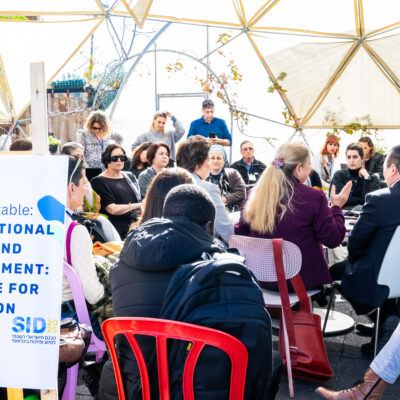
Additionally, the network convenes what we call “Holding Space” sessions for professionals to come together, reflect and manage personal challenges that may stem from today’s highly charged political and conflict-filled environment. These network-hosted spaces have helped to reduce isolation among Jewish human service agencies — giving staff and lay leaders spaces to share strategies, co-develop solutions, and feel seen as part of a larger mission.
These types of collaborative opportunities maximize both our personal well-being and impact on service, in concert with each other.
Rest and recharge
The gravity of emotionally heavy roles can breed exhaustion. Professionals working in Jewish human service agencies are often asked to manage mental health crises, respond to hateful acts and pivot to other emergencies on top of daily operations.
While resting is a cornerstone of Jewish culture with Shabbat each week, Jewish human service professionals should also treat this as a daily obligation.
Rest must no longer be seen as a scarce privilege. It should be built into every day.
The network and our partners work to offer a holistic infrastructure of events, digital platforms, shared services, and toolkits to help professionals unplug from the high-stakes environment while staying engaged with fellow service providers. At the same time, we encourage professionals to refrain from engaging with these offerings whenever they feel it would be helpful to fully unplug.
Understanding that the pressures of burnout are ones that are top of mind for both North American and Israeli professionals, the network is developing an immersive learning experience in which a selected cohort of North American and Israeli professionals will together explore new models to address this critical challenge.
Indeed, the future vitality of the human service sector demands this investment.
Collective responsibility
We agree with the calls from our partners in the broader Jewish communal sector that there must be a comprehensive response to the issue of burnout with awareness, resource investment and collaboration among those working in all types of Jewish organizations.
That’s why the network works closely with foundations, philanthropists and policymakers to amplify the collective voices of Jewish human service providers and to strengthen their capacity. The network advocates for the resources and policies that make sustainable services possible, including grants, security and emergency response, and outcome frameworks that prioritize long-term well-being over short-term outputs.
It all begins with us coming together. Whether it be participating in NETGroups, attending “Holding Space” sessions, walking outside to recharge, participating in one of the network’s Academy courses or advocating for policy changes, we are stronger together.
By combining our light, we burn brighter together rather than burning out.
Reuben D. Rotman serves as the president and CEO of the Network of Jewish Human Service Agencies.