Opinion
EMERGENCY RESPONSE
From Bondi Beach to the next crisis: Why the first hour matters




 Add EJP on Google
In Short
Constant presence in Jewish communities around the world means that when disaster strikes, the Jewish Agency is ready to help
The deadly terror attack during Hanukkah at Bondi Beach did not unfold in the shadows. It happened in broad daylight, in one of Australia’s most iconic public spaces. For many Jews watching from afar, the shock was not only the violence itself, but the recognition: If it can happen here, it can happen anywhere.
Australia’s Jewish community is strong, proud and deeply rooted. Yet strength does not confer immunity. Jews have learned, once again, that antisemitism is neither isolated nor accidental. It is global, fast-moving and increasingly normalized.
COURTESY/JEWISH AGENCY
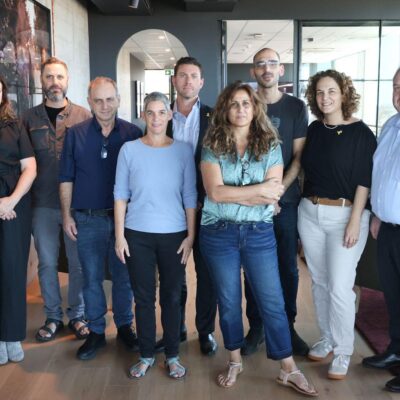
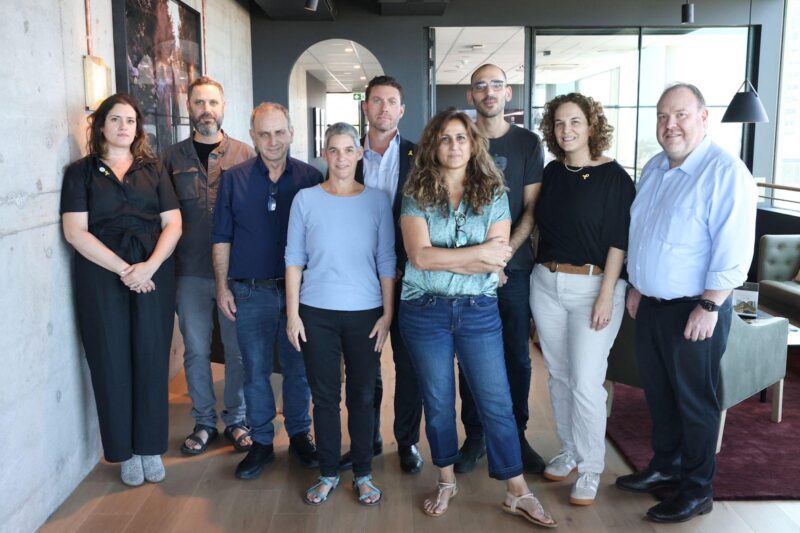
A team from the Jewish Agency arrives in Australia following the deadly terror attack at Bondi Beach in Sydney, Australia, in December 2025.
For world Jewry, the question is no longer whether antisemitism will reach our communities, but whether we are prepared to respond when it does. And one lesson has become painfully clear over the past decade: In moments of crisis, the first hour matters.
At Bondi Beach, the Jewish Agency for Israel knew what was happening even before it reached the news. Because we have shlichim (Israeli emissaries) embedded in Jewish communities worldwide, information did not arrive secondhand. A Jewish Agency emissary was present at the scene. Within minutes, our global system was activated.
That presence changes everything. It means our response is not reactive, but immediate. Within hours, resilience professionals from our JReady network were mobilized. Within a day, visas were secured and experts were on the ground supporting families, educators, and communal leaders. At the same time, solidarity gatherings were organized — not as symbolic gestures, but as anchors of belonging. In Melbourne, more than 200 people gathered that very night to light candles together.
This is not improvisation. It is infrastructure.
The three pillars communities need
Every Jewish community facing trauma needs three things at once: safety, resilience and belonging.
First, safety is the most visible pillar. Through its global security fund, the Jewish Agency helps communities strengthen physical protections — from reinforced doors to emergency equipment — particularly where local resources fall short. While Australia is a strong community that does not require a relatively large amount of financial assistance, many others around the world do. Antisemitism does not discriminate based on a community’s balance sheet.
Second, resilience is less visible, but just as critical. Trauma lingers long after headlines fade. That is why the Jewish Agency invests in professional preparedness long before crises occur. Our experts work across 51 countries, drawing on shared global experience — from Pittsburgh to Manchester, England, to South Africa — to help communities heal, adapt, and continue functioning.
In the healing process, shared experiences matter. For instance, given its experience with the Tree of Life synagogue massacre in 2018, the Pittsburgh community (in particular its Jewish federation) connected with the Sydney community’s leadership to offer support immediately following the Bondi Beach attack.
Third, belonging is the emotional glue. With 24 emissaries in Australia alone, support is not abstract. We know the communities, the institutions, the families. We can mobilize quickly because trust already exists. When tragedy strikes, no one is asking, “Who are you?” They know.
Bondi Beach also reminded us that Jewish life today is interconnected. A trauma in Sydney reverberates in Jerusalem, Toronto and New York. During the COVID-19 pandemic, we connected Montreal and South Africa to share strategies. After antisemitic attacks elsewhere, we have connected communities that had walked this road before with those just beginning it.
This is what mutual responsibility looks like in practice: not speeches, but systems. Importantly, effective global support does not mean overriding local leadership. In Australia, communal leaders were clear. They did not ask for emergency fundraising campaigns. They asked for expertise, coordination and solidarity. We respected that choice. Real partnership means listening — not assuming.
A roadmap for making an impact
In moments like these, people often ask how they can help. The road map for making an impact does not unfold overnight. Rather, it is a comprehensive journey that involves unlocking partnerships, multiplying resources, and enabling action at scale.
When crises arise, organizations must respond within hours rather than weeks, deploy professionals rather than scramble for approvals and act based on need rather than headlines.
For the Jewish Agency, nearly a century of experience in crisis response — and particularly the past two years — played a crucial role in responding to the Bondi Beach attack. We have supported 28,000 families of Israeli reservists affected by the Swords of Iron War; not one family at a time, but an entire population. Tens of thousands of victims of terror, including extended family members often overlooked by official systems, are receiving sustained support. Israeli children affected by trauma are rehabilitated together at North American summer camps. And then when Bondi Beach happened, our response was immediate, specifically because trust and expertise had been built over years.
Equally important is the role played by the Jewish federation system, which transforms individual generosity into coordinated, community-wide impact. Annual campaigns provide the foundational funding that allows institutions like the Jewish Agency to plan, train, and be present long before a crisis occurs. Emergency campaigns then build on that base, enabling rapid scale when the unexpected happens. Without the steady, trust-based funding generated through federations, crisis response would be fragmented and reactive. The federation system ensures that help reaches not just the loudest voices, but entire communities, quickly and equitably, when they need it most.
The greatest risk facing world Jewry today is not antisemitism alone. It is complacency — the belief that preparedness can wait until after the next crisis. Preparedness is not charity; it is responsibility.
The Jewish people have never survived by accident. We survived because we built institutions, trusted one another, and understood that collective strength matters more than individual effort.
Bondi Beach was a tragedy. But it was also a test. Of our readiness. Of our values. Of our willingness to invest in the unglamorous work that makes resilience possible.
The first hour will come again. What we choose to build — together — will determine how ready we are when it does.
Yehuda Setton is CEO and director general of the Jewish Agency for Israel.