FROM ALL SIDES
FBI cutting ties with ADL puts Jewish community at greater risk, experts say
'Organizations like the ADL must be able to call balls and strikes in the fight against antisemitism and all forms of hatred without fear or favor,' says Mark Treyger, CEO of the Jewish Community Relations Council of New York
Win McNamee/Getty Images
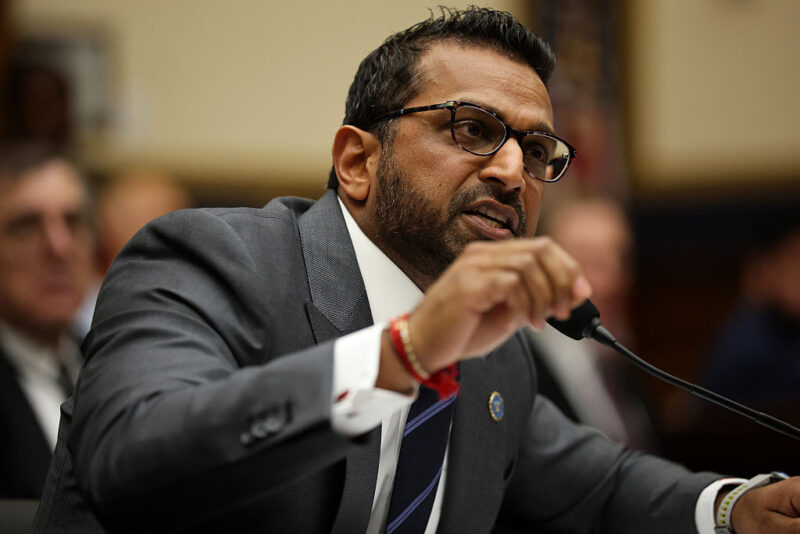
Federal Bureau of Investigation Director Kash Patel testifies before the House Judiciary Committee in the Rayburn House Office Building in Washington on Sept. 17, 2025.




 Add EJP on Google
The Anti-Defamation League has regularly found itself catching flak from both sides of the aisle. Left-wing voices have condemned the organization for what they see as a conflation of criticism of Israel with antisemitism, as right-wing figures have denounced the group for its labeling of Christian nationalism as extremist.
This has only increased over the past two years, amid rising left-wing antisemitism and the election of President Donald Trump, with whom the ADL maintained a rocky relationship during his first term. During this time, the ADL has faced growing criticism from the left, accusing it of appeasing conservatives by holding back criticism of the White House over issues that it spoke out against during President Donald Trump’s first term in office, among other things.
For the ADL, striking a balance between the left and the right was critical as it allowed the organization to maintain its ties with a wide array of government bodies and civil groups. That effort sustained a major blow last week as the FBI announced that it was cutting ties with the group, denying the ADL a significant mechanism for reporting threats and undermining its standing as a widely regarded authority on extremism. The ADL declined to comment on the matter, as did many of its supporters and funders for fear of aggravating the situation.
Some are concerned this leaves the Jewish community more open to threats.
Similar to how many in the Jewish community rallied behind the ADL when they came under attack from the left, the community needs to stand behind them when they are under attack from the right, Mark Treyger, CEO of the Jewish Community Relations Council of New York, told eJP.
“We spoke out when far-left factions sought to sever ties with the ADL, and we will do the same when far-right factions take similar action,” he said. “Organizations like the ADL must be able to call balls and strikes in the fight against antisemitism and all forms of hatred without fear or favor. At a time when antisemitism is skyrocketing, including violent attacks, we must strengthen our partnerships and deepen our engagement with communities committed to confronting hate in all its forms. Only through these efforts can we advance a safer, more inclusive society for all.”
Victor Asal, a political science professor at the University at Albany, who studies insurgency and terrorism, told eJP that while the ADL can still report threats to the FBI, they may not be treated as seriously, which may backfire for the law enforcement agency. “By cutting ties with [the ADL and SPLC], they’re going to be losing access to information and resources that can sometimes, maybe not all the time, but sometimes help them,” he said.
Asal said that this was a politically motivated move by the FBI, which he said is less interested in cracking down on the types of white supremacist and other racist groups that the ADL has been monitoring — and reporting to the FBI — since the 1940s.
“They’re cutting their ties with an organization that’s been able to provide them with very useful information,” Asal said. “But it’s useful information about something they don’t want to pay attention to right now.”
To critics of the ADL on the left, the move by FBI Director Kash Patel showed the futility of right-wing appeasement, while to critics from the right, it demonstrated the longstanding flaws in the organization’s policies, namely that it did not pivot to focus more on progressive antisemitism.
The FBI ultimately cut ties with the ADL on Wednesday after online right-wing blowback over its Glossary of Extremism, a digital database with entries of groups that “subscribe to and/or promote extremist or hateful ideologies across the political and ideological spectrum.” One of its listings was for Turning Point USA, the organization co-founded by conservative activist Charlie Kirk, who was assassinated last month.
Though the ADL had taken the page down the day prior, releasing a statement that there were “a number of entries [being] intentionally misrepresented and misused,” FBI director Kash Patel ended the partnership.
“This FBI won’t partner with political fronts masquerading as watchdogs,” Patel wrote in an X post. Two days later, he also cut ties with the Southern Poverty Law Center, a group known for classifying hate and extremist organizations.
“ADL is simply not ‘Trump Enough’ to satisfy the administration,” Steven Windmueller, emeritus professor of Jewish communal service at the Jack H. Skirball Campus of Hebrew Union College-Jewish Institute of Religion in Los Angeles, told eJP.
Despite this setback, Asal recommended against ignoring the threats posed by groups that are more ideologically aligned with whichever political party is in power. “If you’re going to define extremism not by extremism, but by what ideology it is, you’re going to be ignoring certain extremists, and that can be very dangerous,” he said.
Still, the relationship between the FBI and ADL can be repaired, he said, if a different administration prioritizes it.
Related News
ADVANCING A VISION
N.Y. federation donates $1M toward building shared-society center named for peace activist killed on 10/7

MAGICAL EXPERIENCE
Shefa launches psychedelics retreat for Jewish professionals suffering burnout

EXCLUSIVE
Detroit-based philanthropists Nancy, James Grosfeld donate $8M to renovate JDC’s Israel campus

MAJOR GIFTS
Center for Jewish History celebrates 25 years with a $25M matching grant
PRESIDENTIAL REBUKE
Israel’s Herzog: Mamdani ‘makes no effort’ to hide disdain for Israel, Jews must fight back