Opinion
MODEL OF CHANGE
Amid rising challenges, Jewish day schools nationwide must invest in local collaboration




 Add EJP on Google
In 2026, Jewish day schools are facing a number of societal trends that pose real challenges to our capacity to serve communities across the country.
Economic uncertainty and tariffs are straining school budgets and the ability of families to afford tuition. Rising antisemitism has led to unprecedented security threats, requiring schools to rapidly implement new protocols to keep students and teachers safe. And the continuing national teacher shortage means schools continue to struggle to recruit and retain key staff.

Rosy Ziegler/Pixabay
Amid this difficult reality, we can’t afford to continue operating as normal and hope it will work out. Schools and their supporters must adopt an innovation and agility mindset and try new ways of working together.
Crucial to this is local grassroots collaboration: finding ways for schools in one region to collaborate more effectively to serve their communities’ unique needs. Too often, schools are working in silos and duplicating programming or initiatives that could benefit their peers in their region. As leaders representing the NorCal Jewish Day School Collaborative, a network of day schools in Northern California, we have spent the past six years building a regional infrastructure that has already reshaped how Jewish day schools operate together.
We used to operate as 12 separate schools with very limited partnership. For over two decades, our heads of school met collegially on a periodic basis, occasionally developing regional programs for Yom HaAtzmaut or teacher professional development conferences. But we often focused on our differences — the demographics in the communities we serve, the ages of our students, our denominational affiliations or lack thereof. Even when there was overlap, some of us saw each other as competitors rather than collaborators.
In early 2020, we realized something needed to change. We started working together in an unprecedented way to address collective challenges related to keeping our schools open during the pandemic. After experiencing the value of a robust multi-school collaboration, we jumped at the opportunity to extend our collaboration to other areas of common interest.
Over the last six years, we have worked together to set regional goals for our day schools and tightened our sense of interdependence in addressing collective challenges, such as affordability and competition with local public and private schools. We moved to a framework that embraced our similarities, allowing us to collaborate broadly, while still acknowledging and catering to our differences as appropriate.
As a result, we have secured multi-year regional funding to support shared leadership development, joint programming and coordinated marketing efforts across 12 schools serving thousands of students.
As part of our collaboration, we implemented a community of practice for all the heads of school, which has significantly improved sustainability for these professionals, extending the average tenure of a head of school in our region, well beyond the national average.
Pooling insights about the unique education interests and gaps in Northern California has also allowed us to better serve families. For example, through joint conversations we identified a strong interest among students across schools in the intersection of entrepreneurship and social impact.
This led us to launch an Entrepreneurship and Social Impact program that now operates in many of our middle schools. Instead of each school building its own pilot, we designed a shared curriculum and implementation framework.
As part of the program, participants learn how to develop a business idea with social impact, develop the idea or product in response to user needs and pitch their product to a panel of real entrepreneurs. Students have envisioned products such as an AI-powered walking stick for visually impaired people and floating garbage filters for the ocean.
After Oct. 7, 2023, as heads of school we decided that we needed to work together even more intensely to strengthen students’ understanding of and connection to Israel. Within weeks, we were not only sharing security protocols and communication strategies, but co-developing curricular responses that strengthened Israel literacy and democratic understanding across our region. For instance, we developed a Mock Knesset program that will launch in our schools in the 2026-2027 academic year; this immersive civic education program is designed to engage seventh or eighth grade students in Jewish day schools with the democratic process in the State of Israel.
These benefits aren’t just anecdotal. The importance of working together is backed up by data: studies from around the world show that inter-school collaboration has numerous benefits, improving students’ educational and social outcomes.
We believe that our model of collaboration can benefit other day schools across the country. While many schools may be hesitant about collaborating with other schools, we have found that the investment of time has yielded unexpected insights and gains. Financially, each of our schools has only benefited from the fundraising of the NorCal Collaborative.
This type of collaboration is ripe for institutional support. We applaud the large investments currently being made to address tuition affordability issues in some communities, and we believe funders can play an important role by prioritizing local, grassroots efforts to strengthen schools, address regional affordability challenges and foster greater interdependence through collaboration. In the long term, this type of collaboration helps make schools more sustainable and means each dollar goes further as schools join forces rather than replicate programs that meet shared needs.
Jewish day schools are increasingly seen as a key component to securing a strong future for the Jewish community. More and more, we see philanthropy willing to make a transformational turn toward investing not only in individual day schools but in the day school sector more broadly. We believe that the kind of deep and constructive collaboration among day school leaders we are creating in northern California is a huge step toward that transformation.
While 2026 won’t be without its challenges, they will also provide an opportunity to rethink how we’ve been operating and reinvent ourselves for the better. The future of Jewish day schools will not be secured by isolated excellence. It will be secured by coordinated strength. In Northern California, we are proving that this model is not only possible — it is already underway.
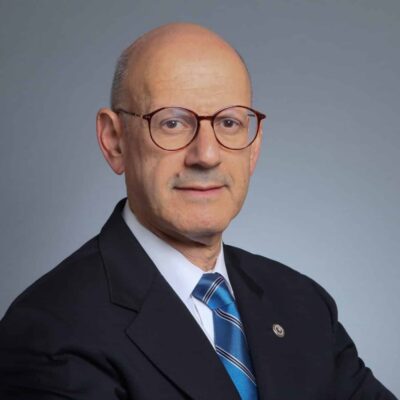
Peg Sandel and Adam Eilath are heads of school at Brandeis Marin in San Rafael, Calif., and Wornick Jewish Day School in Foster City. They are members of the NorCal Jewish Day School Collaborative, a collaboration of private Jewish day schools across the Bay Area and Northern California.