Your Daily Phil: ‘State of Antisemitism’: Still high, still troubling U.S. Jews




 Add EJP on Google
Good Tuesday morning!
In today’s edition of Your Daily Phil, we interview American Jewish Committee CEO Ted Deutch about his organization’s latest annual “State of Antisemitism” survey. We also speak with Yael Foundation CEO Chaya Yosovich about the shift from Russian-speaking Jews being on the receiving end of philanthropy to becoming the donors, with Jody Rabhan after she was named the next CEO of the National Council of Jewish Women and with former hostage Aviva Siegel about her and her husband, Keith, joining IsraAid’s work in Africa after their release from Hamas captivity. We feature an opinion piece by Jonathan Greenblatt, CEO of the Anti-Defamation League, responding to New York Times columnist and Sapir Editor-in-Chief Bret Stephens’ recent comments about the ADL, and one by Lior Zivan encouraging nonprofits to explore independent funding models. Also in this issue: Steve Schwarzman, Jay Schottenstein and Sydney Sweeney and Eytan Graubart.
What We’re Watching
The Jewish Federations of North America’s FedPro conference for Jewish federation employees’ professional development, which kicked off yesterday, continues today.
Israeli Prime Minister Benjamin Netanyahu departed for Washington earlier today ahead of tomorrow’s White House sit-down with President Donald Trump.
The Jewish Community Relations Council of Greater Washington is hosting its Virginia Jewish Advocacy Day. Gov. Abigail Spanberger will be the event’s keynote speaker.
What You Should Know
As a heated debate plays out in the Jewish community over the effectiveness of throwing millions of dollars at the problem of antisemitism, the American Jewish Committee’s annual “State of Antisemitism” survey, released this morning, adds some ominous, though perhaps not surprising, data points to the discussion.
Thirty-one percent of Jews reported being the target of an antisemitic incident. Two-thirds of Jews felt that they were less secure in America than last year. And 93% of Jews felt antisemitism was a problem in America, compared to 70% of the general public. Thirty-one percent of Jews reported being the target of an antisemitic incident, 3% which were physical.
The seventh annual study shows that antisemitism remains elevated throughout America in the wake of the Oct. 7 terror attacks — even if at a similar level compared to the year before — and Jews feel less safe after a year of terrorism and deadly antisemitic attacks around the world. American Jews between the ages of 18-29 have borne the brunt of antisemitism, with 47% saying they were a target of antisemitism over the last year, compared to 28% among those 30 and over, the survey found. Much of the data is not news in the post-Oct. 7 world — Jews continue hiding their Magen David necklaces, and 25% of Jewish college students said they have felt or been excluded from a group or an event. Artificial intelligence is only exacerbating the fears of American Jews, with 65% of study respondents worrying that the programming will allow conspiracy theories to flourish.
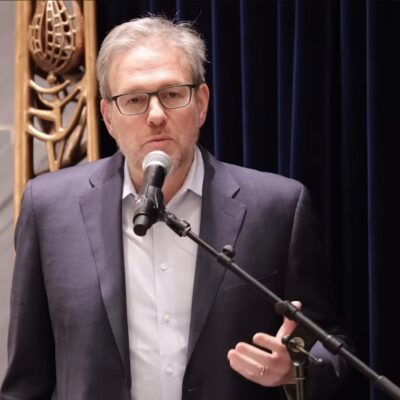
Ahead of the publication of the survey, eJewishPhilanthropy’s Jay Deitcher spoke with AJC CEO Ted Deutch about what he hopes funders take from this study, why antisemitism is a risk to all Americans and why threats to democracy put Jews at risk.
JD: There’s been a lot of discussion recently about the idea that philanthropists are flooding money into initiatives to combat antisemitism without proof of their effectiveness as antisemitism surges. [As evidenced by a 2025 Jewish Funders Network study.] What do you hope philanthropists take from this data?
TD: The reason it’s so important for us to share this information with leaders across the country, and for Jewish community members to be able to share this with their neighbors and their co-workers, is to highlight that these attacks against the Jewish community are not a series of one-offs. The attacks in Harrisburg [at the residence of Pennsylvania Gov. Josh Shapiro] and Washington and Boulder [Colo.] and Bondi Beach [in Sydney, Australia] and Manchester, [England,] and Jackson, Miss., these and all of the other many attacks against Jews in America and around the world are all connected, and the threats to our Jewish community are the tip of the iceberg.
If we allow the 2% of the population to continue to face this kind of antisemitic hostility, if we continue to experience these kinds of attacks, it’s dangerous for the Jewish community, but it’s also dangerous for American society as a whole. We go about our work, first and foremost, reminding the world that we are proud American Jews, and that we will continue to stand strong in the face of all these attacks. It’s why we do so much to help train the next generation of global Jewish leaders. It’s why everywhere we show up, we do so as proud Jews. We’re going to continue to do that at the same time. We also need to help the leaders across the rest of society understand what’s at risk for them.
GET TO GIVE
Yael Foundation shows what happens when Russian-speaking Jews become the funders, not the fundees
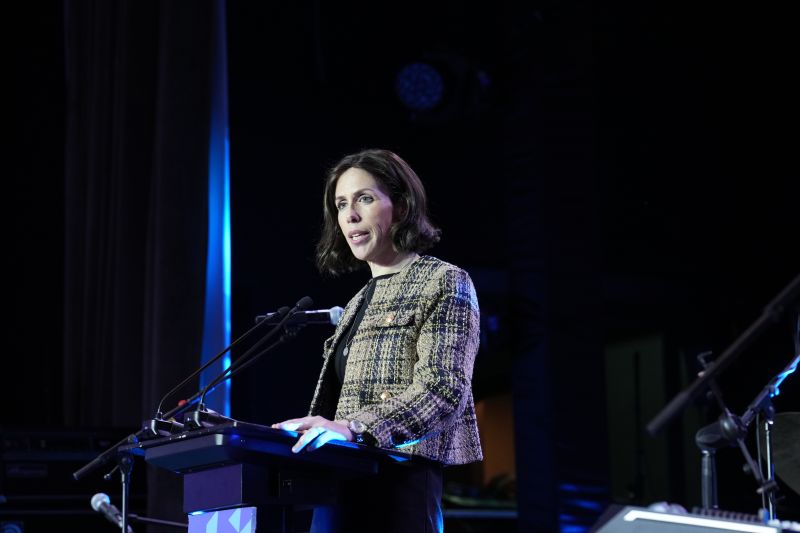
Chaya Yosovich joined the Jewish education-focused Yael Foundation as CEO in late 2023, having spent over a decade as CEO of the Shema Yisroel network of Jewish schools in the former Soviet Union. As a child, the Israel-based Yosovich attended Jewish summer camp in Moscow. There she encountered a yearning she’d never experienced before: Here were Jews who had fought for decades just to know they were Jewish. “The passion they had, the hunger — it was beautiful to see,” Yosovich told Rachel Gutman for eJewishPhilanthropy. “They wanted something very, very strong inside, even when they didn’t know exactly what it was.”
Not pretty? Not a problem: According to Yosovich, this journey from recipients of support to supporters shapes how Yael Foundation founders Uri and Yael Poliavich think about giving. The couple, which is giving upwards of $42 million annually, are driven by what Yosovich calls an “investor mindset” — a philanthropic model built on three principles: speed, strategic investment in communities and uncompromising excellence. While traditional foundations may spend a year processing grant applications, the Yael Foundation moves in the span of days, Yosovich said. The foundation also funds what others frequently don’t: general operating support. “Other foundations will give for programs or for specific things like cameras for security, but not, say, the security guard’s salary,” Yosovich said. “We say, ‘You don’t have money for salaries? We’ll give that.’ The money should go directly to where it’s needed, not to what looks good in a report.”



TRANSITIONS
National Council of Jewish Women taps Jody Rabhan as CEO
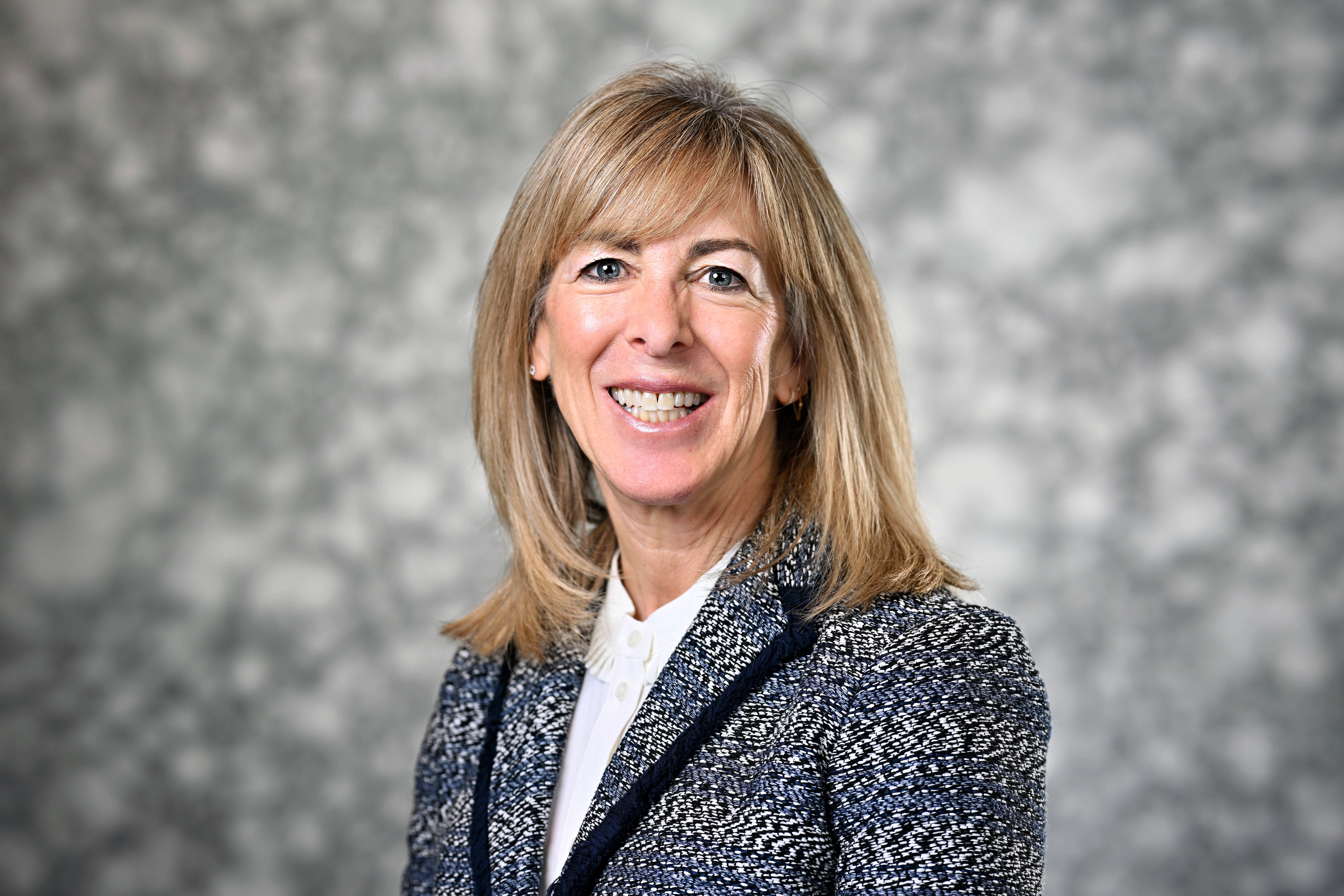
The National Council of Jewish Women has tapped longtime staff member Jody Rabhan as CEO, effective immediately, following the departure of previous CEO Sheila Katz in October, reports eJewishPhilanthropy’s Nira Dayanim. Starting at NCJW early in her career as a legislative fellow, Rabhan has since spent a cumulative 20 years with the council in multiple roles, including director of Washington relations, director of government relations and advocacy and, most recently, executive vice president.
State level: NCJW is about halfway through a five-year strategic plan, and Rabhan will be tasked with bringing the priorities outlined in the plan to fruition. They include expanding NCJW’s advocacy efforts, building a new regional staffing model to bolster state and local “ground game” advocacy for issues ranging from reproductive rights to gun control, and launching the NCJW Center for Jewish Women’s Leadership, to create more “entry points” for women’s leadership. The organization is also in the process of expanding its staff, particularly in communications and regional operations. “We have seen how in moments like this, how challenging it is to really make an impact on the federal level, and how important the states are to the issues that we care about,” Rabhan told eJP.
POST-TRAUMATIC GROWTH
‘Bringing voice to the voiceless’: Former hostages Aviva and Keith Siegel heal through helping others in Kenya
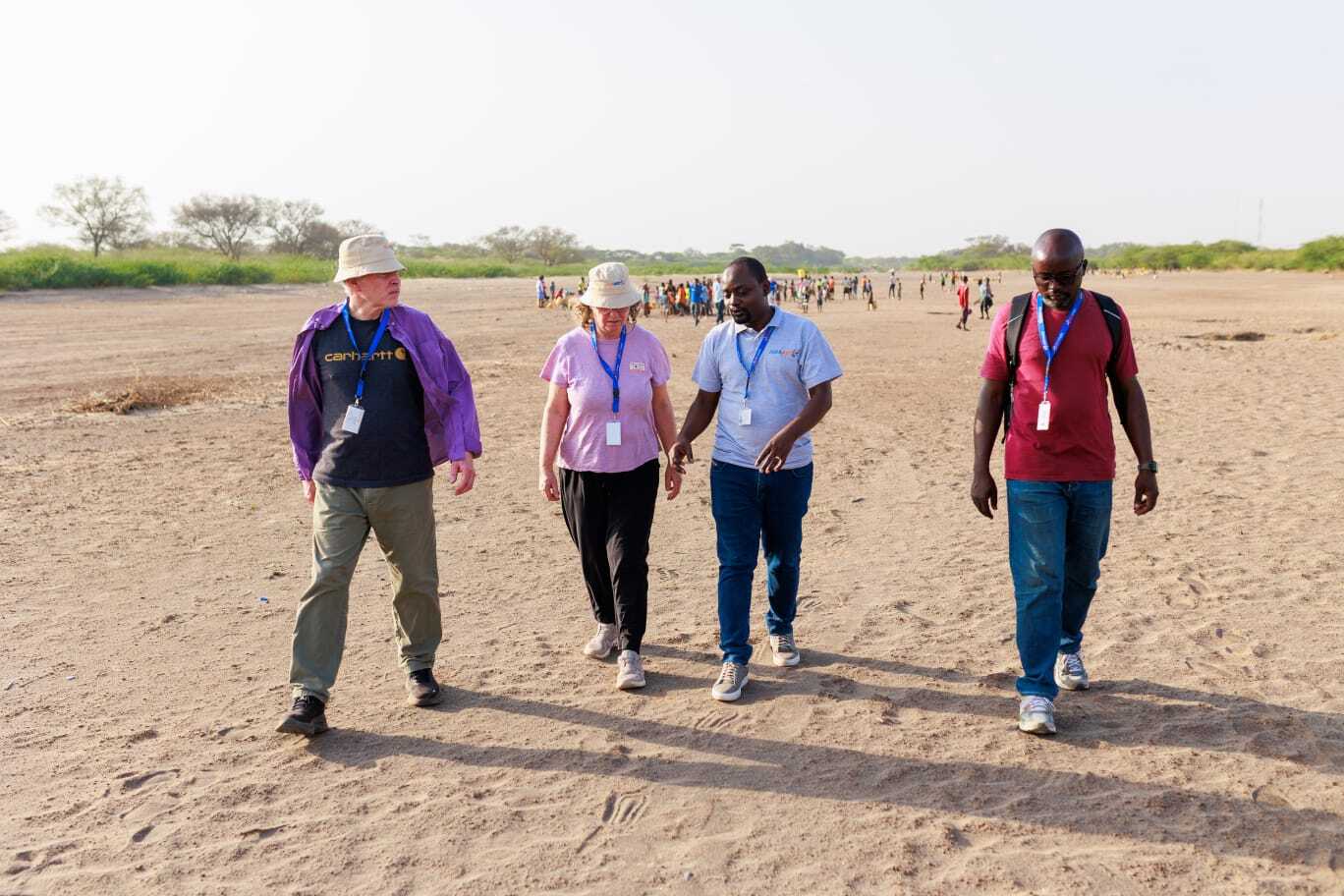
Keith and Aviva Siegel have seen the horrors of war up close and personal — torn from their home in Kibbutz Kfar Aza and taken hostage into Gaza, where Aviva would spend nearly two months and Keith would be held for more than a year. And yet, little could have prepared them for what they would encounter at the Kakuma refugee camp in Kenya, where they spent five days last month volunteering at one of the world’s largest refugee settlements with the Israeli humanitarian group IsraAid. The people they met at the camp, Aviva told Melissa Weiss for eJewishPhilanthropy’s sister publication Jewish Insider earlier this week, were “screaming out with no voice to tell how bad the situation is there. It took me to Gaza, to those moments, and so many moments and so many days of not knowing if I’ll ever live, if I’ll make it, if I’m visible, if anybody is doing anything they could to take me out of there.”
Sharing stories: The couple exchanged experiences both with refugees in the camp and IsraAid staffers — many of whom are refugees themselves. “I really felt like it was like a mutual understanding,” Keith said. “And also feeling like all of us, them and Aviva and I, have experienced suffering. All of us have experienced being hungry because we didn’t have food to eat, being thirsty because we didn’t have water to drink. Just the uncertainty, the lack of security and feeling like death could be imminent.”
Read the full story here and sign up for Jewish Insider’s Daily Kickoff here.
RESPONSE TO BRET STEPHENS
American Jews need both security and identity
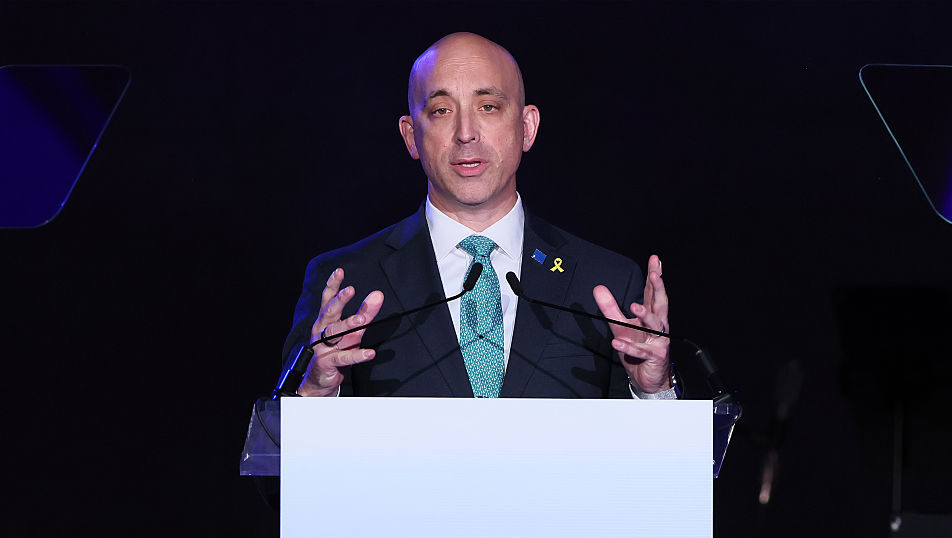
“In a recent talk, New York Times columnist Bret Stephens argued that American Jews should stop obsessing over antisemitism and refocus on Jewish identity. The provocation is useful, because it names a real pathology,” writes Jonathan Greenblatt, CEO and national director of the Anti-Defamation League, in an opinion piece for eJewishPhilanthropy. “When antisemitism becomes the primary organizing principle of Jewish public life, it weakens us. It can turn Jewishness into a defensive crouch — more alarm system than civilization.”
However: “The choice is not ‘fight antisemitism’ or ‘build Jewish life.’ Security and identity aren’t competing priorities; they’re inseparable preconditions for Jewish flourishing in an open society. Shutting down the Anti-Defamation League or other Jewish organizations is not some magic formula that promises self-reliance; it’s a disastrous prescription for unilateral disarmament. From vicious anti-Zionists to violent white supremacists, the threats to the Jewish community are multifarious, dangerous and real. The real question is whether we can do both — intelligently, without panic and with strategies that actually work.”
Bonus: Jewish Insider’s Matthew Kassel examines the ongoing debate within the Jewish community about the focus on antisemitism.
SEEKING SUSTAINABILITY
It’s time for nonprofit organizations to rethink their funding strategy

“In November, a study by Civic Leadership, an umbrella organization of the nonprofit sector in Israel, revealed that more than 70% of Israeli nonprofits are facing significant financial hardship,” writes Lior Zivan, vice president of impact and innovation at the SFI Group, in an opinion piece for eJewishPhilanthropy. “This crisis is unfolding precisely when Israeli society needs these organizations more than ever, at a time when welfare, health and education systems are under immense strain and unable to fully meet the growing needs.”
Long-term solution: “These findings highlight how overreliance on philanthropy can leave social organizations vulnerable to forces beyond their control and emphasize the urgent need to build financial stability through diversified income streams. The question of how nonprofits can develop their own sources of revenue, whether commercial, cooperative or innovative, is no longer a distant strategic concern but a pressing, everyday necessity.”
Worthy Reads
Weaving Connections: In Ynet, Nitzi Yakov spotlights Israeli-owned textile factories operating in Muslim-majority Uzbekistan. “About 200 km east of Tashkent, on the outskirts of an industrial zone, hundreds of Muslim workers sit down every morning near production lines. They cut, sew and pay attention to every millimeter of hardware, kippahs, tallit, kilts and tzitzit vests. The target: IDF soldiers and Jews around the world. … Dr. Victoria Martynova, a specialist in Central Asian countries and a research fellow at Ariel University, sees the Melech Tex case as a clear example of unofficial public diplomacy. ‘Israeli businessmen, ultra-Orthodox, have found deep common ground with religious Muslims in Uzbekistan. They understand the cultural nuances and act with mutual respect. It is not self-evident — and it is working.’ According to her, the company’s output constitutes about 25% of all economic cooperation between the two countries. ‘While Israeli government initiatives in the region have been limited, regional ties like these are developing at an impressive pace.’” [Ynet]
Success Stories: In The Conversation, journalism professor Dan Kennedy responds to the news of massive layoffs at The Washington Post with examples of regional papers offering lessons in sustainability. “Perhaps the most important difference between these papers and the Post — and the hundreds of other shrinking media outlets owned by corporate chains and hedge funds — is that they are rooted in the communities they cover. Whether owned by wealthy people or run by nonprofits, they place service to their city and region above extracting the last smidgen of revenue they can squeeze out. Although I could add a few to this list, I am mentioning five large regional newspapers as examples of how it’s possible to succeed despite the long-term decline in the economics of journalism.” [TheConversation]
Word on the Street
Blackstone founder and CEO Steve Schwarzman is planning to significantly increase his philanthropic activities, The Wall Street Journal reports…
The Met Council’s David Greenfield, Rabbi Moishe Indig, Rabbi Rachel Timoner, Jews For Racial & Economic Justice’s Audrey Sasson, United Jewish Organizations’ David Niederman, JCRC-NY’s Mark Treyger, Agudath Israel’s Yeruchim Silber, Teach Coalition’s Sydney Altfield, Flatbush Jewish Community Coalition’s Josh Mehlman, Marks JCH of Bensonhurst’s Alex Budnitsky were named to City & State New York’s Brooklyn Power 100 list…
The Oklahoma State Charter School Board rejected a proposal for a Florida-based Jewish charter school that sought to open a virtual school in Oklahoma, a year after the Supreme Court blocked a similar effort by a Catholic school. Read eJewishPhilanthropy’s recent coverage of the matter here…
Disgraced financier Jeffrey Epstein paid $100 million to his client Les Wexner in 2008 after Wexner accused Epstein of stealing hundreds of millions of dollars from him over the years, in a previously undisclosed settlement, the Financial Times reports…
A newspaper ad criticizing Israeli President Isaac Herzog‘s visit to Australia, paid for by the Jewish Council of Australia, drew backlash for using people’s names as signatories to its message without their consent, failing to remove clearly false names and including non-Jewish signatories in a public letter nominally from within the Jewish community…
Progressive Jewish activists aligned with New York City Mayor Zohran Mamdani are opposing legislation to create protest-free buffer zones around New York City synagogues, calling the proposal an attack on free speech…
Jay Schottenstein, executive chairman and chief executive officer of American Eagle Outfitters Inc., rang the opening bell on Monday at the New York Stock Exchange with actor Sydney Sweeney…
Campaign finance documents filed this week revealed that former New York City Mayor Michael Bloomberg donated $2.5 million to Pennsylvania Gov. Josh Shapiro‘s reelection campaign in October…
Mark Zuckerberg purchased a home in the exclusive Indian Creek village in Miami Beach, Fla.; the purchase comes as a growing number of California-based billionaires have threatened to leave the state over a proposed tax on ultra-wealthy residents…
Barbara Morgen Wertheimer, the executive director of the Philadelphia-area Pegasus Therapeutic Riding Academy, died last month at 74…
Transitions
Eytan Graubart is stepping down as executive director of Pinemere Camp in the Poconos as he enters the role of director of Camp Ramah in the Berkshires…
Pic of the Day
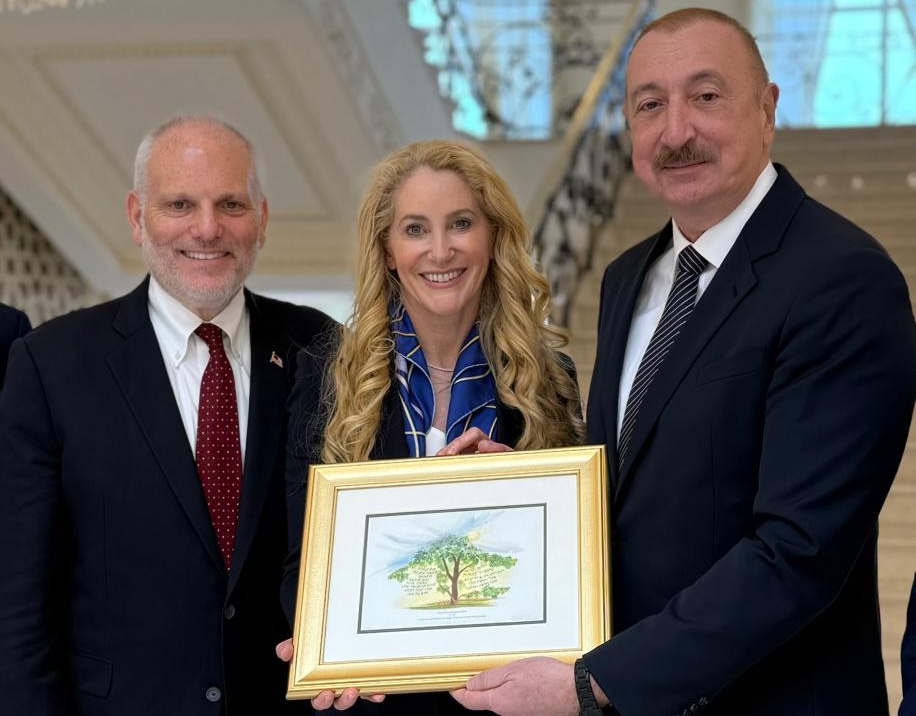
William C. Daroff and Betsy Berns Korn, Conference of Presidents of Major American Jewish Organizations CEO and chair, respectively, present Azerbaijan President Ilham Aliyev with an original artwork by Jerusalem artist Sharon Binder yesterday during a visit to the Central Asian country ahead of the group’s Israel mission next week.
Birthdays
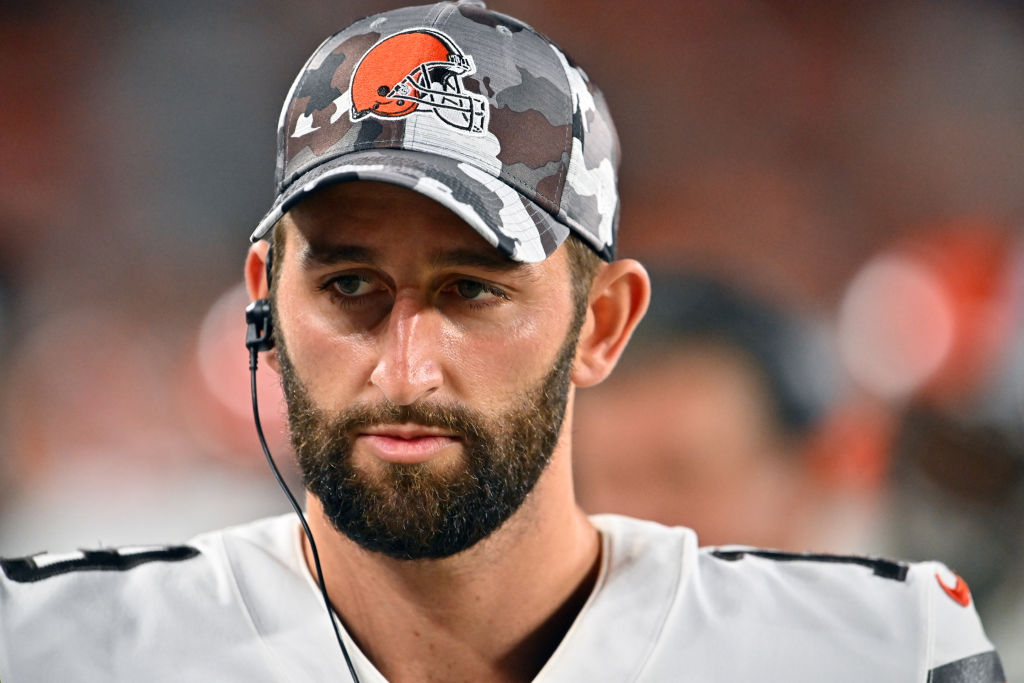
Retired NFL quarterback, he was the 10th overall pick in the 2018 NFL Draft, now an MBA candidate at Wharton, Josh Rosen turns 29…
English businessman, who is the founder and owner of the River Island fashion brand and clothing chain, Bernard Lewis turns 100… CEO of privately held Metromedia Company and a board member of cruise line operator Carnival Corporation since 1987, Stuart Subotnick turns 84… Rabbi in Vienna in the 1980s, in Munich in the 1990s and in Berlin since 1997, Yitshak Ehrenberg turns 76… Swimmer, who won seven gold medals at the 1972 Summer Olympics in Munich, Mark Spitz turns 76… Outgoing CEO of the Walt Disney Company, Robert Allen “Bob” Iger turns 75… Miami-based philanthropist with interests in aviation, real estate development, agriculture, silviculture and fixed income, Jayne Harris Abess… Host of CNBC’s “Mad Money,” James J. “Jim” Cramer turns 71… CEO emerita of D.C.-based Jewish Women International, Loribeth Weinstein… Ethiopian-born, former member of Knesset for the Likud party, he is an activist for the Falash Mura community, Avraham Neguise turns 68… Syndicated newspaper columnist for the Boston Globe, Jeff Jacoby turns 67… Former NASA astronaut, famous for his mezuzah in the International Space Station, he is a professor of astronautical engineering at the University of Southern California, Garrett Reisman turns 58… Member of the Maryland House of Delegates since 2003, Anne R. Kaiser turns 58… Senior director of philanthropic engagement for the central division of the Anti-Defamation League, Matthew Feldman… Executive director of Ohio Jewish Communities (the community relations voice of Ohio’s eight Jewish federations), Howie Beigelman… Israeli pop star (having sold over 1 million albums) and part of the duo “TYP” also known as The Young Professionals, Ivri Lider turns 52… Co-founder and principal at the bipartisan public policy firm Klein/Johnson Group, Israel “Izzy” Klein… Israeli rock musician, David “Dudu” Tassa turns 49… CEO at Citizen Data, she was a candidate for VPOTUS as the running mate of Evan McMullin in 2016, Mindy Finn turns 45… COO of Richmond-based Untangled Media Group, Michelle Levi Noe… Partner in the Washington office of Venable where he leads the firm’s autonomous and connected mobility group, Ariel S. Wolf… Revenue operations manager at Sygnia, Avital Mannis Eyal… Israeli singer, songwriter and dancer, Jonathan Ya’akov Mergui turns 26…