Opinion
COUNT UP
Hanukkah and the long-term value of short-term thinking




 Add EJP on Google
It’s a cold wintry night in Jerusalem about 2,000 years ago. You and your friend are celebrating the first night of this relatively newfangled “Hanukkah” holiday together.
You kindle your oil lamp and beam proudly. One light burning through the darkness.

Yashvi/Adobe Stock
Illustrative. Oil lamps burning.
Your friend looks back, confused. “Aren’t you going to light the others?”
Now you’re confused. “What others? It’s the first night.”
“Right,” he says. “But we do mehadrin min hamehadrin — extra extra credit — so tonight you light all eight. Then tomorrow seven, then six and so on. We count down. The rabbi said so.”
You stare at him. “Huh? We count up. One tonight, two tomorrow, eight on the last night. My rabbi said so!”
It turns out that you and your friend have different rabbis. Unlike today’s universal custom of adding one light each night of Hanukkah in accordance with the Academy of Hillel, the Academy of Shammai actually held the opposite: start with eight, end with one.
The Talmud (Shabbat 21b) records their disagreement, offering two explanations for the dispute. The first explanation says Beit Shammai counts down the days of the holiday that remain, while Beit Hillel counts up the days as they begin. The second, more abstract explanation connects Beit Shammai’s approach to the descending number of sacrifices on Sukkot, while Beit Hillel follows the principle: “Elevate to a higher level in matters of sanctity, and do not downgrade.”
Both explanations, however, merely describe the dispute. Neither fully explains why each side chose its position and not the other.
I believe a clue appears elsewhere. The Talmud (Beitzah 16a) relates that when Shammai the Elder found a choice piece of meat during the week, he would save it for Shabbat. If he found an even better piece later, he’d save that one and eat the first. His entire week was oriented toward the future: eyes on Shabbat, counting down.
But Hillel, the Talmud tells us, had a different way. His approach was to eat the good meat today. Count your blessings as they come, day by day, and God will provide another good piece tomorrow.
Shammai is future-oriented, anticipatory, eye on the prize. Hillel, however, is focused on today, trusting that tomorrow will provide what tomorrow needs. Shammai counts down; Hillel counts up. And so it goes with Chanukah.
Jewish law generally rules in accordance with Hillel; but here, it would seem that Shammai’s approach makes eminent good sense. Be strategic about the future, delay gratification and save the best for what matters most — this is sound wisdom, yet we reject it. Why?
For one, Jewish history has not afforded us the luxury of long-term planning as our primary operating mode. It’s hard to think about the future when you’re running for your life. But more fundamentally, Hillel’s approach taps into a particularly Jewish type of faith: lighting one lamp when you don’t know whether there will be oil tomorrow.
Consider Israel itself. Prime Minister David Ben Gurion famously quipped that in Israel, to be a realist you must believe in miracles. In a region where threats emerge faster than strategies can address them, Israelis have no choice but to stay nimble, responsive and present to today’s reality while remaining adaptive to tomorrow’s surprises.
Yes, it’s true that we Jews have a reputation for being anticipatory in temperament. In our hearts, perhaps we’re Shammai people. But in practice, we’re actually Hillel people.
Attending the Jewish Federations of North America General Assembly last month, I picked up on this duality everywhere. Session after session explored long-term risks, strategic opportunities, and sweeping policy priorities for the future of post-war Jewish life. And at my own organization, JGO: The Jewish Grad Organization, we’re rolling out our own five-year strategic plan as we transition from startup to mid-sized institution.
But here’s the reality: nobody has any clue what’s coming. The biggest dynamic variables affecting Jewish life in recent years have all been surprises, both good and bad.
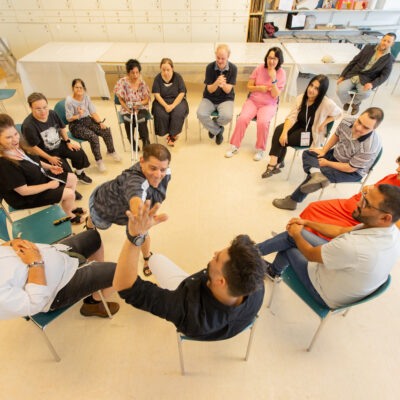
In our campus work, students’ needs evolve faster than planning cycles. By the time the lawyers finish appraising the legality of encampments, the other side has already shifted tactics. While crunching numbers to determine whether there is a “surge” in Jewish engagement, that surge could have already ended. And of course, in our world, any organization still clinging to its pre-2023 strategic plan is irrelevant.
Does that mean we shouldn’t plan? Absolutely not. President Dwight Eisenhower once said: “In preparing for battle I have always found that plans are useless, but planning is indispensable.” The plan itself becomes obsolete the moment circumstances change, but the discipline of planning — reaffirming your values, understanding your limitations, clarifying your objectives — remains invaluable; and not just for tomorrow, but for today.
Which brings us back to Hanukkah. The Maccabees had no grand plan, at least not initially. They had no realistic chance of success going up against the world’s greatest army. But they saw an immediate crisis — the desecration of the Temple, the suppression of Jewish practice — and, fully understanding their objectives, they acted.
And when they rededicated the Temple and found one day’s worth of oil, they didn’t save it for later. They lit right away with whatever they had — never planning for the flame to still burn the next night. From that act of faith, the true miracle emerged.
The organizations that will matter long-term are the ones showing up short-term: paying attention to what’s needed now, understanding priorities, adjusting later based on what they learned. The Jewish future we’re planning for will look different when it arrives — because the only thing certain about any strategic plan is that it will change. Start with one; count up from there.
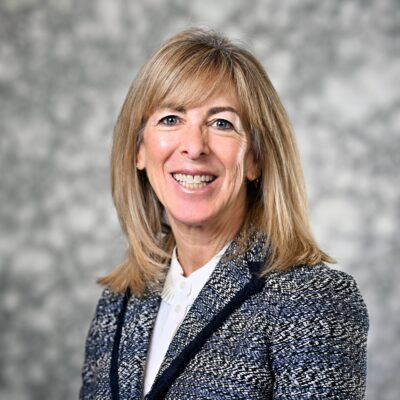
Rabbi Matthew J. Rosenberg is the executive vice president and senior rabbi at JGO: The Jewish Grad Organization, which provides Jewish programming at over 150 graduate school campuses across North America. He previously practiced corporate law and taught at Georgetown University Law Center.