Your Daily Phil: Breaking down who gives, why and who cares about celebrity donations




 Add EJP on Google
Good Tuesday morning and moadim lesimcha!
In today’s edition of Your Daily Phil, we examine a new Generosity Commission study breaking down the types and motivations of people who donate money and volunteer, and preview a new five-part Fox Nation documentary series on religion that includes a segment on the “Surge” in American Jews’ religious engagement post-Oct. 7. We feature an opinion piece by Rabbi Tarlan Rabidazeh offering an Iranian-American Jewish perspective on the current war with Iran and what’s at stake; one by Gidi Grinstein drawing lessons for American Jewry from the experiences of previous “Great Diasporas”; and one by Rabbi David Fainsilber sharing his rural synagogue community’s approach to navigating polarizing times. Also in this issue: Nadav Eyal, Georgia state Rep. Esther Panitch and Maj. (res.) Asaf Dagan.
Ed. note: In observance of Passover, the next edition of Your Daily Phil will arrive on Friday, April 10 — chag sameach!
What We’re Watching
President Donald Trump’s deadline for Iran to reopen the Strait of Hormuz — or face attacks on its power grids and bridges — expires at 8 p.m. ET.
The Trump administration’s Board of Peace has given Hamas until the end of the week to accept a disarmament proposal.
What You Should Know
A QUICK WORD FROM EJP’S JAY DEITCHER
What kinds of people give, and what or who motivates them? Those are the questions a new Generosity Commission study set out to answer.
And it turns out that giving, together with volunteering, is largely tied to values. Respondents in the survey, titled “How and Why We Give,” said that what mattered in their giving and volunteering is that the action aligned with their passions, with 61% saying that giving and volunteering are ways they express their values. Only 6% of respondents were motivated to give by tax breaks, and 3% were motivated by impressing others.
The responses in the study varied widely, effectively offering nonprofits a road map to understanding and reaching their target demographics. The 70-page report was conducted by Hattaway Communications and released late last month by the Generosity Commission, a nonpartisan group of philanthropic leaders launched in October 2021 by The Giving Institute and Giving USA Foundation. Results were collected from tweets and news articles to see what conversations about giving were gaining traction across the nation, as well as a 2022 study of 2,569 U.S. adults and a series of focus groups.
Respondents said they wanted to see tangible results from their actions, which often led them to local initiatives, with participants donating clothes, food or money in ways that could be seen and felt. The majority of respondents valued nonprofits that were transparent, with 67% wanting to know how their money was spent.
The media section of the report showed that while celebrities’ giving and volunteering took up a disproportionate amount of the media conversation, only 9% of respondents cared to hear from celebrities about which causes to support. On the other hand, more than half of respondents trusted friends’ opinions on giving, followed closely by relatives’ and neighbors’. Only around 10% trusted the views of elected officials, journalists or business leaders on giving. Participants also tended to look to social media to gain information about where to give, before email, news or snail mail.
Respondents in the study fell into six groupings: “Super givers,” who were demographically older, higher income, Democrats and suburban; “Connection seekers,” who aspired to give and were often younger, religious, women and politically independent or Republican; “Next-generation doers,” who were younger, racially diverse and skewed Democrat, male and urban; “Civic-minded hopefuls,” who were often white, progressive, women and not religious; “Show-me scrutinizers,” who gave, often to local and religious causes, yet were skeptical of philanthropy, and were often white, older and male; and “apathetic non-givers,” who were often rural, non-religious, politically independent and lacked hope that their actions could trigger change. The final category gave the least and believed that institutions such as businesses and the government should be responsible for helping Americans.
No matter the group, the study showed, people wanted to see tangible results that tapped into their specific values.
FAITH SPOTLIGHT
Fox Nation highlights surge in Jewish engagement as part of new series on religion
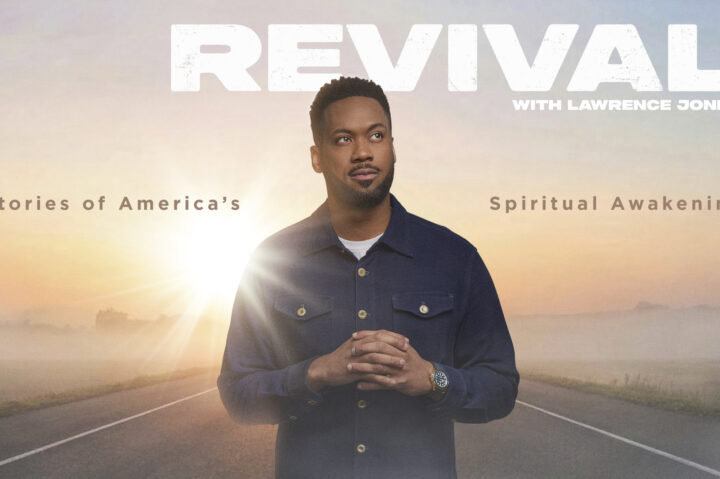
From mass baptisms to packed pews, a new Fox Nation documentary chronicles a profound spiritual awakening it suggests is sweeping America. The five-part series, “Revival with Lawrence Jones,” includes a spotlight on the renewed embrace of religious identity among Jews following the Oct. 7, 2023, terrorist attacks in Israel, reports Haley Cohen for eJewishPhilanthropy’s sister publication Jewish Insider.
Gotta have faith: Episode 3 of the new series, “Jewish Identity,” highlights the record-breaking “Big Shabbat” held in New York City last November. It also features a conversation between “Fox and Friends” co-host Lawrence Jones, the series’ host, and Israeli activist Noa Tishby about her own Jewish identity; and an interview with Rabbi Joshua Davidson, who leads Temple Emanu-El, the oldest Reform congregation in New York City, which organized the “Big Shabbat.”
Read the full report here and sign up for Jewish Insider’s Daily Kickoff here.



GETTING PERSONAL
Our narrow straits: On Iran, freedom and the importance of asking questions
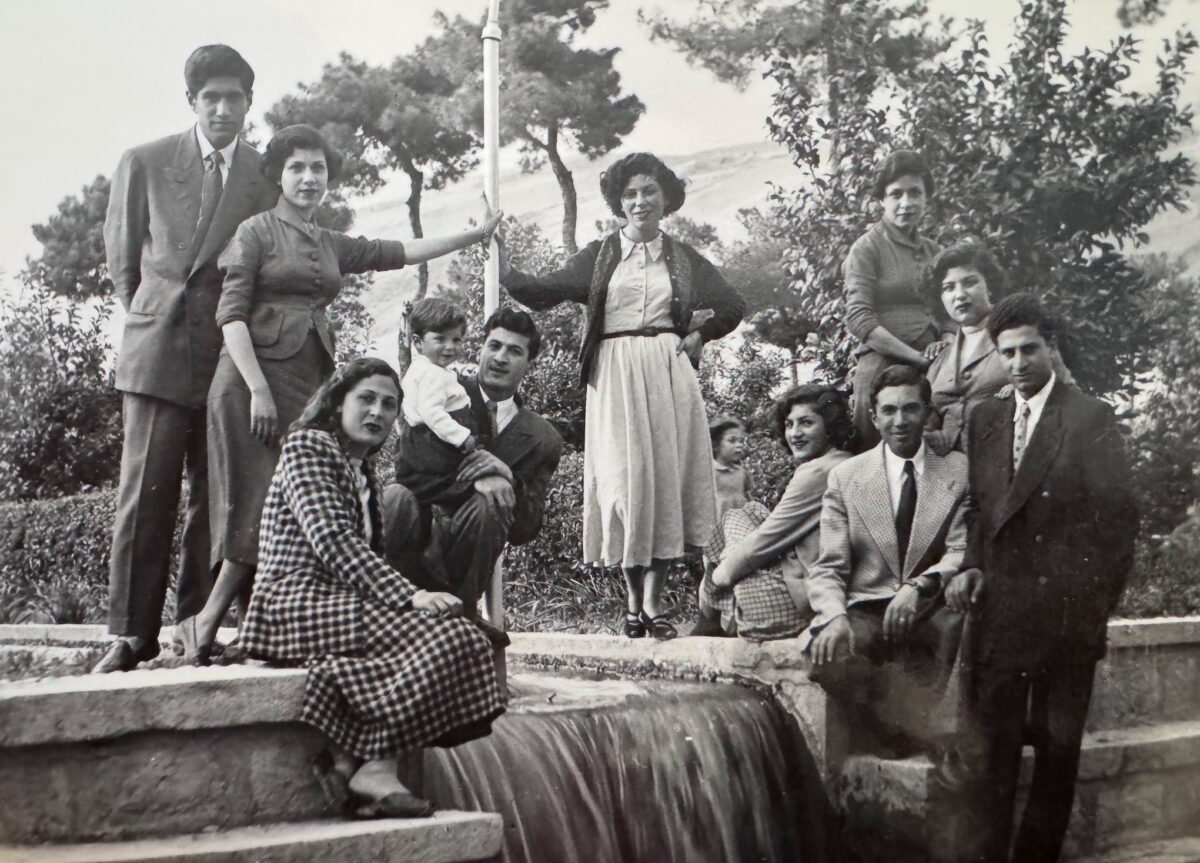
“This is heavy for me to speak about, not as a rabbi but as the daughter of Iranian refugees,” writes Rabbi Tarlan Rabizadeh, vice president of Jewish engagement at American Jewish University and director of the Maas Center for Jewish Journeys, in an opinion piece for eJewishPhilanthropy. “Over the past few weeks, what is happening in Iran has not felt distant to me. I carry it with me, in my body, in my conversations, in the way I move through each day.”
Real talk: “At the recent Zionism conference hosted by the Leffell Foundation, I addressed over 150 rabbis and left that room thinking about one thing. Not that people don’t care. They do. But there is a real gap in understanding what is actually happening in Iran right now and why it matters, not just for Israel, but for the Jewish people and, honestly, for the world. And in a room of rabbis, people our communities look to for clarity, that gap is significant.”
MA’ASEH AVOT SIMAN L’BANIM
From pyramids to skyscrapers: Lessons of our ‘Great Diasporas’
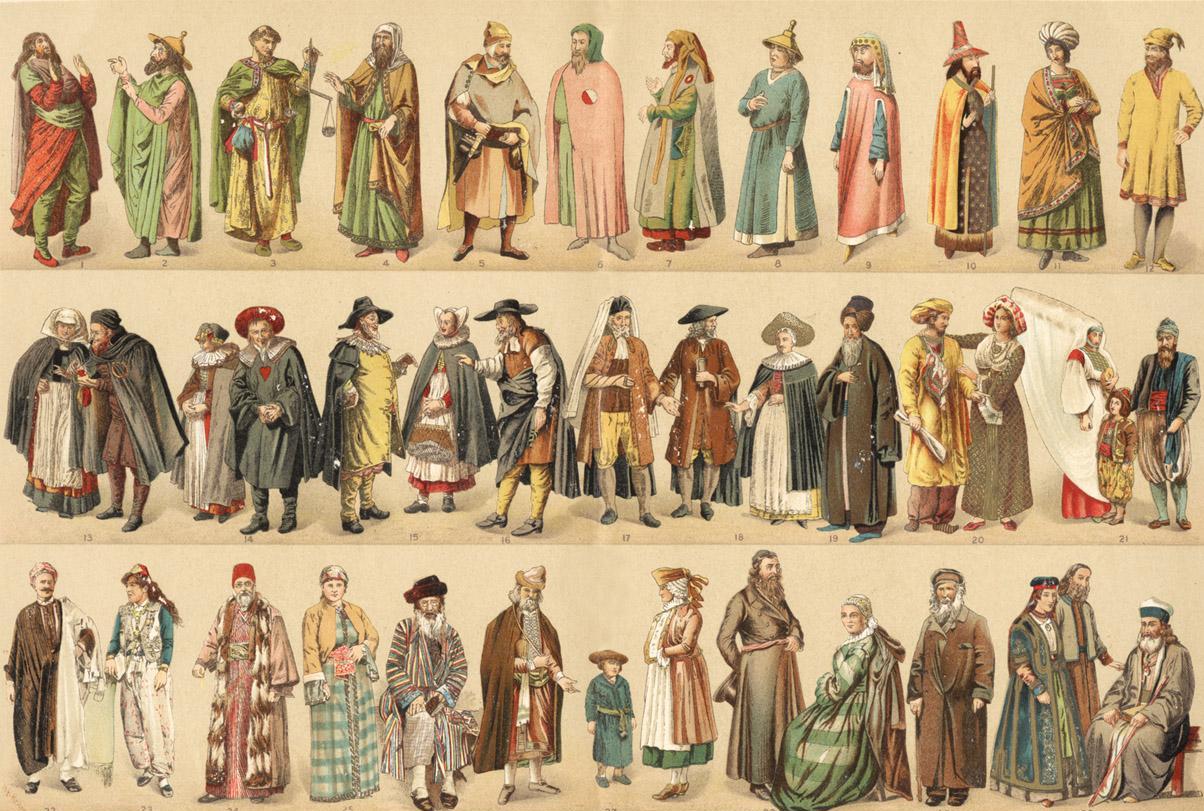
“Pesach is our annual commemoration of the Exodus from Egypt, which launched us into Jewish Peoplehood and ended our first centuries-long ‘Great Diaspora.’ While we tell the story of the Exodus every year, there is also much to learn from the archetypal story of the Israelites’ time in Egypt, which has many relevant lessons for American Jewry,” writes Gidi Grinstein, founder and president of Reut Group, in an opinion piece for eJewishPhilanthropy.
For example: “The heads of the tribes were the established leadership of the Israelites. Moses was an outsider, yet he was chosen to lead — because of his moral compass, his courage and his experience as a former prince of Egypt. In America, the leadership of our community can emanate from anywhere, and anyone with a vision should step forward to effectuate it. ”
NAVIGATING POLARIZATION
The Listening Project
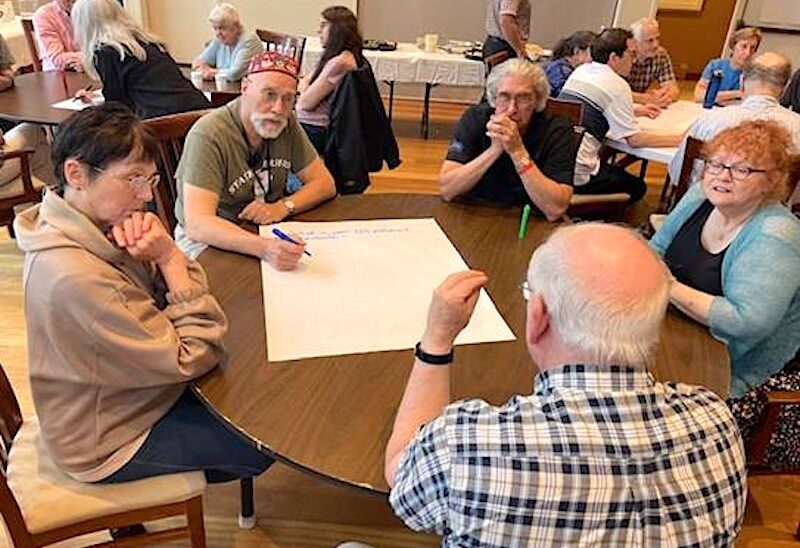
“As the only synagogue within a 25-mile radius, with members traveling as much as one hour to gather, pray and learn, we are the one-stop spot for Jewish and interfaith families,” writes Rabbi David Fainsilber, of rural Vermont’s Jewish Community of Greater Stowe, in an opinion piece for eJewishPhilanthropy. “In a community like ours, and in a post-Oct. 7 Jewish world, could we avoid splintering into ideological camps?”
On the line: “We knew what was at stake if we failed. Adults — including parents of young children — quietly walking away from Jewish life; children growing up without b-mitzvah ceremonies or meaningful Jewish bonds; unaffiliated Jews in our area, already alienated by early childhood Jewish experiences, steering clear of our doors; and a shrinking sense of shared responsibility for sustaining community itself.”
Worthy Reads
The G Word: In his Substack column “Between Us,” Nadav Eyal explores the relationship between Israel, Zionism and the Diaspora. “Now more than ever, Israelis are bound by a shared fate to Jews in the diaspora. This moment demands a reassessment: a renewed relationship with the notion of the galut, and a recognition of the diaspora’s intrinsic worth. Jewish communities abroad are not waystations en route to Israel, nor auxiliaries of the state, but integral to the fullness of Jewish life. To many reading this in English, it may seem self-evident. In the Israeli narrative, it is not.” [BetweenUs]
Reclaim Compliance: In the Stanford Social Innovation Review, Martha Lackritz-Peltier encourages funders to approach compliance as a tool that enables rather than impedes philanthropy. “Philanthropy can maintain strong compliance while also encouraging trust, transparency, and greater diversity in giving, but funders must first understand the extent of existing compliance and where there is room to better operate within the limits of the regulatory reality. Funders have an opportunity and an obligation to identify what true risk is to their missions and operations, and how that risk impacts their grantees. They must move from a zero-risk approach to one that dissects context-specific risk and works directly with grantees to minimize harm on both sides. Only then can they make informed decisions based on reality, not fear, and deepen the impact they seek to achieve.” [SSIR]
Data Dive: In Urban Wire, Dashni Sathasivam and Denice W. Ross share insights from funders about supporting local, people-centered data systems. “Communities need accurate data to design programs that help residents. As federal data sources that inform economic mobility, social services, health, and other local programs become less reliable, local governments and nonprofits face new challenges. Historically, philanthropy has supported states and localities through these and other strategies: fostering a pipeline of data talent among local and state government sectors [, and] building in-house capacity and learning across government and community organizations via training, technical assistance, communities of practice, and technologies. To bridge federal gaps in this moment, philanthropy can step up their role in growing state and local government and nonprofit data capacity.” [UrbanWire]
Word on the Street
The four victims in Sunday night’s deadly Iranian missile attack that struck a Haifa apartment building were identified as husband and wife Vladimir Gershovitz and Lena Ostrovsky Gershovitz, their son Dimitri “Dima” Gershovitz, and his wife, Lucille-Jane Gershovitz; the four members of the Gershovitz family were buried in Haifa’s Sde Yehoshua cemetery earlier today…
Haaretz examines how the ongoing war with Iran has exacerbated long-standing mental health issues in Israel’s Arab community…
Prominent Jewish figures and Trump administration officials gathered in the Oval Office yesterday for an event hosted by President Donald Trump commemorating the Passover holiday, Jewish Insider’s Emily Jacobs reports. Attendees included: Martin Marks, the White House Jewish liaison; Rabbi Yehuda Kaploun, the Trump administration’s special envoy on antisemitism; Rabbi Moshe Margaretten, director of the Tzedek Association; Matt Brooks, CEO of the Republican Jewish Coalition; William Daroff, CEO of the Conference of Presidents of Major American Jewish Organizations; Jeff Miller, chairman of the United States Holocaust Memorial Council; Rabbi Levi Shemtov, the executive vice president of American Friends of Lubavitch (Chabad); Rabbi Chaim Dovid Zwiebel, executive vice president of Agudath Israel of America; Rabbi Meir Soloveichik, vice chair of the United States Commission on International Religious Freedom; and freed Israeli American hostage Edan Alexander…
A group of former captives and their family members denounced the selection of Gal Hirsch, the Israeli government’s point person on the hostage situation, to light an honorary torch on Israeli Independence Day, with one former hostage calling the decision a “slap in the face” in light of Hirsch’s criticism of the protests for their release…
A group of Jewish Georgia politicos gathered last Thursday for a first-of-its-kind-event at the Georgia Statehouse: the “Sine Die Seder.” Organized by state Rep. Esther Panitch, a Democrat and the only Jewish member of the Georgia General Assembly, the event brought together around 30 Jewish staffers, journalists, lobbyists, interns, a former attorney general and more to celebrate Passover on the final night of the legislative session, known as sine die, Jewish Insider’s Marc Rod reports…
The World Health Organization announced that it was suspending operations in the Gaza Strip after one of its contract workers was killed in what it called a “security incident”…
An appellate court reinstated a $656 million judgment against the Palestinian Authority and Palestine Liberation Organization following a 2025 Supreme Court ruling allowing American victims of Palestinian terror to sue the groups under the 1992 Anti-Terrorism Act…
The New Yorker does a deep dive into OpenAI CEO Sam Altman’s professional trajectory and leadership of the artificial intelligence company…
Bill Ackman’s Pershing Square Capital made a bid for Universal Music Group, valuing the company at $63.5 billion; if successful, the acquisition would merge Universal with Pershing Square Sparc Holdings and move its stock listing to the New York Stock Exchange…
U.K. Education Secretary Bridget Phillipson called on organizers of this summer’s Wireless Festival to drop Kanye West as the concert’s headliner over his past “completely unacceptable and absolutely disgusting” antisemitic comments, as U.K. officials reportedly consider revoking West’s permission to enter the country…
Meanwhile, the festival’s promoter defended West’s “legal right to perform” in the U.K., as Diageo and Anheuser-Busch InBev dropped their sponsorships of the summer concert series…
The Israeli military recognized combat navigator Maj. (res.) Asaf Dagan, who killed himself after suffering from post-traumatic stress disorder, as a fallen soldier, following a monthslong legal and public relations campaign…
Major Gifts
The Alfred Street Baptist Church in Alexandria, Va., has pledged $1 million to pay off the debts owed by the residents of the city’s 1,100 public housing units…
The Ballmer Group is donating $110 million over five years to three California universities — California State University, Dominguez Hills in Carson; California State University, Los Angeles; and UCLA — to expand the behavioral health workforce serving low-income children and youth…
Transitions
Rabbi Gesa Ederberg of Berlin was named the president of the Conservative movement’s Rabbinical Assembly this week; she is the first person who is not from Israel or North America to hold the position…
Rabbi Laura Duhan-Kaplan will be named the next dean of the Aleph Jewish Renewal Seminary on Sunday…
Pic of the Day

A farmer harvests wheat yesterday with a tractor in the Hula Valley of northern Israel.
Birthdays
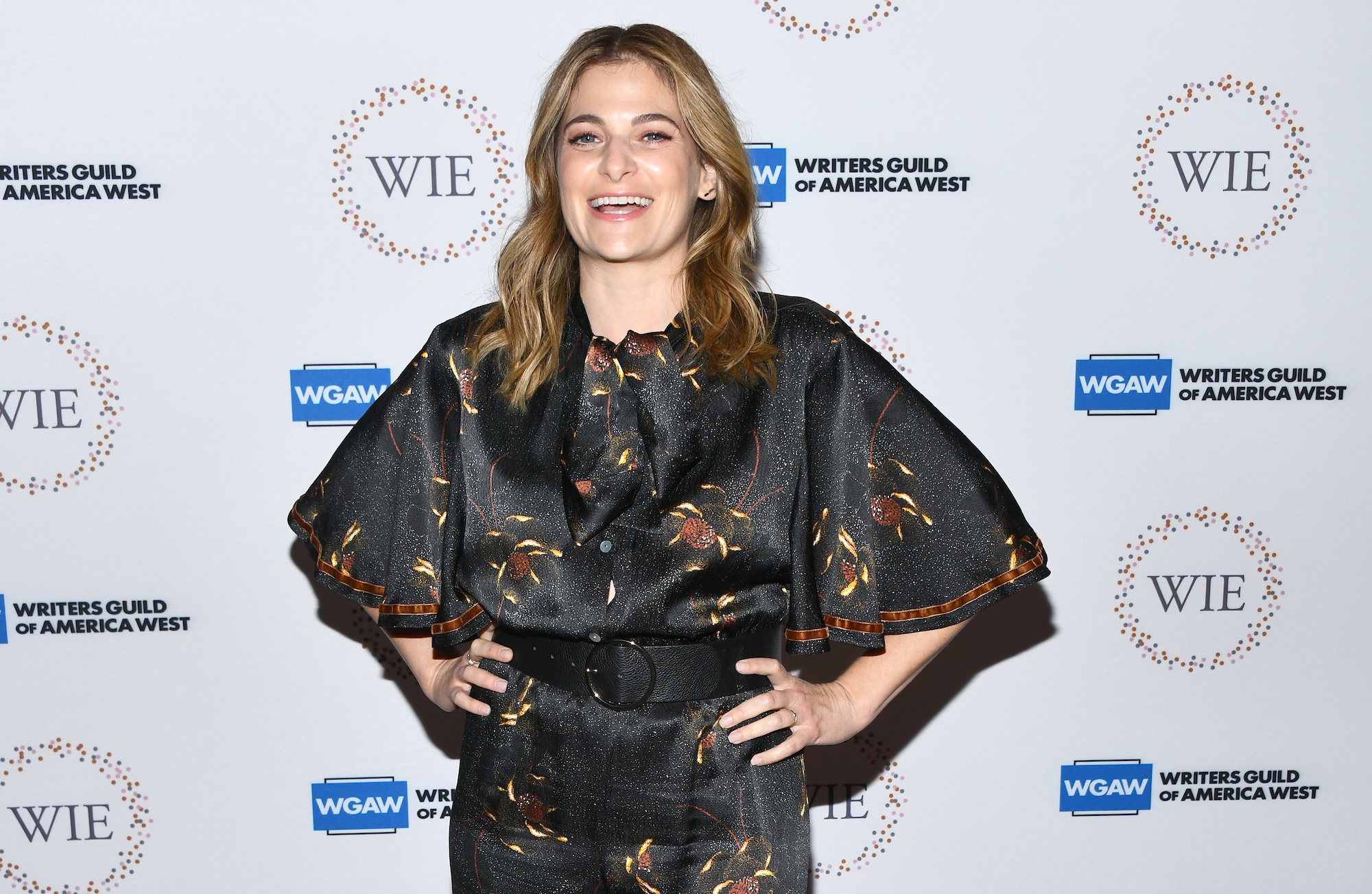
Screenwriter, actress and director, Andrea Berloff turns 52…
Professor emerita of philosophy at Vanderbilt University, Marilyn Ann Friedman turns 81… President of Yale University for 20 years, then CEO of Coursera, an education-focused technology company, Richard Charles “Rick” Levin turns 79… Consultant on aging, longevity, law and policy, Naomi Karp turns 76… Software engineer at FlightView, Jonathan Ruby… Professor at the University of Wisconsin Milwaukee, he was born in Haifa, Israel, Simon J. Bronner turns 72… Los Angeles-based casting director, Jane Sobo… Former director of project staffing at Tower Legal Solutions in Addison, Texas, Ilene Robin Breitbarth… Former member of the House of Commons of Canada from the Winnipeg area, Martin B. Morantz turns 64… White House and Congress editor for USA Today, Darren Samuelsohn… Chicago-based progressive activist, he is a co-founder of Project Shema, Oren Jacobson… Principal owner of JRL Strategy, helping expats relocate overseas, Justin Ross Lee… Senior director of communications at Leidos, Gregory Hellman… Reporter covering the White House and Washington for Politico, Daniel Lippman… Executive director of Camp Seneca Lake for the JCC of Greater Rochester, she was previously an associate director of communications at AIPAC, Marissa Wizig Klegman… Managing partner of Reno-based Mazal Capital, David Farahi… Professional golfer who joined the PGA Tour in 2015 when he won Rookie of the Year, he has since won four tournaments, Daniel Berger turns 33… Pitcher and first baseman for Team Israel at the 2020 Summer Olympics, Ben Wanger turns 29…