Opinion
STRIKING A BALANCE
Why I refuse to choose between Jewish peoplehood and Jewish red lines this Hanukkah




 Add EJP on Google
In Short
Learning when unity sustains Jewish life and when boundaries protect it may be one of the most urgent Jewish tasks of this moment.
I am a Zionist who has spent years arguing for Jewish peoplehood — insisting that Jews remain one people even when we disagree. I have also argued for boundaries: that not every position is compatible with Judaism or with the survival of the Jewish collective. Increasingly, those boundaries are about anti-Zionism.
People sometimes treat this position as incoherent: How can you argue for Jewish unity while insisting on red lines? I don’t think this is a personal contradiction. I think it names a structural problem in Jewish life right now.

Getty Images
Our arguments about Israel and Zionism are so combustible not because we lack moral commitments, but because we have inherited Jewish stories that make competing demands on us — some warning that internal division is fatal, others insisting that survival sometimes requires drawing hard boundaries.
We are living inside that collision now, celebrating Hanukkah while reading Genesis. Each offers a different, and often contradictory, account of Jewish peoplehood, illustrating when unity is paramount and when boundaries are necessary.
The puzzle
The Torah portions we read in Genesis around Hanukkah time tell one of the most painful stories in the Hebrew Bible: brothers turning on a brother. Joseph’s siblings hate him, plot to kill him and sell him into slavery. This past Shabbat we read the Parshat Miketz, in which Joseph, now viceroy of Egypt, encounters his brothers as strangers and is faced with a difficult decision. Can he trust the brothers who once turned against him?
What’s striking is the fallout from this internal strife — the descent of Jacob’s entire family into Egypt and their eventual enslavement. Genesis tells a hard truth: external threats demand vigilance, but what undoes us is what we do to each other — the bonds we break, the brothers we abandon.
Centuries later, the rabbis seized on this motif after the destruction of the Second Temple and refused to blame Rome alone. They blamed sinat chinam, baseless hatred among Jews. Josephus records how Jewish factions burned one another’s food supplies while Rome waited; the Romans realized that attacking would unite the Jews, but letting them destroy one another would do Rome’s work for them.
This lesson — that internal division destroys us faster than any external enemy — feels uncomfortably familiar today. As the war in Israel seems to be winding down, the internal divisions that have fractured the country over the past two years remain unresolved. In America, we are hopelessly divided — even inside the pro-Israel tent — too often devolving into destructive moral purity tests (like going after rabbis for signing or not signing the “right” letter). We watch ourselves doing the enemy’s work.
And then comes Hanukkah.
Contrary to what many of us learned about the holiday as children, Hanukkah is not simply a story of Jews fighting the Seleucid Greeks. It is also a story of Jews fighting Jews. In the second century BCE, the Maccabees didn’t only battle Antiochus IV and his empire — they also fought Hellenized Jews who had allied with that empire, Jews who embraced Greek culture and collaborated with a regime that banned Jewish ancestral practice.
The conflict mixed theology and politics. When the Maccabees fought the Greeks and Hellenized Jews, they were fighting both to preserve ancestral Jewish practice and to preserve Jewish safety and sovereignty from an empire bent on imperial rule and oppression. It wasn’t a pretty conflict: the Maccabees fought a brutal civil war alongside their war against the empire. And the Maccabees won. We light candles for eight nights to celebrate their victory — a victory that included defeating fellow Jews.
So which is it? Is internal Jewish conflict always catastrophic, or is it sometimes necessary? Do we learn from Genesis and the Second Temple to avoid it at all costs, or from Hanukkah that some conflicts must be fought?
A framework
Not all conflicts between Jews are the same, and the wisdom lies in knowing which is which.
Our tradition helps us identify three kinds of intra-Jewish conflict — not as a formula, but as a framework that demands judgment rather than certainty.
Category #1: Internal differences. These are disagreements inside the family that can be catastrophically mismanaged. Joseph’s arrogance, his dreams and his fancy coat made him insufferable to his brothers. Maybe their feelings were justified; but he was still family. This was a conflict about sibling rivalry, not about loyalty or Jewish survival. Many of our contemporary arguments fall here in the form of disagreements, such as between denominations or over Israel policy.
Category #2: Disputes over method. Here we share the same goals and face the same enemies, but we’re tearing each other apart over strategy. This is the Second Temple disaster: Jews killing each other over how to fight Rome while Rome waited outside. This is what the rabbis meant by sinat chinam. Much of our contemporary infighting fits here as well: the judicial reform crisis, where both sides argue they want to preserve democracy; disputes about how to fight antisemitism in America when we all agree it’s bad and dangerous. Painful, consequential — but fundamentally internal.
Category #3: Disagreements over who the enemy is. This is betrayal — when some Jews align with forces seeking to erase or harm Jewish life. The Hellenized Jews whom the Maccabees fought did not merely reinterpret tradition or “assimilate.” They collaborated with Antiochus IV, who banned circumcision, outlawed Shabbat, forbade Torah study and executed Jews who resisted. This wasn’t a theological dispute. It was collaboration with a regime intent on destroying Jewish practice.
Genesis warns us not to turn Category #1 conflicts into Category #3 — don’t make family disagreements into existential threats. The Second Temple warns us that Category #2 conflicts can destroy us even when we agree on what matters most. And Hanukkah teaches us that Category #3 conflicts exist, and that boundaries are sometimes not only permissible but morally required.
The point isn’t that we should copy the Maccabees’ response; their methods were extreme, their religious vision fundamentalist, and what we face today isn’t identical to what they faced in the second century BCE. Rather, the point is to recognize that different kinds of crises demand different kinds of responses. And the work of distinguishing between irritating family members, strategic disputes among allies and actual collaboration with enemies remains essential.
Here is what makes this work so difficult, though: everyone imagines themselves to be the Maccabees. Almost no one recognizes themselves in Joseph’s brothers.
The costs of this misdiagnosis are enormous. Call internal difference “betrayal,” and you commit sinat chinam — you tear the family apart over nothing and weaken us all. Call actual betrayal “just a difference of opinion,” and you enable real danger, strengthening forces that seek Jewish harm.
So how do we navigate this? How do we develop the wisdom to tell the difference?
We need to resist unnecessary division while still naming real betrayal.
The contemporary mess
As Yehuda Kurtzer has argued, American Jewish life has been built around a “big tent,” but since Oct. 7, 2023 many institutions have narrowed it. We can’t navigate this responsibly without distinguishing among different kinds of conflict.
Most Jewish disagreements fall into Category #1 or Category #2, requiring patience, humility and a broad tent. But Category #3 exists. Betrayal is real. And we’re seeing it again, especially around forms of anti-Zionism that serve the enemies of the Jewish People.
Not every Jew who opposes Israeli policy — or who doesn’t identify as a Zionist — belongs in this category. Many Jews, especially younger ones shaped by contemporary progressive political cultures, absorb anti-Zionist frameworks long before they have the tools to evaluate their implications. This, I believe, is a serious moral error — but not in of itself grounds for exclusion from Jewish life or from family and community.
When private individuals hold these views, the appropriate response is engagement, challenge and relationship where possible. This can be done even while refusing to treat those positions as legitimate expressions of Judaism.
But when Jewish leaders use their platforms to advance anti-Zionist movements — especially movements taken up by those who seek to harm the Jewish People such as Hamas or Iran — different boundaries are required. And those boundaries demand confidence.
The danger today often comes not from the loudest anti-Zionist voices, but from Jewish leaders who lend them legitimacy. When Jewish leaders publicly endorse or normalize figures whose rhetoric erases Jewish peoplehood or excuses violence against Israelis, they launder positions incompatible with Jewish safety and self-determination. That is why I draw hard lines.
I will not share a bimah with Jewish leaders whose actions help legitimize violence against Israelis. I will not break bread at communal tables with those who deny Jewish self-determination.
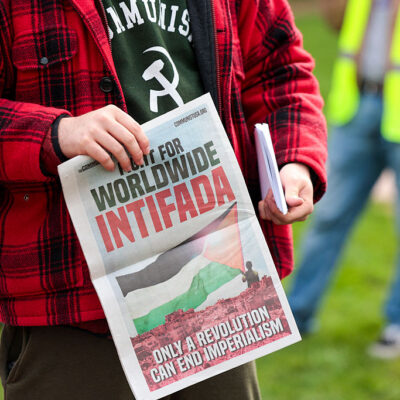
Judith Butler justifying the Oct. 7 attacks as “armed resistance.” Peter Beinart endorsing forms of BDS that cut off dialogue with half the Jewish People. Neturei Karta embracing Iranian leaders who call for the annihilation of Israel.
These are not internal policy disputes. They are alignments with movements that seek Jewish harm. These are the contemporary Pablo Christianis — the medieval convert who didn’t just leave Judaism but actively worked with the Church against Jews, who advocated for burning the Talmud and forced Jews into rigged theological debates designed to humiliate and endanger Jewish communities.
I want to be clear: I’m not claiming these individuals wake up wanting to harm Jews. I’m saying intent doesn’t erase consequence. When Jews align with movements that justify violence against Jews, that deny Jewish self-determination, that partner with regimes calling for Jewish destruction — whatever the motivation — they are functioning as collaborators with forces that endanger us. That alignment itself is the betrayal.
Living in the tension
So where does this leave us?
It leaves us needing to hold Genesis, the memory of the Second Temple and Hanukkah together without collapsing into the simplicity of any one story.
When I’m tempted to accuse someone of betrayal, I have to ask myself: Am I misreading a family disagreement as an existential threat? Am I turning disagreement into exile, repeating the mistake Genesis warns us about: brothers who could no longer see one another as kin?
And when I’m tempted to minimize genuine alignment with forces that seek Jewish harm, I have to ask the opposite question: Am I being naïve? Am I so afraid of causing division that I’m enabling real danger, repeating the blindness that Hanukkah warns us against?
The default should be generosity; sinat chinam destroyed the Second Temple. At the same time, commitment to Jewish peoplehood cannot mean refusing to name real danger when it appears.
This is what makes this moment so agonizing. Loving the Jewish People sometimes means protecting one part of the family from another — not by erasing disagreement, but by taking harm seriously. I’ve been told that “peoplehood” requires welcoming all Jews, even those who traffic in rhetoric that dehumanizes Israelis. But accepting that would mean betraying Israelis themselves — my brothers and sisters — for whom that dehumanization is not theoretical but dangerous.
This is the hard balance: being responsible for the whole sometimes means refusing to flatten real differences, and sometimes refusing to weaponize them into excommunication.
The discipline being demanded of us now is to develop the wisdom to ask the right questions and to identify which conflict we are facing — and the humility to keep checking ourselves against all of our stories.
Happy Hanukkah. May we have the courage, restraint and discernment required to be responsible for one another.
Mijal Bitton is the spiritual leader of the Downtown Minyan in New York City and scholar in residence at Maimonides Fund. She co-hosts the podcast “Wondering Jews” and writes weekly on her Substack, “Committed.”