Opinion
KNOWLEDGE SHARING
To combat hate, we need more than coordination — we need an interdisciplinary approach




 Add EJP on Google
My father was a thoracic surgeon, my mother a pediatrician. Our dinner discussions were frequently about medicine — and sometimes about medical mishaps. The most memorable was a story my father told about the days before IV fluids came in plastic bags. A doctor had instructed that a patient be given IV fluids and orange juice, and some brilliant nurse mixed them together. Orange juice pulp in veins never ends well.
There were stories of botched surgeries and the sometimes heated discussions at Morbidity and Mortality meetings, where the goal was to shine a light on what went wrong. Conversely, the doctor who treated my mother’s rare cancer (which had, depending on which study you believed, a 0% or a 0.5% chance of survival rate) not only called around the world to figure out what to do, but shared what he discovered. My mother lived for another 20 years, and got to know her grandchildren.

iStock
Having a structure that seeks knowledge of what works and what doesn’t, what principles should guide decisions, and how to share this information, is essential for the field of medicine.
Sadly, we don’t have something akin to that among the groups and practitioners who focus on what may be our most deadly disease: hate.
There’s a lot of useful information that’s siloed in various academic fields: from brain science, which examines how quickly we perceive who is “us” and who is “them”; to social psychology, which shines light on our group identities; to political science, which helps us understand why conspiracy theories and hate work in politics; to economics, which helps us think about the monetary costs of hate.
The field of hate studies is an interdisciplinary attempt to pull together these various strands of knowledge to focus on how hate works, and what can counteract it. The Bard Center for the Study of Hate just released a first-of-its-kind book, Simply Human: A Guide to Understanding and Combating Hate (University of Toronto, 2025). It has chapters on how to counter hate speech effectively, the role of humanizing and relatable stories, how to approach hate crimes, how memory works (explaining how group memories can clash or be a source of compassion and joint projects) and the impact of our philanthropic structures on hate.
The first chapter is co-authored by a philosopher who looks at the ethics around how we fight hate. He ponders whether there should be something akin to a Hippocratic oath — we should at least be able to articulate sound reasons why we believe what we propose to do will not make matters worse.
During the drafting process, he also had the practical suggestion: that we set up Zoom meetings with people involved in NGOs fighting hate, so that he and the other authors could have a better understanding of how these groups function, what their guiding principles are, what they wouldn’t do and how not to let the hate they are fighting “consume them.” These discussions, with representatives (past and present) of such NGOs in the U.S. and Canada (including those from some Jewish NGOs), helped make this book even more focused and practical. Joe Levin, the co-founder of the Southern Poverty Law Center, was one of the first people we consulted. He not only shared his long expertise and insights over Zoom meetings, he wrote the book’s powerful foreword.
Perhaps the most important part of the book is a checklist, publicly available, that pulls the principles from the preceding chapters together as a tool for groups and the donors who support them. It recommends not only scheduled post-mortems on programs of the past, but also an internal structure for continued evaluation and learning, including having some staff assigned to take a devil’s advocate position. If each group in the countering hate space conducted a formal annual review of the principles from this book (perhaps at a board meeting), along with an institutional willingness to share what has worked, and what hasn’t, the exercise might help us become a somewhat healthier society.
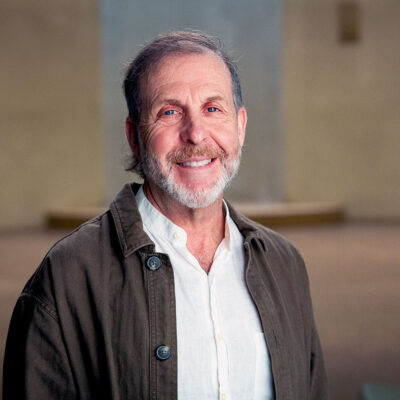
Kenneth S. Stern is the director of the Bard Center for the Study of Hate, editor of Simply Human: A Guide to Understanding and Combating Hate (University of Toronto, 2025) and the author of five other books, including The Conflict over The Conflict: The Israel/Palestine Campus Debate. Funding for Simply Human was provided by a grant from GS Humane Corporation.