WHAT YOU SHOULD KNOW
Preparedness empowers: CSS-MDA partnership highlights expanding layer in community security

IAISI/Getty Images
Illustrative. Entrance to a synagogue.




 Add EJP on Google
Five minutes. That’s how quickly a severe hemorrhage can become fatal if a major artery is involved and no intervention occurs, according to the Stop the Bleed, the emergency response curriculum developed after the Sandy Hook mass shooting.
If that figure is unsettling, consider this: The median response time for emergency responders in the U.S. is seven minutes for urban areas and 10 minutes for rural areas, according to the National Emergency Medical Services Information System — and that is counting from when they are dispatched, not from when the incident occurs.
In the absence of imminent danger, viewed from the safety of a smartphone or a computer screen, this information can still be anxiety-provoking, all the more so in a period when it seems the only thing American Jews can predictably expect is the unexpected. But put someone in an actual emergency situation, and that knowledge could be paralyzing.
The antidote to that paralysis is training — information and practice that empower people to act and even save lives.
That’s the reasoning behind the Community Security Service’s new partnership with American Friends of Magen David Adom, announced last week, which will provide the CSS network of 7,000 volunteers at synagogues nationwide with access to specialized trauma-response training created by Israel’s national emergency response organization. It’s also why the Secure Community Network incorporates Stop the Bleed and MDA curricula into its own layered approach to Jewish community security.
The AFMDA partnership with CSS will center on MDA’s “First 7 Minutes” incident-response training, which translates MDA’s firsthand knowledge of what decisions and practices are most effective in ensuring victims survive until medical services arrive. In the course of the training program, participants learn to assess an emergency, prioritize care, control severe bleeding and make decisions under pressure. It draws on MDA’s mass-casualty experience and is generally taught by MDA staff who have responded to actual terror attacks in Israel; but in this case, CSS volunteer instructors will undergo “First 7 Minutes” training at CSS Academy and then incorporate the program into the existing security and safety curriculum delivered to the CSS grassroots network of more than 7,000 volunteers.
“We are very excited about this partnership with American Friends of Magen David Adom,” Richard Priem, CEO of CSS, told eJP.
“We were a little bit hesitant because our entire model is predicated on preventing terrorist attacks from succeeding,” he noted. “At the same time, we cannot stick our head in the sand and ignore the fact that terrorist attacks have been increasing, abroad and in the United States, and it is not inconceivable that there is going to be a terrorist attack” at a location where a CSS is directly active or one of its volunteers is in attendance. “If that’s the case, we want those community members to have these skills, to save lives.”
“It aligns with our philosophy of empowering our community to protect itself; empowering our community to feel safe and secure; and in this case, empowering our community to know what to do should the worst happen,” Priem said.
“The math argues for the community to be trained and prepared, which obviously includes knowing what to do once an event when an event happens,” said Michael Masters, national director and CEO of SCN. “The statistics bear out that the actual injury is not the cause of death in most of these attacks. It is the actual delay or time difference between rendering life-saving aid.”
“How quickly people are able to mobilize, how quickly they’re able to set up a perimeter, how effectively they’re able to work with law enforcement, how they’re able to communicate with one another and other institutions — that is all a trained response,” said Masters. “And we often say within our network: You never rise to the occasion; you fall back to a level of training and preparedness.”
“We have known for some time the criticality of trauma and life-saving training as a professional network that has grown in interest and need in the community broadly,” said Masters. “Of course, one of the driving factors for those types of curriculums here in the United States was the the Sandy Hook massacre, which resulted in the creation of the nationally-recognized Stop the Bleed curriculum, which SCN leverages as one part of our portfolio, in addition to partnerships and work with other organizations like Magen David Adom and the Israeli Trauma Coalition.”
Stop the Bleed focuses on how to control severe bleeding, teaching three specific techniques: applying direct pressure to a wound, packing a wound and using a tourniquet. While “First 7 Minutes” teaches bleeding control methods as well, it also covers a broader set of responses for surviving and helping during a mass-casualty violent attack. MDA’s training incorporates more instruction related to psychological preparedness, training people to function amid chaos and fear.
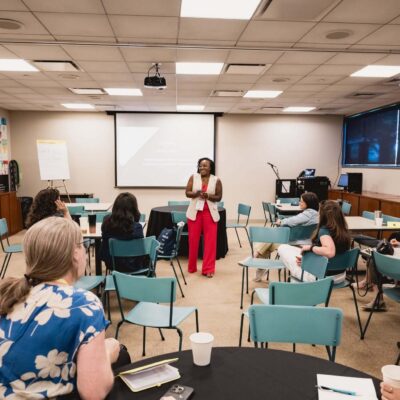
“People are definitely more on edge and realizing that safety is their own responsibility,” Silver Spring, Md., resident Chanokh Berenson told eJP. Berenson founded Tikkun Health Education in 2017 and gives Stop the Bleed, CPR and other forms of emergency response classes at schools, camps, businesses and community organizations throughout Maryland. He recently added AVIRT certification — active violence immediate response training — to his resume to address the issue of school and synagogue shooters, stabbings and mass-casualty car rammings.
Berenson thinks this sort of training should become a standard part of the synagogue experience. “I believe that everybody should receive lifesaving First Aid, CPR, AED, and Stop the Bleed training as part of their bar/bat mitzvah and take refresher classes every couple years to keep their skills current,” he said.
One misconception people have about emergency medical response training, Berenson said, is concern about “getting sued for getting involved.”
“But we have Good Samaritan laws that protect people as long as they act in good faith, keep to their level of training and don’t abandon the person” they try to help, he pointed out.
A little over a week ago on Sunday morning in Silver Spring, Tevi Troy, a senior fellow at the Ronald Reagan Institute and senior scholar at Yeshiva University’s Straus Center, attended his first Stop the Bleed course at Kemp Mill Synagogue.
“When I saw the offering, I didn’t think of it in the context of terror attacks or hate crimes,” he told eJP. “I was just thinking that we had recently had our first grandchild and it might be smart to know some basic first aid if an accident were to happen while we were watching her.”
The specific context of the training eventually became clear, and Troy was still on board. “These days, every Jew needs to do what they are capable of doing in order to prepare for a possible attack,” he said. “Some people can handle all of the trainings and some can do only certain ones, but everyone should be doing at least something.”