Jewish Civics Beyond Political Hobbyism




 Add EJP on Google
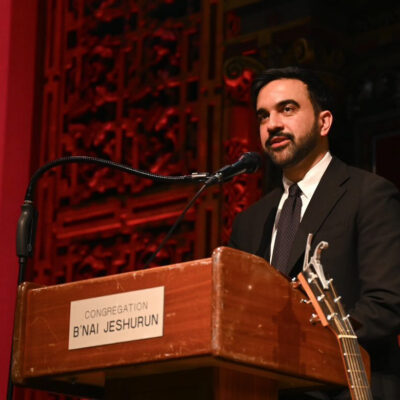
By Eitan Hersh
About a year ago, I started meeting with a 98-year-old political organizer in Brighton, Massachusetts. His name is Naakh Vysoky. A Holocaust survivor, Naakh escaped to the Soviet Union during the war, and then escaped the Soviet Union to come to the United States in 1979. When I met him in 2019, he had lived in a small apartment in the same low-income senior housing facility for over 30 years.
Naakh arrived in the U.S. before many other immigrants from the former USSR. When others arrived after him, Naakh and his wife Klara helped them. They drove their new neighbors to doctors’ appointments, they taught them English, they helped them settle in. In his retirement, Naakh assumed the role of a volunteer leader in the Russian Jewish community in Brighton.
Then a crisis suddenly caused Naakh to get involved in politics. In 1996, the US Congress passed a welfare reform law that, among other things, would take benefits, such as food stamps, away from legal immigrants living in nursing homes. Many in Naakh’s community were panicked. Some contemplated suicide. Naakh went to the press to explain what a hardship this was. Even traveling to Washington, he spoke at the National Press Club: “I ask the Congress on behalf of all refugees, old and sick people, to be more sensitive to the terrible situation they are in, and to take care of them.” But Naakh and Klara did more than make speeches. They started training their neighbors to study and pass the citizenship test so they could retain benefits. Within a few years, they helped 300 of their neighbors get citizenship, though the federal law was eventually amended.
Naakh soon realized that he could serve his community not just through advocacy and not just through mitzvahs like taking neighbors to doctors’ appointments, but through politics as well. He formed a committee. The committee made a slate of candidates for local, state, and federal office whom the community should support. Naakh and his so-called “lieutenants” passed out the slate and made sure the community voted. Within a couple years, Naakh’s precinct, located in the Jewish community housing development where he lived, had 2-3 times the voting turnout rate of the surrounding precincts.
With Naakh’s organization came attention from politicians. His state legislator would shovel his sidewalks. Politicians would walk Naakh to the grocery store. More important, they listened to Naakh when he talked to them about issues his community cared about.
Soon after I completed writing a book in which I tell stories of organizers including Naakh, I learned of Naakh’s passing. He died three days shy of his 99th birthday, on December 31, 2019. I attended his funeral. Along with a few dozen members of the Russian Jewish community, in attendance were the mayor of Boston, the governor of Massachusetts, state legislators, city councilors, and other dignitaries, all who came to quietly honor the man who has been called an old-school boss of a modern-day political machine.
***
I tell this story because Naakh practiced a form of civic and political engagement so different from what most of us are used to. His method is simple: he does politics as a form of community service. He serves his community by accumulating political power so he can respond to concerns, whether small (snow shoveling) or big (immigration policy). He accumulates power not by force or intimidation but by performing years of mitzvahs, good deeds, and building trust with his neighbors. That’s why they listened to him when he suggested who they vote for.
Not only is Naakh’s political participation different from our own; many people actually find it disturbing, at least at first glance. Some of Naakh’s detractors despised his machine. Opponents once asked the U.S. Attorney’s office to look into Naakh and his precinct. It was hard for them to imagine that a person could influence a thousand voters, as Naakh did, by being a mentch.
***
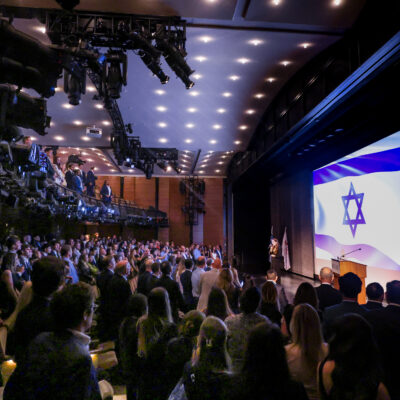
Seven weeks after Naakh’s funeral, I was privileged to join Lippman Kanfer Foundation for Living Torah and Shalom Hartman Institute of North America in a convening on the topic of Judaism and American democracy. At the start of the convening, we learned with Dr. Yehuda Kurtzer a passage from the Mishnah about civic obligations. Two thousand years ago, rabbis wrestled with questions like: which people (homeowners? short term visitors?) can a city compel to pay taxes to build a protective gatehouse? Who gets to decide what public services are prioritized?
I immediately thought of Naakh. After experiencing the brutality of the Nazi and Soviet regime, he came to the United States, became a citizen, and helped hundreds of people assume the rights and responsibilities of citizenship as well. Like the local concrete issues described in the Mishnah (gatehouses for protection), Naakh too was concerned with the basic issues of survival that were important to his neighbors. But once any community is organized for immediate concerns like personal safety, it can take on more ambitious projects. Naakh did that as well.
At a few points during the Lippman Kanfer/Hartman convening, participants expressed some frustration at the form of organized politics they don’t like within the American Jewish community. Some participants from progressive Jewish communities are dismayed at ways that ultra-orthodox communities get out to vote and serve their interests. Some participants opposed to the Netanyahu government in Israel are dismayed about his American supporters’ disciplined and persistent advocacy. Underlying these critiques seem to be not just different preferences for political outcomes, but a rejection of the methods: that the machine-like organizing is itself a corrupt form of civic engagement.
I again thought of Naakh. I am in awe of Naakh’s organizing. I am inspired by his methods. If I want political power for the issues and candidates I care about, I have a lot to learn from Naakh. And yet, I also know that groups I most disagree with in politics can also learn from Naakh. They can adopt his methods too. And they do.
I don’t think there’s one “Jewish” way to participate in politics, but Naakh’s method certainly relates to my own Jewish values. He kept his community close. The members depended on each other to survive and to thrive. This wasn’t a virtual community or a boundary-less community, but a face-to-face community of people who lived together in a neighborhood. They organized politically because they knew that local, state, and federal governments affect their lives and lives of their children. Their own personal histories provided reminders of what an evil government can do. So they worked together to empower their value. To middle class or well-to-do progressives in and out of the Jewish community, Naakh’s story sometimes seems admirable but distant. What if I don’t have a strong in-person community? What if I don’t see around me concrete problems to solve, like the problems of low-income senior refugees in Brighton? If you ask these questions, I think you’ve answered them too. To really be civically engaged, we need to be in a strong community and to run toward, not away from, the concrete needs of community-members in need of help. Out of the powerful and lively Lippman Kanfer/Hartman convening, that’s my most important takeaway.
Eitan Hersh, associate professor in the Department of Political Science and at the Tisch College of Civic Life at Tufts University, is author of Politics is for Power.
This is the second piece in a four-part series reflecting on the Judaism and American Democracy Convening hosted by Lippman Kanfer Foundation for Living Torah and Shalom Hartman Institute of North America.