Opinion
LIGHTS IN THE DARK
In 5787, we celebrate Jewish excellence




 Add EJP on Google
In Short
In a moment when Jews are too often defined by those who wish us ill, spotlighting our community's builders and believers says something essential about who we are.
I grew up in Northern California in the ‘90s — a time and place that could certainly contend for a top-five spot on any “Golden Age of American Jews” list.
The safety and comfort of my childhood stood in stark contrast to that of my grandparents, both Holocaust survivors. Some of my earliest lessons about being Jewish came from their example. They saw their survival as a miracle. By proxy, we — their grandchildren — were miracles, too. With this miraculous existence came an imperative: to show up and, through living our Jewish values, repair what is broken.
Courtesy
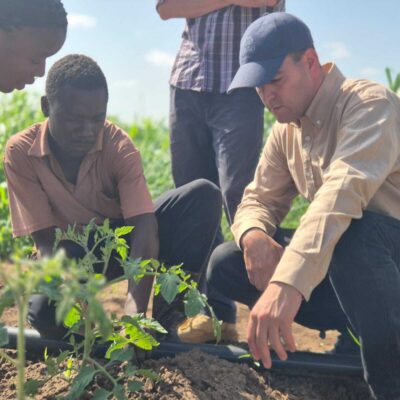
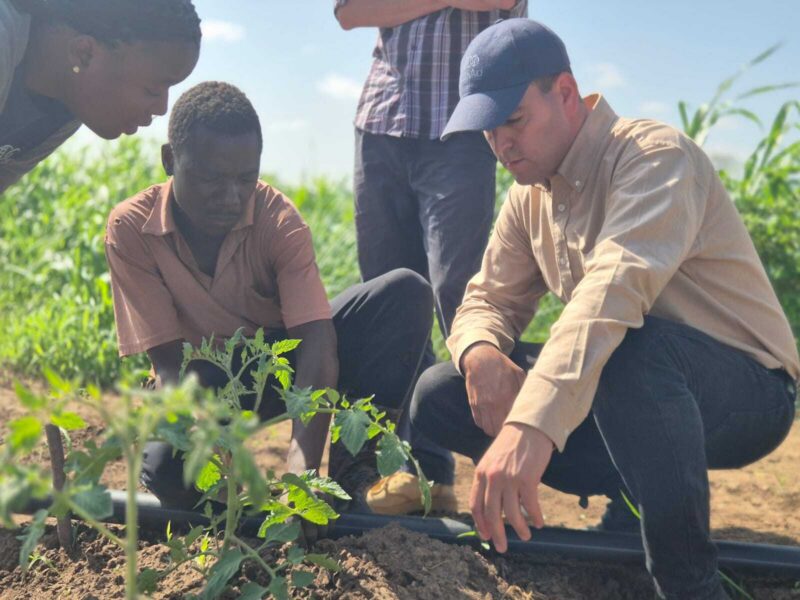
2026 Charles Bronfman Prize laureate Tomer Malchi (right) leading work in the field in Africa.
That idea sits at the heart of The Charles Bronfman Prize, a program I’m now honored to co-lead.
Established in 2004 by philanthropist Charles Bronfman’s children to honor their father, the prize recognizes Jewish social entrepreneurs whose innovative work is improving the world writ large.
After the horrors of Oct. 7, 2023, this mission exists against an entirely different backdrop — and, to be candid, that is precisely the reason I was so eager to take on this professional opportunity.
The brutality of the attacks and the shock that followed remain with us. In the years since, we have watched antisemitism surge globally. Data from the American Jewish Committee and others paints a sobering picture of the fear and hostility many Jews now face. It is painful.
It would be easy, in this moment, to focus only on that reality.
But there’s another Jewish story unfolding right now — one that receives far less attention, but says far more about who we are.
It is the story of Jews who respond to darkness by building. Who answer cruelty with compassion. Who see suffering and decide to act.
Consider Jay Feinberg. Diagnosed with leukemia shortly after college, he responded not by retreating, but by building — founding the Gift of Life Marrow Registry. His work has now facilitated over 5,700 transplants across 47 countries and raised the odds of Jewish patients finding a bone marrow match from under 5% to over 80%.
Then there is Becca Heller. After her first year at Yale Law School, she traveled to Jordan and met Iraqi refugees with nowhere to turn. She came home and built the International Refugee Assistance Project, which has since provided legal aid to over 30,000 people in immediate danger and secured systemic reforms to protect more than 170,000 displaced persons worldwide.
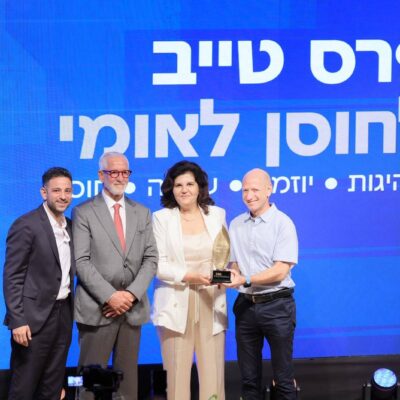
Most recently, we honored Tomer Malchi, who recognized that agricultural science could serve as a powerful three-pronged approach to improve economic well-being, nutrition and climate resilience. As the co-founder of CultivAid, he has spent over a decade building market-driven irrigation and food security infrastructures across sub-Saharan Africa, proving that sustainable development is a universal language.
The Bronfman Prize Laureates saw a problem and decided to build. They were entrepreneurial in the truest sense, refusing to accept the world as it is. Every year, through the prize application process, we review hundreds of individuals like them. They often don’t make headlines, but they are enhancing our collective future.
In a moment when Jews are too often defined by those who wish us ill, this community of builders and believers tells a different story. It says something essential about who we are.
We do not show up in the world to make people like us. Jewish tradition does not ask us to win popularity contests. It asks something harder, but more enduring.
It asks us to act. To repair what is broken. To feed the hungry. To welcome the stranger. To use the resources at our disposal to improve the human condition.
This tradition is the reason Jewish communities have produced such disproportionate contributions to science, medicine, education, culture and social progress.
In this moment, we must not mute the values that have defined Jewish life for generations. We must turn the volume up.
The Charles Bronfman Prize represents something profound: that celebrating leadership is itself a form of leadership. By shining a light on people doing the hard work of improving the world, we remind ourselves, and everyone else, what Jewish values look like in action. Not as a response to hostility, and not as proof of our worth to skeptics, but because this is who we are — this is what we have always done.
The Charles Bronfman Prize has been telling this story for two decades. The next chapter is just beginning.
It may be the most important one yet.
Emily Kane Miller is the co-executive director of The Charles Bronfman Prize and the founder and CEO of Ethos Giving.