Opinion
MEANINGFUL EMBRACE
Faith-driven feminism after Oct. 7, 2023: Showing up when it’s hard




 Add EJP on Google
A Muslim woman I had never met before sat beside me and gave me the biggest, most comforting hug.
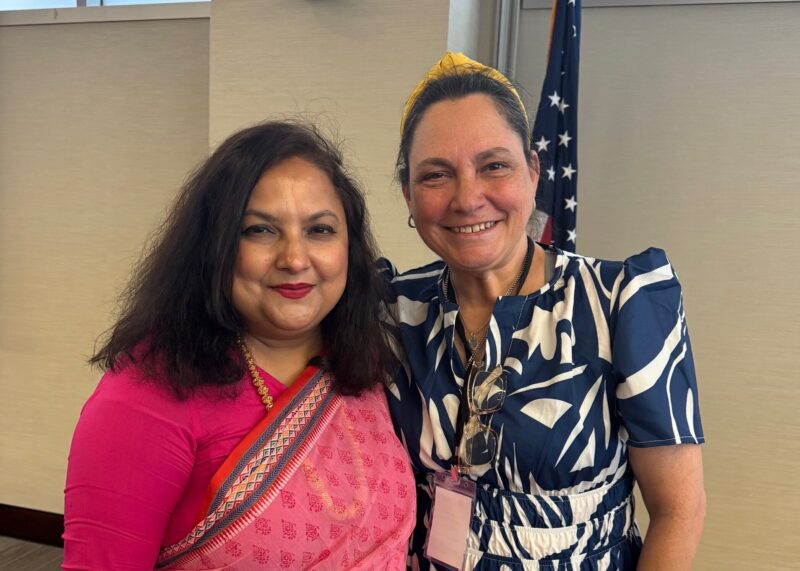
It was spring 2024, and I was at a White House convening on sexual violence in conflict. We had just finished watching “Screams Before Silence,” Sheryl Sandberg’s devastating documentary about the gender-based atrocities committed by Hamas on Oct. 7, 2023. I had seen the film before, but this time, I wept openly; and in that vulnerable moment, a woman named Zebunnesa Zeba Zubair — a Muslim leader and board member of the American Muslim & Multifaith Women’s Empowerment Council (AMMWEC) — reached across pain, across faith, and embraced me.
Courtesy/Daphne Lazar Price
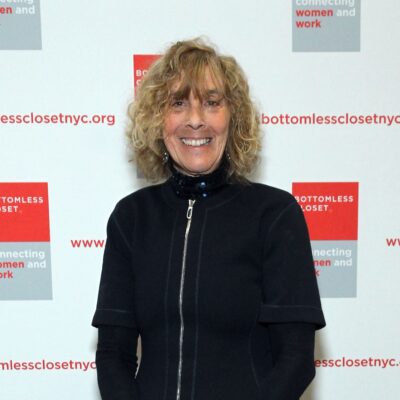
Zebunnesa Zeba Zubair (left) and Rabba Daphne Lazar Price at the National Conference of Women Changemakers Uniting Against Hate in Washington, D.C., July 2025.
After months of having longtime allies ignore the pain the Jewish community was feeling, it was the first time in a long time that I felt truly seen.
At the AMMWEC conference this July, I found her again. I reminded her of the hug. She hugged me once more.
That embrace carried layered meaning. As an Orthodox Jewish woman, I’ve often found kindred spirits among Muslim women. We both navigate religious traditions that are frequently misunderstood by the secular mainstream. We both face scrutiny — over modesty, piety, leadership. We’re often told we are too conservative and too liberal, sometimes in the same breath..
That shared space of faith-driven feminism has been one of the most profound parts of my life. Since the Oct. 7 attacks, I have mourned its unraveling. That’s why I attended AMMWEC’s National Conference of Women Changemakers Uniting Against Hate in Washington last week. The Jewish Orthodox Feminist Alliance (JOFA), which I lead, was proud to co-sponsor the event. For me, it was not just another convening — it was a lifeline.
From the opening moments, the tone was set with moral clarity. AMMWEC’s president, Anila Ali, stood before a room of Muslim, Jewish, Christian and other faith leaders and declared:
“We have one mission. It is to build solidarity and fight the growing cancer of antisemitism and hate in our communities… If I can wear my Allah [necklace], my dupatta [scarf] and my hijab, then my Jewish sisters should be able to wear their Star of David — don’t you think?… That’s why we are here together on one unified platform, to speak up not just for the Jewish people, but for our children and their future.”
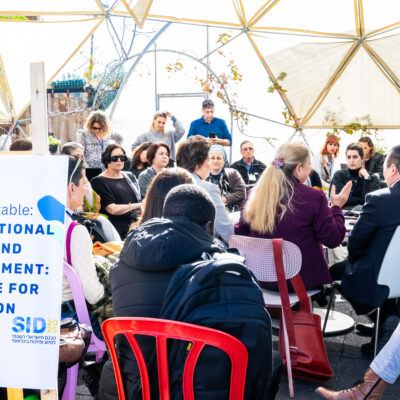
In a single day, about 100 women and men did something rare: We came together for honest dialogue, truth-telling and the hard work of trust-building. We talked about the role of faith in leadership, the erosion of safety in schools, college campuses and health-care settings, and how the media can amplify our values rather than flatten our experiences.
For me, the conference brought a flicker of possibility back to life.
Before Oct. 7, 2023, I believed deeply in the promise of Jewish-Muslim feminist solidarity. I had sat on interfaith panels, built coalitions with Muslim women and collaborated on campaigns to end gender-based violence and religious bigotry. We didn’t deny the difficult politics of Israel and Palestine, but we trusted what we held in common.
Then came the Oct. 7 attacks.
The Hamas attacks on Israeli civilians were horrific. For many Jewish feminists, including myself, the gender-based violence — confirmed reports of rape, mutilation and sexual torture — was especially devastating. These weren’t just atrocities. They were betrayals of everything our feminist partnerships had stood for.
I expected our allies to speak out unequivocally — as we always had — against sexual violence as an act of war and the weaponization of women’s bodies, as well as the spike in antisemitism in America and around the world. In too many cases, however, there was silence. Or worse: Denial, deflection. Even justification. The feminist frameworks we had built — believing survivors, amplifying silenced voices, holding perpetrators accountable — seemed to vanish when the victims were Jewish.
It felt like the world was saying: Me too, unless you’re a Jew.
That silence hurt more than I can express. I found myself retreating — not out of anger, but out of necessity. I even left one beloved multi-faith space when my testimony about the Oct. 7 attacks was met with suspicion and disdain. Ultimately, I turned inward, supporting Orthodox Jewish women who, like me, were grieving and disoriented. It wasn’t a rejection of bridge-building. It was a recalibration. We needed one another.
I want to be clear: I am not asking anyone to choose my pain over someone else’s. I am not asking anyone to declare my pain worse than those experiencing anti-Muslim bigotry. Showing compassion for each community is not mutually exclusive. In fact, being able to see the unique pain we are each feeling and to be able to provide support and comfort to all in need is a key ingredient to finding a path forward.
That’s why JOFA’s decision to co-sponsor the AMMWEC conference mattered. The bravery wasn’t just in what was said; it was in who showed up. The Muslim and Jewish feminists who are still emailing, still organizing healing circles, still refusing to give up on each other — they are my hope. Because if we can’t speak across this divide even now, what was all our bridge-building for?
At the close of the conference, AMMWEC board member Soraya Deen offered me a simple challenge: “Invite 10 friends to your Shabbat table,” she said. “Tell them what you experienced today.”
I plan to.
Feminism must mean more than speaking out when it’s easy. It must mean showing up when it’s hard. It must mean holding space for one another’s wounds — especially when we’re hurting. Sometimes something as simple as a hug can mean more than you can imagine.
We don’t have to agree on everything. But we cannot let silence be the final word.
Rabba Daphne Lazar Price is the executive director of the Jewish Orthodox Feminist Alliance and an adjunct professor of Jewish law at Georgetown University Law Center.