Opinion
WHO IS WISE
Elevating the profession of Jewish early childhood education




 Add EJP on Google
In Short
Early childhood educators need and deserve opportunities for intellectual, pedagogical and leadership training.
“Who is wise? One who learns from every person.”
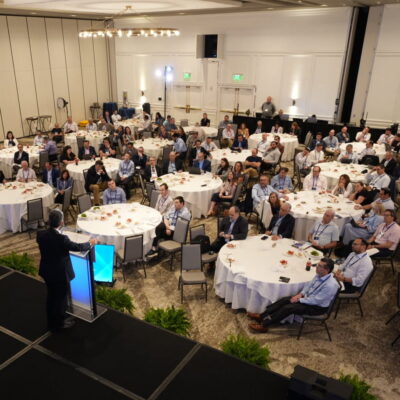
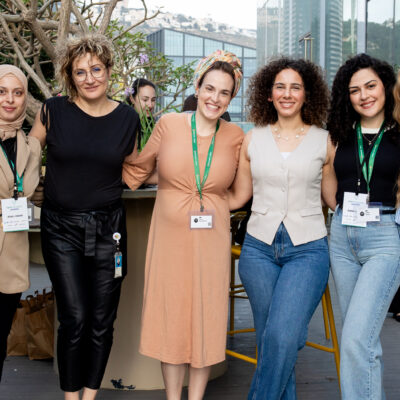
This teaching from Ben Zoma in the Pirkei Avot 4:1 has stayed with me in the weeks since I attended two gatherings dedicated to Jewish early childhood education: the Kehillah and Kavod conference organized by EarlyJ in the Bay Area and the Builders of Jewish Education’s recent conference for educators held in Los Angeles. Both events were filled with thoughtful conversations about pedagogy, Jewish identity, family engagement and leadership, but what struck me most was something deeper: the extraordinary wisdom already present in the field.

Krakenimages.com/Adobe Stock
Early childhood educators sit at one of the most important intersections in Jewish life. They witness the earliest moments when children begin to experience Jewish community, language, ritual and belonging. They guide families who may be entering Jewish communal life for the first time, and they create environments where curiosity, empathy and identity begin to take shape.
If Ben Zoma teaches that wisdom comes from learning from every person, then Jewish early childhood educators are among the most important teachers our community has.
And yet, the profession is not always treated that way.
Across the country, early childhood educators often carry enormous responsibility while receiving limited recognition, modest compensation and few pathways for professional advancement. Of course, these gaps are brought to the forefront when we hear of teachers acting calmly yet heroically during a crisis, such as the recent attack in West Bloomfield, Mich.
Despite the central role that early childhood centers play in Jewish communal life, the educators who lead them are too often asked to do complex educational and leadership work without the professional infrastructure that other sectors of education take for granted. After 25 years in public schools, I can say that even the anemic systems of support in public schools are substantially greater than what I see in Jewish early childhood centers.
Happily, the gatherings I attended over the past few weeks suggest that this reality is beginning to change. At both conferences, educators were not simply sharing classroom activities: they were exploring leadership frameworks, engaging with research on child development and Jewish identity and learning from one another about how to build thriving school communities through thoughtful pedagogy and relationship building.
As I reviewed the workshop descriptions and visited during presentations, I noticed something striking: many of the presenters and organizers were alumni, faculty,or current students of American Jewish University’s Masor School for Jewish Education and Leadership. In fact, the co-organizers of the Kehillah and Kavod conference, Mykenzie Busser and Karla Cianci, are graduates of our master of arts in early childhood program.
This is not accidental. Rather, this reflects a growing recognition that Jewish early childhood education must be treated as a true profession; one that requires rigorous preparation, ongoing learning and strong and supported leadership.
At American Jewish University, our work is rooted in the belief that early childhood educators are worthy of recognition. Through our degree programs for early childhood educators and leaders, we aim to elevate the profession by providing the intellectual, pedagogical and leadership training that this field both needs and deserves. Educators pursue advanced study not simply to earn a degree, but to deepen their ability to guide schools, mentor colleagues and shape the future of Jewish education. In doing so, they are shaping the future of Judaism itself.
The impact of our investment becomes visible in moments like the conferences I recently attended. When educators gather to share ideas, build networks and develop new approaches to their work, they are strengthening far more than individual classrooms. They are strengthening what Miriam Heller Stern, the recently installed CEO of Builders of Jewish Education, calls “the ecosystem” of Jewish early childhood education.
If we want a vibrant Jewish future, we must take this work seriously.
The first sustained experiences that children and their families have in Jewish communal life often take place in early childhood centers. The educators who lead these environments are not simply teaching songs, stories and holidays, and they are certainly not “babysitting.” They are shaping the earliest foundations of Jewish belonging through intentional practice.
Ben Zoma reminds us that wisdom comes from learning from every person. Our community would do well to recognize the wisdom already present among the educators who guide our youngest learners every day, and to invest in the professional pathways that allow that wisdom to flourish. When we elevate the profession of Jewish early childhood education, we are not simply supporting educators. We are guaranteeing the future of Jewish life.
Jay Greenlinger is the dean of American Jewish University’s Masor School for Jewish Education and Leadership