Condemnations of the budding Iran deal grow as more details emerge
Anna Moneymaker/Getty Images
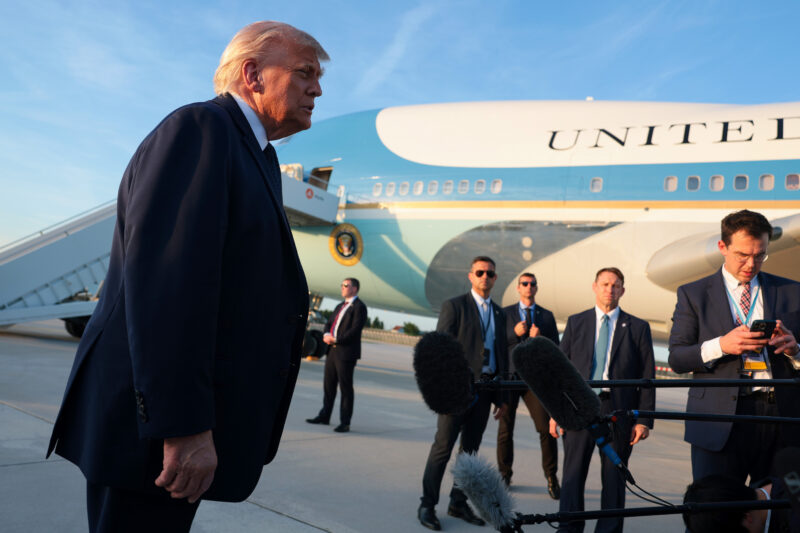
President Donald Trump speaks to reporters as he arrives at Orly Airport to attend a dinner with French President Emmanuel Macron at Chateau de Versailles on June 17, 2026 in Orly, France.




 Add EJP on Google
When news first emerged of an agreement between the United States and Iran to end the war, many Jewish groups were hesitant to weigh in on the matter, holding out until the full details were released. Now, as the official language for the memorandum of understanding has been published, a growing number of initially reluctant Jewish organizations and figures are speaking out about the deal, which some warn emboldens the Islamic Republic and endangers Israel’s national security.
Concerns around the MOU have led even some of President Donald Trump’s staunchest supporters to condemn the agreement and the thinking that went into it.
Eric Levine, a top GOP fundraiser who is on the board of the Republican Jewish Coalition, told eJewishPhilanthropy’s sister publication Jewish Insider yesterday that the war with Iran “achieved none of its stated aims,” including Trump’s pledge to liberate Iranians from a theocratic regime and to end its nuclear program. “We ran 26 miles, and then chose to stop at the last 385 yards,” he said, reaching for a marathon metaphor. “I don’t understand why.” Read JI’s full report on the reactions by GOP donors and activists here.
For many in the U.S., however, the “why” is clear: This has been an unpopular war, causing an even more unpopular energy crisis in the months leading up to midterm elections. The White House was willing to pay a price to end it quickly, even if doing so came at Israel’s potential expense.
The condemnations of the agreement, which calls for an end to Israel’s fighting against Hezbollah in Lebanon, are likely only to grow after four Israeli soldiers, including a battalion commander, were killed today in a strike on their tank by the Iran-backed terrorist militia in southern Lebanon. In a separate incident, five Israeli soldiers were also injured in a drone attack early this morning.
Many of the criticisms of the emerging agreement are similar to those voiced in the lead-up to the 2015 Joint Comprehensive Plan of Action — namely that it provides economic relief to an enemy state that will use those funds to build up its own military capabilities and those of its terrorist proxies. Though some have alleged that the current deal is even weaker, halting efforts to support the Iranian opposition through a “no intervention” clause and restricting Israel’s freedom of action in Lebanon.
As with President Barack Obama’s JCPOA, the new deal does not address Iran’s ballistic missile program, a key area of concern for Israel, which has been repeatedly pummeled by those weapons over the past year. However, unlike Obama, Trump legitimized Iran’s long-range missile program, saying in a press conference this week that the Iranians “have to have some” since others in the region do.
This time around, however, the pushback on the agreement will be more complicated as many of the JCPOA’s greatest critics cast their lot with Trump, who pulled out of the 2015 nuclear deal at their urging. By doing so — and undoing a key foreign policy achievement of Obama’s White House — those JCPOA critics left themselves with few friends in the Democratic Party.
While some of Trump’s supporters hold out hope that the emerging agreement merely represents a stall tactic or the start of a negotiation that can still be turned against Tehran, others have resigned themselves to a new, complicated reality.
The “Heimish Humor” social media account captured the fatalistic feelings in the more conservative parts of the Jewish world in a joke: One person asks how the new Iran agreement sounds, and the other responds, “Hashem is in control of the world,” to which the first replies, “Wow, that bad?”