WHAT YOU SHOULD KNOW
As Iran strikes enter their third day, their duration becomes the critical issue
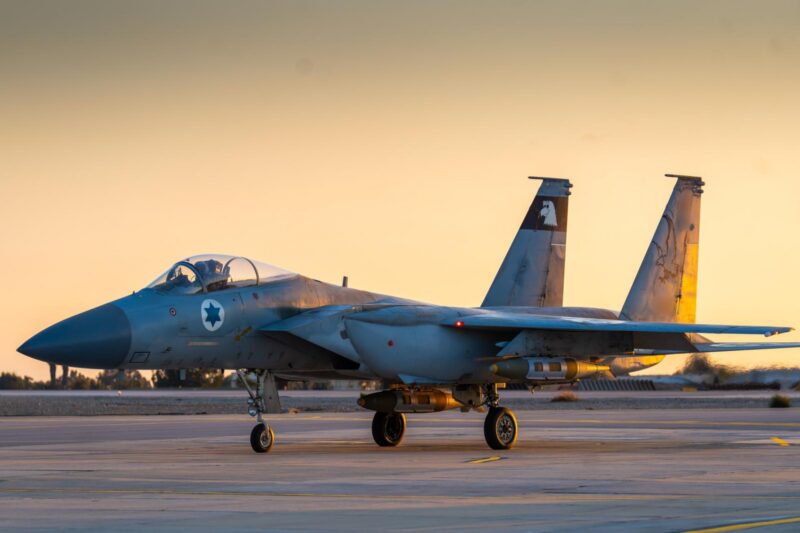
COURTESY/IDF
An Israeli fighter jet is seen on a runway in March 2026.




 Add EJP on Google
How long will it last?
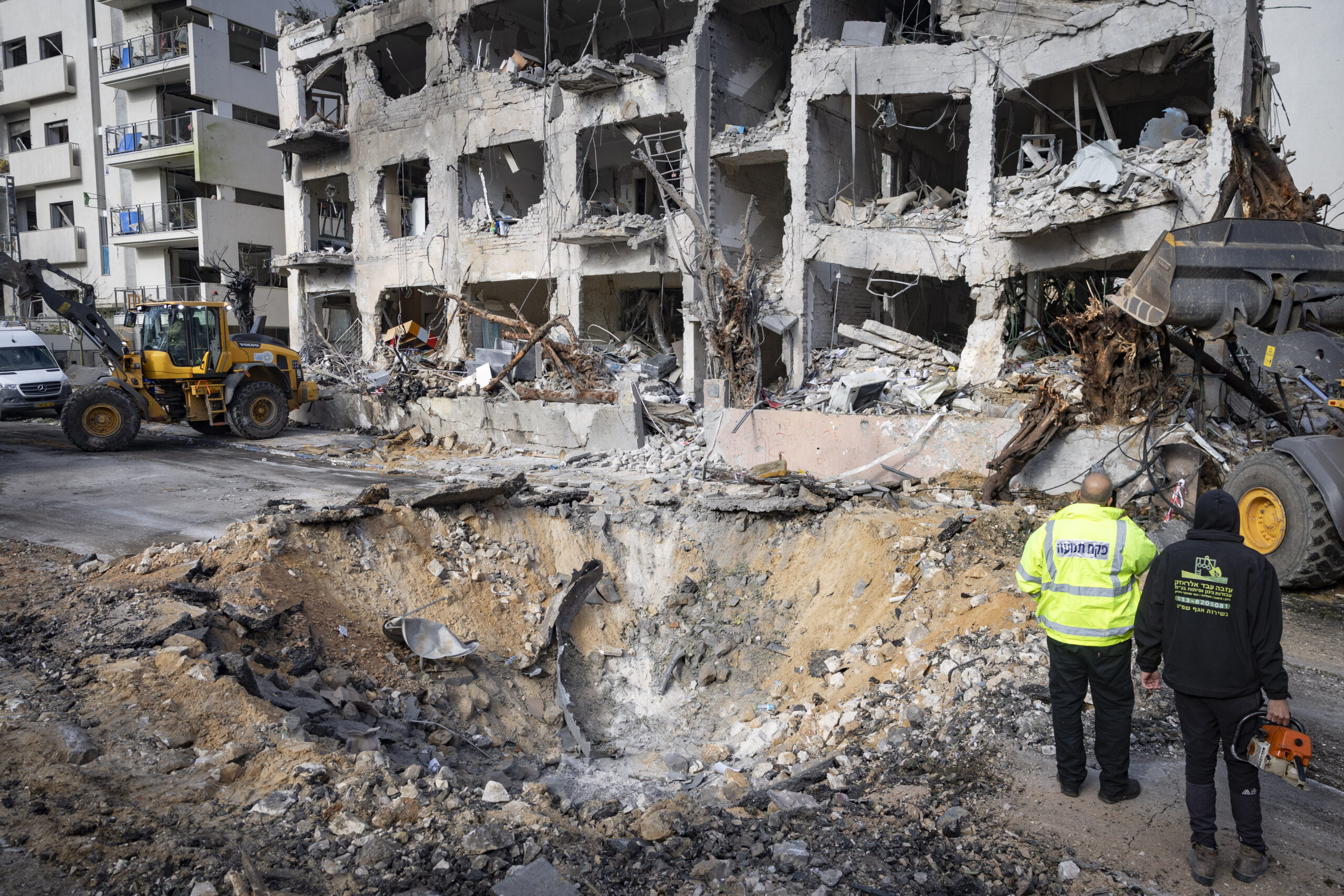
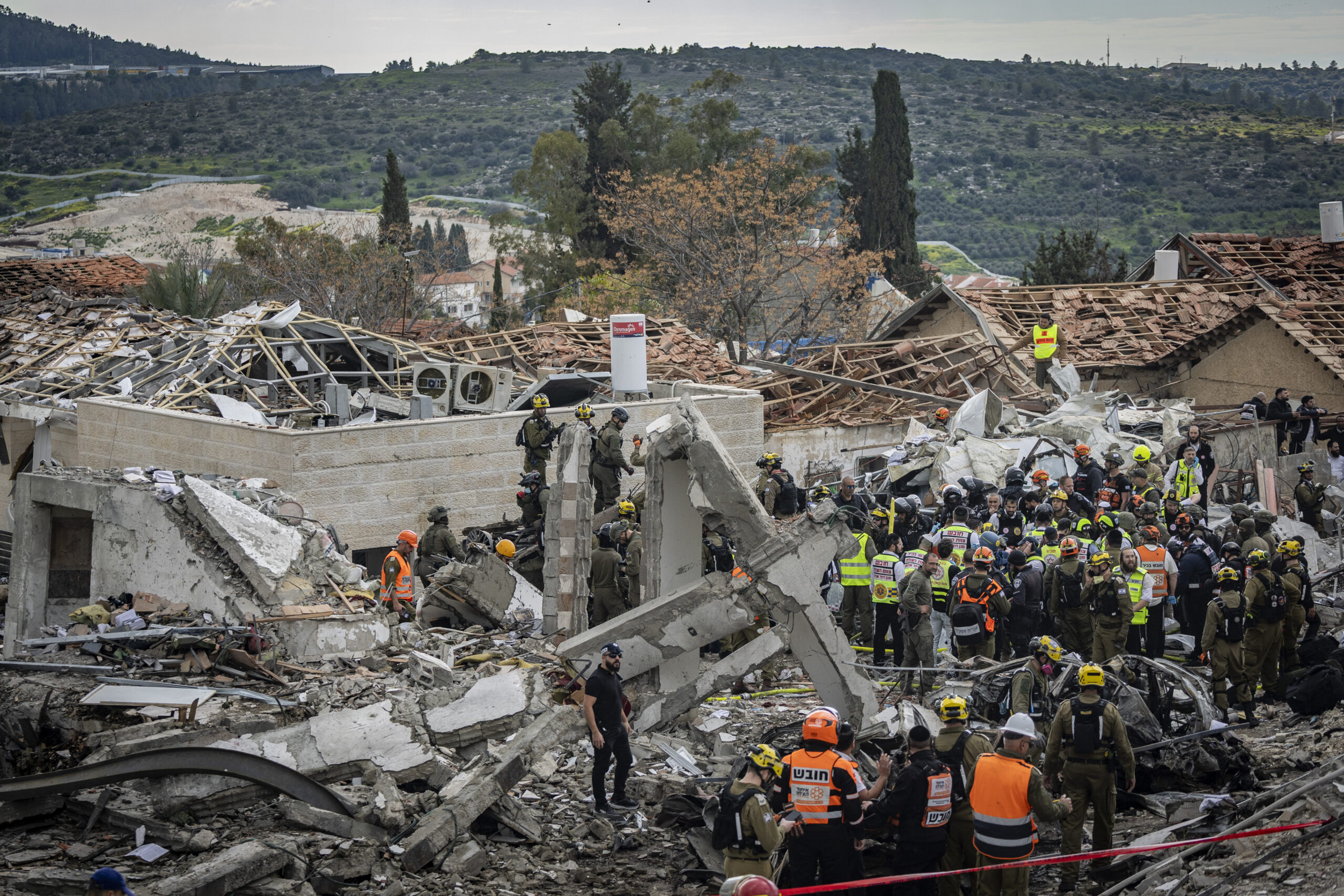
Perhaps more than any other, that is the main question as we enter the third day of what is quickly becoming a full-scale regional war, after the United States and Israel launched strikes on Iran’s top leaders, military sites and power structures. Tehran, in turn, has fired barrages of ballistic missiles at Israeli military and civilian targets, directly killing at least 11 people in Israel — nine of them in a single direct strike on a bomb shelter in the central city of Beit Shemesh — along with at least three American soldiers. In the early hours of Monday morning, Lebanon’s Hezbollah terror group joined the fighting, firing multiple rockets at northern Israel.
The duration question is a critical one, as with each additional day, the costs of the war in both human life and in economic terms increases. As times goes on, additional Iranian proxies — beyond Hezbollah — may join the fighting. Diaspora Jewish groups have also warned of potential Iran-directed threats to Jewish communities around the world.
These financial costs come in multiple forms, chiefly in defense expenditures on munitions, materiel and manpower, as well as the ongoing disruptions to the Israeli economy, with all but critical businesses shuttered. Some 70,000 Israelis have been called up to the reserves, leaving behind families and jobs — in addition to the 50,000 who were already on duty.
Unlike the shorter-range rockets and missiles used by Hezbollah and Hamas, the ballistic missiles used by Iran carry heavy warheads that cause massive damage when they hit, as seen in the strike in Beit Shemesh, which collapsed a communal bomb shelter that was located beneath a synagogue.
“The missile totally annihilated the synagogue and entered into the shelter because it was a direct hit with a half-a-ton missile,” Israeli President Isaac Herzog said, speaking next to the blast site in Beit Shemesh. “Children were murdered here. Nine innocent souls were lost.?All night, the teams of the mayor were gathering their remains and pieces. We pray for the victims, and we pray with the families, and we hope that they will find comfort.”
The renewed missile fire has again highlighted the shortage of bomb shelters in Israel. Roughly one-fifth of all Israelis do not have access to any kind of bomb shelter, and another 30% must rely on larger communal shelters outside their homes, which can be impossible for people with disabilities or small children to reach in time. This issue is particularly acute in low-income households and, even more so, among Israel’s non-Jewish communities, where a lack of state funding, logistical challenges and, according to activists, government neglect have prevented the construction of communal fortified areas and the addition of fortified rooms in private homes.
The war has also closed Israeli airspace, with most airlines canceling service for the coming weeks. Israel’s El Al and Arkia carriers announced plans for “rescue flights,” bringing Israelis stranded abroad back home.
Avi Weiss, American Israeli economist and president of the Israeli social policy-focused Taub Center think tank, noted yesterday that the 12-day Israel-Iran war in June directly cost the Israeli economy roughly $6.5 billion, along with another $1.5 billion-$3 billion more in damages caused by Iranian missiles, particularly to Beersheva’s Soroka Medical Center and Rehovot’s Weizmann Institute of Science.
“It’s reasonable to think that this might not be that different from then,” Weiss said, speaking in a web briefing organized by the Taub Center. “I can’t know for sure that that’s what’s going to happen. We don’t know how long this is going to last. We don’t know how intense it’s going to be, but it’s not far off from what we expect might happen.”
The start of the war on a Saturday morning — when few Israelis are working and children are anyway out of school — was likely aimed at mitigating the immediate effects on the Israeli economy. Many have noted that the war was launched ahead of Purim, which begins tonight and marks the Jews of Persia rising up against an enemy — Haman — who sought to destroy them.
For Israeli children, Purim is typically one of the highlights of the school year, with costume parties and mishloah manot swaps traditionally held in schools in the days leading up to the holiday. As a result of the war, these festivities have been called off — a morale blow for children who have already been through two-plus years of war-related disruptions and, in many cases, the COVID-19 pandemic.
For all the disappointment that it brings, the proximity to Purim was also not likely a coincidence — or at least comes with fringe benefits: Schools and childcare facilities were already meant to be closed for much of this week.
As the Israel Defense Forces’ Home Front Command has forbidden public gatherings, Israeli synagogues are again having to find ways to organize compliant readings of Megillat Esther tonight, including through COVID-era Zoom readings and readings in underground shelters.
American and Israeli officials have indicated both a willingness to continue the war for at least several weeks and a need for a thorough campaign, lest the fighting so far be for naught.
“We are in the middle of a very important stage in history,” Israeli President Isaac Herzog said. “This stage will determine the direction of the Middle East. There is a unique opportunity to change the trajectory. Rather than endless terror and havoc created by the empire of evil from Tehran, there will be change that will offer hope and peace to a coalition of nations, which has emerged above ground and is fighting against the empire of evil.”
In his briefing, Weiss, of the Taub Center, largely refrained from prognosticating, but said that while the current war comes with considerable costs, if it’s aims are met, the benefits could be significant.
“Let’s take the optimistic view and say that as a result of what happens now, there’ll be a regime change inside of Iran,” Weiss said. “It would affect the entire region. You could have an expansion of the Abraham Accords… that would obviously be huge for Israel. It would quiet things down, it would eventually allow [Israel] to lower the size of the army or expenditures on security. I don’t know how long that would take, but it could happen.”