WHAT YOU SHOULD KNOW
Twin vandalisms of synagogues demonstrate the challenges facing U.S. Jewry
AP Photo/Sophie Bates
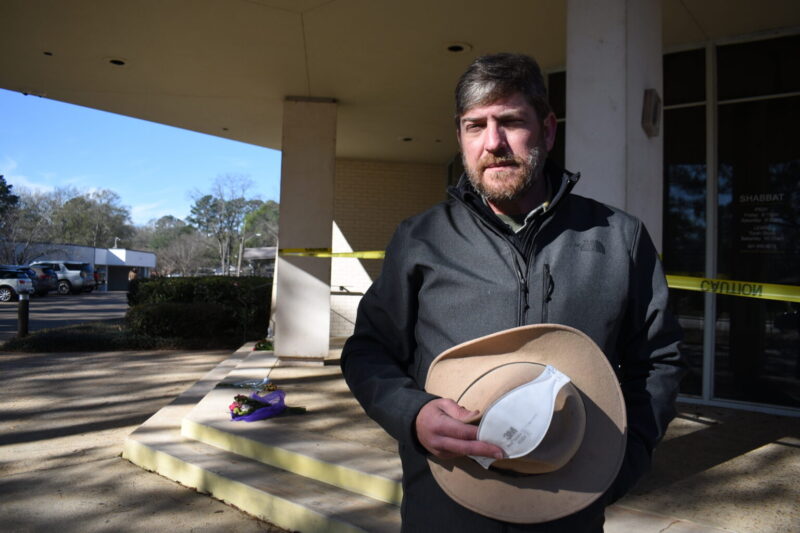
Beth Israel Congregation President Zach Shemper visits Beth Israel Congregation in Jackson, Miss., after it was severely damaged in an arson attack in January 2026.




 Add EJP on Google
The first two weeks of 2026 have made clear that security and combating antisemitism will remain top priorities for American Jewry for the coming year, despite the hopes of many to focus communal attention elsewhere after more than two years of post-Oct. 7 crisis mode.
After last month’s deadly terror shooting on Bondi Beach in Sydney, Australia, the American Jewish community was shocked by an arson attack on Jackson, Miss.’s Beth Israel Congregation over the weekend, which was followed — unrelatedly but almost immediately — by the vandalism of a Los Angeles synagogue that had burned down the year before in the city’s wildfires.
Emblematic of the challenges facing the American Jewish community and of the so-called “horseshoe theory” of antisemitism, these two attacks on synagogues appear to come from either extreme of the political spectrum. Based on his admission to federal agents, the Jackson arsonist was motivated by so-called “classical antisemitism,” referring to Beth Israel as a “synagogue of Satan.” The perpetrator or perpetrators that vandalized the burnt remains of the Pasadena Jewish Temple and Center, who have yet to be caught, appear to come from the opposite side of the political map, painting “F— Zionism” on an exterior wall, along with — bafflingly, as the synagogue’s president described it to The New York Times — “RIP Renee,” in reference to Renee Good, who was killed last week by an ICE agent. On top of these acts of vandalism, last week also saw anti-Israel protesters openly praising Hamas outside a synagogue in Queens.
This all contributes to a growing bunker mentality in the Jewish community, one that comes at a cost, both in resources and bandwidth. In the wake of the Oct. 7 terror attacks in Israel and the rise in antisemitism around the world that followed, Jewish donors and the communal groups that they fund reordered their priorities, which has resulted in a boom for some organizations — particularly those focused on aid and recovery in Israel, combating antisemitism and Jewish education — and in a bust for others, such as those focusing on diversity and equity, Jewish culture and international development.
With the release of all of the Israeli hostages but one and the war in Gaza largely winding down toward the end of last year, there appeared to be a hope on the horizon that the Jewish world would again be able to allocate resources to what were largely seen as “nice to haves.” Heading into 2026, this seems less likely.