Opinion
NOT A PROP
The dangerous logic behind Mamdani’s synagogue critique




 Add EJP on Google
As the executive director of the Jewish Orthodox Feminist Alliance, I have a vested interest in protecting the sacredness of synagogue spaces, and there is a fundamental error behind Mayor-elect Zohran Mamdani’s response to the Nefesh B’Nefesh event at Park East Synagogue and the threatening protests last week.
His press secretary, Dora Pekec, issued a statement insisting Mamdani “believes every New Yorker should be free to enter a house of worship without intimidation, and that these sacred spaces should not be used to promote activities in violation of international law.”
Park East Synagogue/Facebook
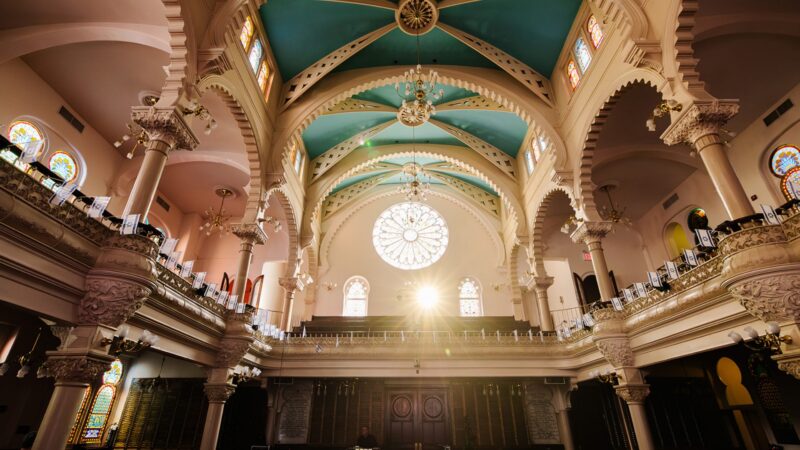
The sanctuary of Park East Synagogue in New York City.
What this statement gets wrong about synagogues is not only a matter of politics. It is his fundamental misunderstanding of what makes a space sacred, and his willingness to weaponize that misunderstanding against Jewish communal life.
A synagogue isn’t holy because it resembles a public institution or because it hosts community programming. A synagogue becomes sacred because a community — Jewish women and men, girls and boys — chooses to bind itself to God, to one another and to the obligations of Jewish life within its walls. It is not a museum, nor a community center, nor a neutral town square. It is a beit knesset, a house of gathering; a beit tefillah, a house of prayer; a mikdash me’at, a miniature sanctuary. Its sanctity flows from covenant, not from consensus.
Invoking “violations of international law” in this context is not a neutral caution. It is a smear dressed up as legal discourse and an accusation in search of a crime. It casts suspicion on a synagogue for offering information about aliyah, suggesting outright that a core expression of Jewish peoplehood is a criminal act and implying that Jewish institutions warrant surveillance in ways no other religious communities are subjected to.
This kind of scrutiny does not stop at one synagogue. Once applied here, it reaches every denomination, every funder and every community leader who supports Jewish life, casting a shadow over the entire ecosystem that sustains our houses of worship. Make no mistake, the language is not accidental.
When an elected official treats synagogues as venues that must conform to his political preferences, he is not protecting sacred space. He is violating it.
Sacredness is not sentimental. It is enacted, day after day: individuals rising for the Amidah, the silent prayer, voices interlacing while reciting the Mourner’s Kaddish, hands carrying the Torah. It is made of the transcendent and the mundane alike: life-cycle celebrations and prayer services; public speaking events, concerts and pre-Chanukah gift boutiques; parenting classes and support groups — and yes, even informational meetings for Jewish New Yorkers considering a move to Israel. (It is not lost on me that Mamdani’s reaction here does more for aliyah than a dozen Nefesh b’Nefesh gatherings). An informational meeting is not a political provocation. It is part of the rhythms of Jewish communal life.
A synagogue is sanctified by generations of Jewish people walking through its doors carrying both their joy and their pain. It is holy because it is where children grow up and learn to pray and practice in real time. Because it is where communities argue, reconcile and return to each other. Sacredness is cumulative. It is built through ritual, learning, song and the simple act of showing up.
Reducing the covenantal, the halachic, the generational, the lived to a political battleground — it does more than distort what a synagogue is. It erases the very logic of sacred space. The question is not whether synagogues reflect the world around them. It is whether they remain faithful to the commitments that have held Jewish communities together for centuries.
That is what Mamdani does not grasp. Sacred space is not a prop for legislative posturing. Nor is it a soft target for ideological pressure. It is created by the people who walk in, open a siddur (prayer book), listen to the ancient words read from the Torah scroll, stand shoulder to shoulder and choose, again and again, to sanctify God’s name in community. And that holiness, built patiently and faithfully over generations, is far stronger than any accusation he can hurl at it.
And to be clear, Jewish people — not the mayor-elect — get to decide what happens inside our sacred spaces.
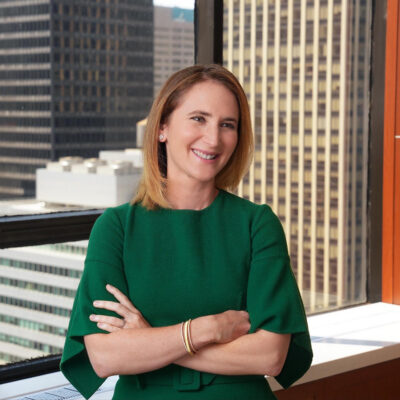
Rabba Daphne Lazar Price is the executive director of the Jewish Orthodox Feminist Alliance.