Opinion
READER RESPONDS
The aliyah conversation belongs to all of Am Yisrael




 Add EJP on Google
Adam Ferziger has done the Jewish philanthropic community a genuine service in his recent op-ed for eJewishPhilanthropy, “The aliyah imperative and the philanthropic dilemma: Navigating the Modern Orthodox crossroads” (April 6). His analysis of the April 2026 YU Torah To-Go symposium names something real: the strategic logic that once held North American Jewish philanthropy in place — invest heavily in Diaspora institutions, support Israel from a distance — is fracturing. The old arrangement assumed you could do both indefinitely. You cannot. The question is who gets to define what comes next.
What Ferziger gets right
Yossi Aloni/FLASH90
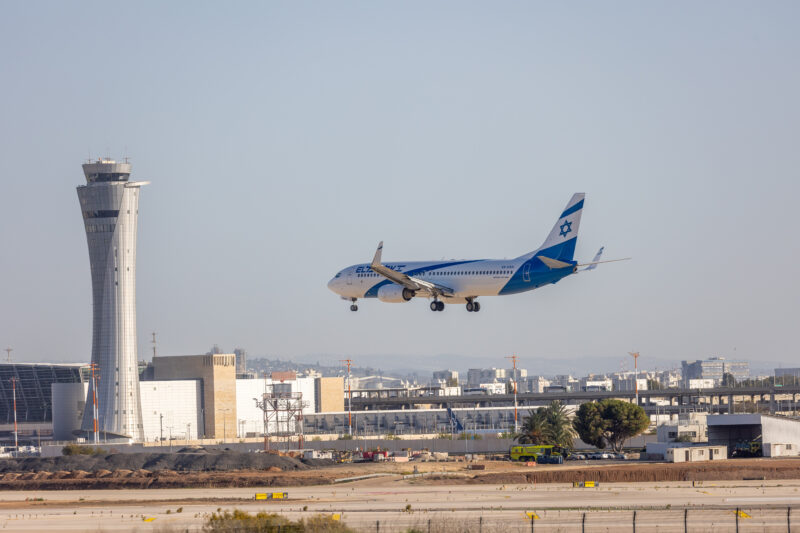
An ELAL flight lands at Ben Gurion International Airport, March 31, 2025.
From its very beginning, Jewish life has unfolded on both sides of the river. The tribes of Reuben, Gad and half of Manasseh chose to settle outside the land. Moses did not condemn them — but he did make them swear to cross over and fight alongside their brothers, to bind their destiny to those entering the land. Diaspora is not a deviation from the Jewish story. It is part of it. Aliyah is a mitzvah, but living outside the land is not a sin. A Jew who builds a committed, Jewishly engaged life in Toronto or Melbourne or Buenos Aires and raises children who love their people — that is success.
And yet, there is a notch above. Tying your destiny to the destiny of the Jewish people in the land and state of Israel — not merely supporting it from a distance but staking your life to it — is a different order of commitment, not a judgment on those who remain. It is a calling, for those who can answer it.
Ferziger’s “agents of change” argument captures something important. The most significant contribution North American Jews can make to Israel is not financial. It is values — democratic pluralism, gender equality, a Judaism that earns its authority through relationship rather than coercion. Every North American Jew who makes aliyah carrying these values engages in an act of national construction.
What the data actually shows
Ferziger suggests that for non-Orthodox Jews, Zionism is “predominantly expressed through political support,” and that even this is fading.
That characterization of our communities is wrong.
In my role as Chair of The Jewish Agency’s aliyah committee, I am privy to data that shows that Orthodox Jews — roughly 9% of American Jewry — account for 51% of North American aliyah. Conservative Jews, at 17% of American Jewry, represent 25%. Reform Jews, the largest denomination at 37% of American Jews, account for just 14%. Per capita, Orthodox Jews make aliyah at roughly six times the non-Orthodox rate.
Yet among young adults making aliyah, the picture shifts: Conservative Jews represent 27% of that cohort, Reform 11%; together, non-Orthodox Jews comprise a narrow majority, making aliyah not out of theological obligation but out of love, and largely without the institutional scaffolding the MO world provides.
Perspective also matters here. The Jewish Agency and its partners facilitate roughly 3,500–4,000 North American olim per year out of a Jewish population of six million — less than one-tenth of 1% annually. Aliyah is not a mass phenomenon in any denomination. The real question is not why Conservative and Reform Jews lag behind the Orthodox; it is why virtually all North American Jewry has not answered the call at scale. That is a communal failure we share, and a communal opportunity we can seize together.
Here Ferziger has something to teach us. Depth of religious engagement matters. The Orthodox educational system frames Eretz Yisrael as a theological center — woven into daily prayer, study and identity from childhood. A gap year in Israel, now a near-universal expectation in the MO world, builds not just love but networks, language, and a concrete vision of life there.
Conservative Judaism has been Zionist from its very inception; a commitment embedded in the Jewish Theological Seminary from the 1880s. Pew 2020 data shows 78% of Conservative Jews feel emotionally attached to Israel. The love is real. What has eroded is the infrastructure that converts attachment into aliyah. Birthright democratized Israel connection — a genuine achievement — but crowded out more intensive programs like USY Pilgrimage and Nativ, the Conservative movement’s year-long Israel program that historically produced a disproportionate share of Conservative olim. A 10-day trip builds love. A year builds roots.
Meanwhile, the Reform movement embraced aliyah as a mitzvah in its 1997 Miami Platform, but has not yet translated that commitment into programming at scale.
Aliyah follows depth of engagement. That requires investment, intentionality and honesty about where we have fallen short.
The honest reckoning we owe Israel
North American Jews need to engage Israel as it actually is: our ancestral homeland, a dream realized against impossible odds — and a living, complicated sovereign state subject to every challenge facing liberal democracies, living in one of the most difficult neighborhoods on earth. Engaging it honestly — neither uncritically nor uncharitably — is itself a form of Zionist maturity.
That honesty cuts both ways. We in the non-Orthodox world must own our part of this challenge. And the State of Israel must own its part. Non-Orthodox rabbis cannot officiate at a wedding in Israel. The egalitarian prayer space at the Western Wall, agreed upon in 2016, was subsequently abandoned — and with it the trust of millions who believed the state was theirs too.
Here is the catch-22: non-Orthodox North American aliyah at scale could change Israel’s electoral and cultural landscape — but requires a state that makes those Jews feel fully welcome. We cannot ask people to stake their lives to a country that does not fully recognize their Judaism; and yet the very act of going is what changes the country. That paradox is not a reason for paralysis. It is a reason for urgency — on both sides.
What is required now
The aliyah conversation must be pan-communal — not because every denomination is performing equally, but because the future of Am Yisrael depends on Klal Yisrael rising to meet this moment together. It requires rebuilding intensive Israel programming, a theological language for aliyah that speaks to Conservative and Reform Jews on their own terms, and an Israeli government that dismantles the barriers — in the aliyah process and in the absorption that follows — that make building a non-Orthodox life in Israel harder than it has to be.
Ferziger is right that we stand at a threshold moment. The question is whether the institutions charged with facilitating aliyah will lead a conversation worthy of all Am Yisrael — or allow it to be captured by one denominational corner of it.
Am Yisrael is not a denomination. Its future belongs to all of us — if we do the work.
Rabbi Steven C. Wernick is the Anne and Max Tanenbaum Senior Rabbi of Beth Tzedec Congregation in Toronto. He serves as chair of the aliyah committee of the Jewish Agency for Israel.