Opinion
CAPACITY BUILDING
In polarizing times, Jewish professionals need constructive dialogue skills




 Add EJP on Google
When I joined Mem Global, then known as Moishe House, as its chief program officer in 2020, I was thrilled to be joining an organization which played a pivotal part in my own life as a Jewish young adult. As I dove into my new role, however, I began to notice a pattern: Our team was proudly diverse — in gender, sexual orientation and, to some extent, ethnicity — yet when it came to political perspectives and religious backgrounds, we were far more uniform than I had realized. It’s not the kind of sameness that can be captured in the data; it’s the kind you feel in a room when someone tosses out a political comment and everyone nods in agreement.
No matter how well-intentioned, it is easy for any organization to slip into this reinforcing cycle. We all naturally gravitate to hiring others who think like us, who make us feel comfortable and who validate what we already believe.
Courtesy/Mem Global
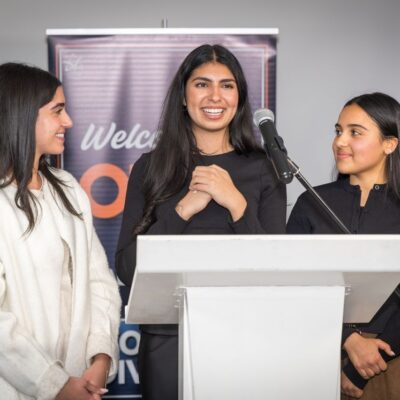
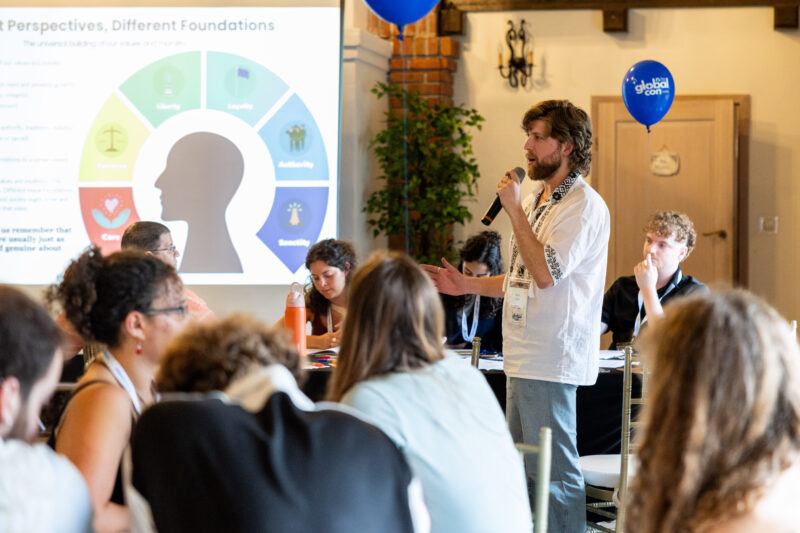
A training session led by the Constructive Dialogue Institute at Mem Global's GlobalCon 2025.
Given that we serve a community of Jews with many different backgrounds and life experiences, however, it is inevitable that people come to Mem Global with a variety of perspectives and backgrounds. During my years as a Moishe House resident and host in Washington D.C., we witnessed polarizing events such as the murder of George Floyd, multiple presidential elections and growing antisemitism. In that environment, there were countless moments, big and small, that required deep listening, empathy and genuine curiosity to navigate. In today’s political climate, these skills are in even more demand.
Part of our mission is to be a place of learning and growth for Jewish young adults, and that would be impossible if we become an echo chamber. We have to ensure that everyone in our community, from Mem Global residents, hosts and rabbis to the staff who train and support them, has the skills to have complex conversations and stay in relationship with one another, even — perhaps especially — when they disagree.
To help us with this critical work, I turned to the Constructive Dialogue Institute. In 2022, we began using their Perspectives curriculum to train our staff in viewpoint diversity so they could navigate complex and often emotionally charged conversations.
Constructive dialogue is not about winning an argument or proving that the other side is wrong. It is about developing mutual understanding without giving up our own beliefs. Constructive dialogue does have its limits: it does not extend to hateful speech or to well-trafficked falsehoods, and it never requires us to legitimize ideas that cause real harm. What it does ask of us is to stay rooted in curiosity and respect when we engage in good faith disagreement.
Rabbinic Judaism values machloket, or conflict. The Talmud includes thousands of disagreements among rabbis, and they are a critical part of uncovering truth. The key, however, is to engage in machloket productively, while building relationships with those who think differently than you do. For the young adults leading Moishe Houses, constructive dialogue is essential as they create homes that truly welcome a wide variety of Jews.
The skills that Perspectives teaches do not come naturally. I know this firsthand from my own experience as a Moishe House community builder and then as a leader in the organization, and even in my personal life. When we disagree with someone, our instinct is to convince them that they are wrong. Leading with respect and curiosity and creating space for uncomfortable conversations and unfamiliar ideas takes courage and humility. It is also clear that this work has strengthened our organization and our leaders.
By completing this training every year, residents and their support staff have been able to address challenges before they escalate. In 2024, the number of house incident reports dropped by nearly 40% and was down an additional 31% in 2025. At staff and resident conferences in North America, Latin America and across our global communities, the Perspectives sessions always receive some of the highest satisfaction ratings.
This is a training that all Jewish organizations would benefit from as we navigate growing divisions not only in our country, but within our global Jewish community as well. CDI has even created a curriculum specifically for this purpose: Perspectives for Jewish Organizations, which combines Jewish tradition, texts and wisdom with scenarios of tensions that are common among Jewish Americans today. CDI created this curriculum in partnership with a group of senior Jewish educators and professionals led by Rabbi David Wolpe, and it is fully subsidized for Jewish organizations to train their staff through the end of 2026.
Of course, we cannot approach this work as a one-time training or a box to check. Constructive dialogue is a muscle, and like any other form of Jewish learning, it’s something we must keep exercising and strengthening. No matter what sector we work in, the ability to foster open conversations, strengthen relationships and build a culture of trust and inclusion is essential for creating healthy communities.
I see it every day at Mem Global. Through constructive dialogue, we have become more resilient and able to respond to challenges, making room for conversations and ideas that, while not always comfortable, can be truly inclusive.
To learn more about CDI’s Perspectives for Jewish Organizations curriculum and the full subsidy for Jewish organizations offered by Maimonides Fund, visit CDI’s website.
Tiffany Harris is the chief program officer at Mem Global.