Opinion
BEST PRACTICES
How to turn a thank-you into a lasting donor connection




 Add EJP on Google
For too long, many nonprofits have treated donor engagement as an afterthought — limited to a periodic generic thank-you email or a passive invitation to an annual gala. In fact, more than half of nonprofit leaders report not having a dedicated donor engagement strategy at all. That gap represents a significant missed opportunity to build stronger, more enduring relationships with supporters.
Donors today expect more. They want to feel personally connected to the causes they support and the lives they’re impacting. They want to know their contributions matter — not just in theory, but in tangible, meaningful ways. When done right, personalized engagement strategies have the power to transform casual donors into dedicated champions for a cause.
American Friends of Magen David Adom/Facebook
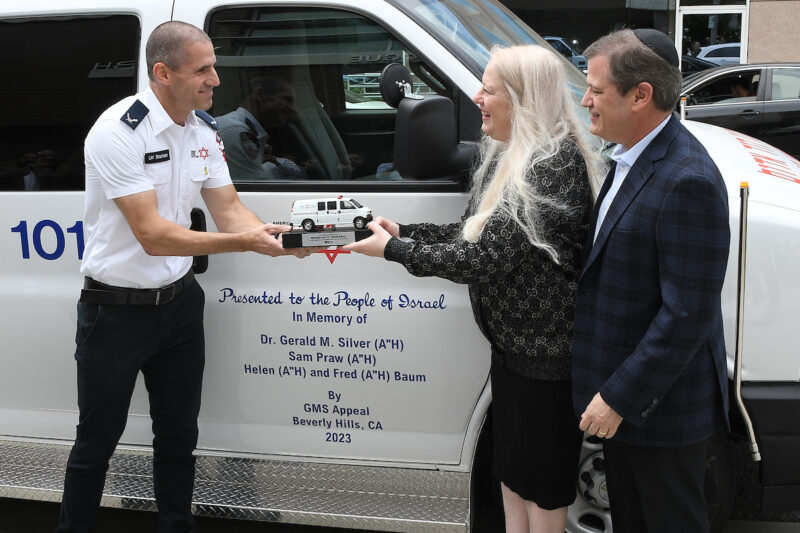
MDA Chief of Staff Uri Shacham (left) with Michele and Dr. David Silver, who initiated a campaign to sponsor an ambulance for Magen David Adom, at a dedication ceremony at Young Israel of North Beverly Hills before the ambulance’s departure to Israel in May 2024.
As CEO of American Friends of Magen David Adom, the U.S. fundraising arm for Israel’s national emergency medical services organization, I’ve seen firsthand how this approach can cultivate lasting relationships that inspire continued support — even when the work takes place 6,000 miles away on the other side of the world. The key is creating meaningful moments that connect donors to the impact of their generosity. When supporters feel emotionally invested in a mission, it directly influences donor retention and long-term engagement.
Pair naming opportunities with signature experiences
Donor recognition should go beyond program names or plaques on walls. When recognition is tied to an experience — one that’s personal, memorable and mission-driven — it becomes far more powerful. A well-executed naming opportunity doesn’t just acknowledge generosity; it makes the donor part of the story.
At my organization, we’ve seen how ambulance dedication ceremonies can serve as powerful expressions of shared purpose. These events mark the delivery of a new, donor-funded ambulance, with the donor’s name — or the name of their community or a beloved family member — written on the vehicle, creating a lasting tribute that travels wherever the ambulance is needed. Sometimes these ceremonies are incorporated into larger events like fundraising galas. Other times, the dedication becomes the event itself. At one recent program, a local U.S. congressman spoke, elevating the occasion and generating broader interest and visibility. Having well-known or respected speakers can add a sense of significance to the moment — and help draw in new audiences and potential supporters.
But recognition doesn’t always have to follow a traditional format. During last year’s Art Basel in Miami Beach — one of the most prestigious and high-profile art fairs in the world — we partnered with street artist Dede Bandaid to transform a MDA ambulance into a striking interactive art installation titled “The Art of Saving Lives.” Parked outside major venues during the fair, the piece drew visitors inside the vehicle to experience the artwork in a visceral way, showing how MDA turns urgency and compassion into action. It was a fusion of culture, creativity and purpose that left a vivid, lasting impression.
When naming opportunities are paired with meaningful experiences like these, they deepen a donor’s emotional connection to the mission and lay the groundwork for long-term partnership.
Facilitate immersive, hands-on engagement
Donating is about more than money; when possible, organizations should also create opportunities for people to donate their time or other resources. For example, we partner with Blood Centers of America to host joint blood drives in communities across the U.S. By giving blood, participants can contribute directly to saving lives in their own communities, while also becoming more personally connected to our organization.
Show the impact, strengthen the bond
Gratitude is one of the simplest tools we have; yet too often, it’s overlooked or delayed. This is a missed opportunity to connect donors directly to the moments that they made possible. The most powerful thank-yous go beyond expressing appreciation — they show results. When donors can see, understand and feel proud of a concrete outcome, their connection to the cause deepens and their desire to continue giving is naturally strengthened.
For example, we send ambulance donors periodic reports about how their vehicle is being used: how many calls it’s responded to, how many accidents or emergencies it’s helped manage — even how many babies were born after safely transporting women in labor to the hospital. During the recent conflict with Iran, donors were informed in real time as their ambulances were deployed to save lives under fire. These kinds of updates can transform a one-time gift into an ongoing relationship. They demonstrate return on investment in the most human terms possible, helping donors feel emotionally connected to the lives they’ve helped touch.
Building a community of committed changemakers
Personalized engagement strategies aren’t about one-off gestures; they’re about creating a sense of belonging. By combining thoughtful recognition, immersive experiences, timely gratitude and meaningful storytelling, nonprofits can turn donors into long-term partners who feel deeply invested in their mission. When donors feel personally connected to an organization’s impact, they don’t just give: they engage, advocate and inspire others to join a cause. Embracing these strategies enables nonprofits to strengthen the donor base, unlock greater generosity and create a community of supporters committed to driving meaningful change.
Catherine Reed is the CEO of American Friends of Magen David Adom.