Opinion
MIND THE GAP
How philanthropists can anchor a generation of Jews




 Add EJP on Google
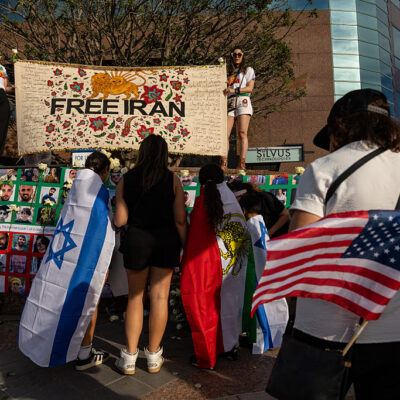
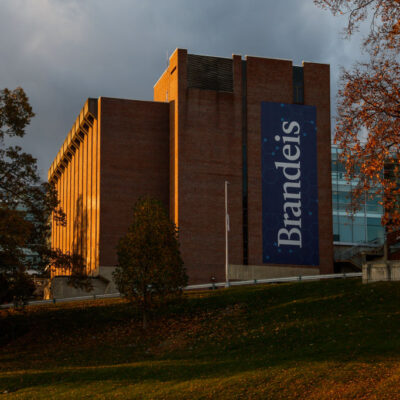
Brandeis University’s recent “Campus Voices” report documents Jewish students describing anxiety, harassment and self-censorship regarding Israel. The Anti-Defamation League’s latest Audit of Antisemitic Incidents recorded record-high antisemitic incidents nationwide. In a post-Oct. 7 world, Jewish identity is no longer abstract. It is visible. It is questioned. It is challenged. Jewish students are feeling pressure in the face of this hostility, but they are also grappling with a deeper vulnerability.
Too many Jewish teens graduate high school with an emotional connection to Judaism but without Jewish literacy. They care about being Jewish, but cannot explain why. They feel pride, but lack historical fluency. They want to stand up for Israel, but have never deeply examined its history or their own relationship to it. And when identity without substance meets scrutiny, it shrinks.
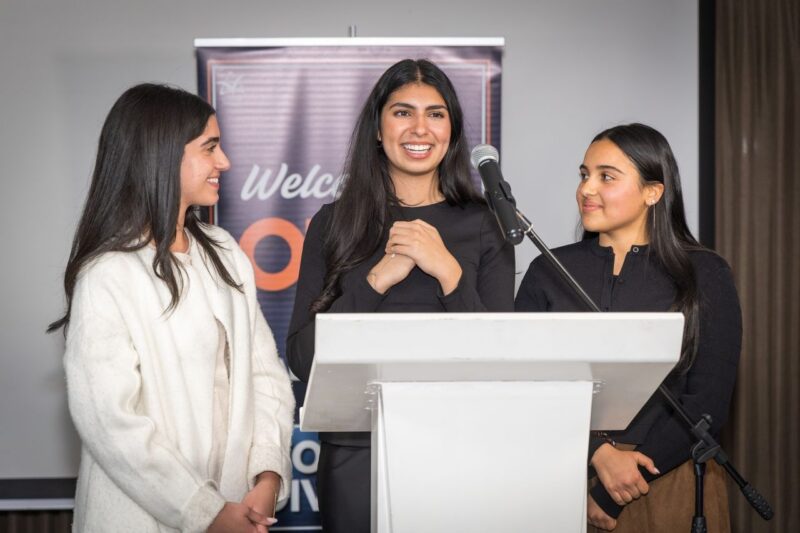
Courtesy/Olami Launch
Deborah Cohen (center) of Bnos Air Miriam Seminary speaks at the Olami Launch gala about the courage it took to choose a gap year in Israel over the conventional college path as fellow, crediting the decision with changing her life, as fellow honorees look on.
Research supports the importance of formative depth. The Pew Research Center’s 2020 study found that Jews who received intensive Jewish education are far more likely to feel strongly connected to Israel and participate actively in Jewish communal life. Longitudinal research confirms that religious trajectories formed in adolescence tend to persist into adulthood. What is built before college shapes what endures long after.
Yet much communal funding focuses on response: antisemitism task forces, campus crisis programming and advocacy initiatives once students are already under pressure. That work is essential, but by the time students are reacting to hostility, many foundational decisions have already been made.
Where they will spend their formative year after high school.
Whom they will surround themselves with.
Whether Jewish identity will be peripheral or central.
Whether they will enter campus as reactive participants or prepared leaders.
That’s why the most powerful intervention happens earlier than college.
A post-high school gap year in Israel is not simply experiential travel. It is immersive formation, living within Jewish society and engaging deeply with Jewish history and contemporary moral complexity while building peer networks rooted in shared commitment. Long-term Israel immersion has measurable impact: a major Masa Israel Journey impact study, for instance, found that 92% of alumni with children are raising them Jewish and demonstrate higher levels of Jewish engagement than peers who did not participate. Engagement follows immersion.
Olami Launch was built not simply to send students to Israel, but to create a culture in which a gap year becomes a natural and aspirational next step for public and community school teens. Through structured fellowships, regional gatherings, leadership seminars and immersive retreats, students begin to see themselves as part of a serious cohort, peers choosing intentional identity development before entering college. What was once unusual becomes normative.
We work closely with carefully selected partner institutions in Israel that know how to engage students who may not come from traditional Jewish educational backgrounds. These programs provide intellectual depth, historical context and mentorship, meeting students where they are while challenging them to grow. Dedicated gap-year specialists guide each student individually, helping families navigate applications, expectations and financial logistics. Scholarships ensure that financial limitations do not determine access to serious identity formation.
Equally important is what happens next after the program. A meaningful percentage of our students choose to remain in Israel for a second year of advanced study and leadership development. Some pursue aliyah. Nearly all return to North America with greater Jewish literacy, confidence and clarity about their role in Jewish communal life. Our alumni network remains active, connecting current students with prospective applicants and reinforcing a visible culture of depth. While students are in Israel, we provide ongoing mentorship and programming. Upon their return to North America, we integrate alumni into campus leadership tracks and advanced Jewish engagement initiatives so that growth does not dissipate.
The goal is not a single transformative year, but a sustained trajectory.
In its first year, 68 students chose this path. A short five years later, more than 250 students are currently studying in post–high school programs across Israel this year.
At a recent gathering in Jerusalem honoring gap-year students, Israel’s President Isaac Herzog spoke about the transformative power of strengthening one’s bond with Israel and the Jewish people. Rabbi Doron Perez, executive chairman of World Mizrachi, whose son Daniel fell defending Israel on Oct. 7, 2023, reflected on the weight of decisions made at eighteen, when independence begins and identity solidifies. Those decisions are unfolding now.
If we want Jewish students to stand tall in contested spaces, they must first stand firmly in their own understanding.
Philanthropy has demonstrated its ability to mobilize in moments of crisis. The greater opportunity is to invest before crisis, strengthening Jewish literacy, resilience and conviction before Jewish identity is tested. Eighteen is a hinge. What we build before it turns determines who stands when pressure comes.
Rabbi Yehuda Maryles is the North America director of Olami Launch.