Opinion
THE PEOPLEHOOD PAPERS
From reactive urgency to proactive agency: Reclaiming Zionism in its proper context




 Add EJP on Google
The following essay is part of a collaboration between eJewishPhilanthropy and the Center for Jewish Peoplehood Education, which will publish a new edition of its Peoplehood Papers series, “Zionism 2025: Reinterpreting Vision, Mission and Boundaries,” with this essay and more, this week.
For much of the past century, Zionism has been deeply tied to the language of survival. The phrase “Never Again,” born from the ashes of the Holocaust, became an almost sacred mantra, aiming to secure the State of Israel’s raison d’etre as the ultimate safeguard against Jewish powerlessness. This defensive posture was necessary to reflect the trauma of recent history and the longstanding vulnerability of a dispersed people.

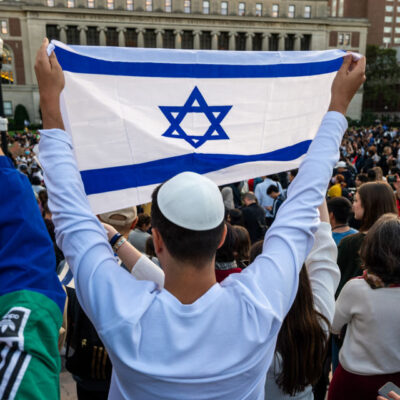
Photo by Eduardo Castro from Pixabay
Yet this narration profoundly undermines the broader scope of the Zionist ideal: By entrenching Zionism as a reactionary survival project whose chief justification is response to antisemitism, it surrenders the true impetus of Zionism as a proactive revival project whose chief calling is “our natural and historic right.” As we look forward, we must ask: Is mere survival enough for a civilization defined by profound moral, spiritual and social aspirations? Is urgency alone a sufficient compass for a people whose story has been built on creative vision and ethical audacity?
To answer this, we must distinguish between Zionism as a modern political movement and Zionism as a civilizational ideal that breathes life into the very soul of Judaism since its appearance in history.
The modern movement, crystallized by Herzl and his contemporaries in the late 19th century, indeed emerged as a practical response to rising antisemitism and the failures of European emancipation. Herzlian Zionism focused on statehood as an urgent solution to Jewish vulnerability. But beneath this reactive, crisis-driven layer lies a far deeper Zionism — a vision stretching back to Abraham and Sarah, to prophets, monarchs, poets, sages and dreamers who envisioned the land of Israel as the stage for a grand moral and national realization. This foundational Zionism is about agency, not mere urgency; revival, not just survival; proaction, not simple reaction.
At its heart, Zionism is a renaissance project: the renewal of ancient vitality in the ancestral land that is essential to its realization. The land of Israel is therefore a central partner in this civilizational restoration, whereas Zionism is not about running away from destruction but running towards renewal. It is not based on traumatic recollections of our past but on inspirational hopes for our future; it is not a memory-driven but a mission-driven enterprise, a reawakening of the Jewish people’s capacity to shape destiny rather than simply endure it.
Focusing only on modern, reactive Zionism is precisely what anti-Israel propaganda thrives upon. Reducing Zionism to a late 19th-century narrative, disconnected from millennia of Jewish longing and presence, makes it easy to mischaracterize it as opportunistic and illegitimate. Reclaiming Zionism’s full historical arc is essential to reaffirm it as a natural, authentic expression of Jewish agency.
A community defined solely by its enemies inevitably shrinks into a fortress mindset, losing sight of its creative mission and true inner purpose. A proactive approach to Zionism therefore envisions Israel not merely as a shelter from persecution, but as a recreated platform for moral and cultural creativity as a sovereign nation (again!). It also calls for a renewed partnership with World Jewry. Rather than asking Diaspora Jews to support Israel only as a vulnerable state in constant peril, this vision invites them to join a shared project of civilizational renaissance. It transforms the relationship from anxious solidarity into one of co-creation and mutual inspiration.
Our story is far more than a tale of everlasting survival. From the journeys of the patriarchs and matriarchs, the Exodus, the revolutionary ethics of the prophets, the intellectual rigor of our sages, the longing souls of our poets and the incredible contributions of our diaspora communities — all have continuously been a story of daring agency, moral courage, unrelenting memory and social awareness. Zionism, today, is the modern continuation of this ongoing journey — the collective decision not just to survive history, but to shape it with purpose and vision.
Moving from reactive urgency to proactive agency is a call for civilizational transformation, reclaiming Zionism as a forward-looking mission grounded in our own historical values and ideals. It demands that we see Israel not as a perpetual refuge but as a platform for shaping a vibrant, ethical and enduring Jewish future — one built on strength, vision and purpose. Not “Never Again” but “Back. Again”.
Zohar Raviv serves as the international vice president of educational strategy for Taglit-Birthright Israel, as well as scholar in residence for Momentum Unlimited.
The latest edition of the Peoplehood Papers was created by the Center for Jewish Peoplehood Education in collaboration with Z3 and ENTER. The editors of the publication are Shlomi Ravid, Amitai Fraiman and Barrak Sella.