WHAT YOU SHOULD KNOW
A new mobile museum, a new summit and other reveals from Simon Wiesenthal Center’s Chicago gala
Courtesy/Simon Wiesenthal Center
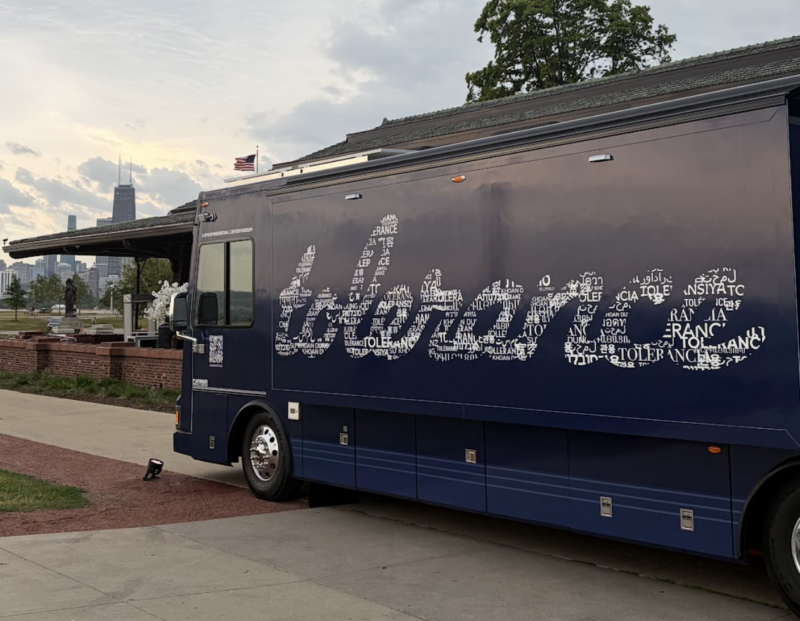
The newest Simon Wiesenthal Center Mobile Museum of Tolerance, with the Chicago skyline in the background.




 Add EJP on Google
CHICAGO — A violent summer storm typical of the Windy City gave way to clear skies Wednesday evening just in time for the start of the Simon Wiesenthal Center’s Humanitarian Award Dinner, held at Theater on the Lake overlooking Lake Michigan.
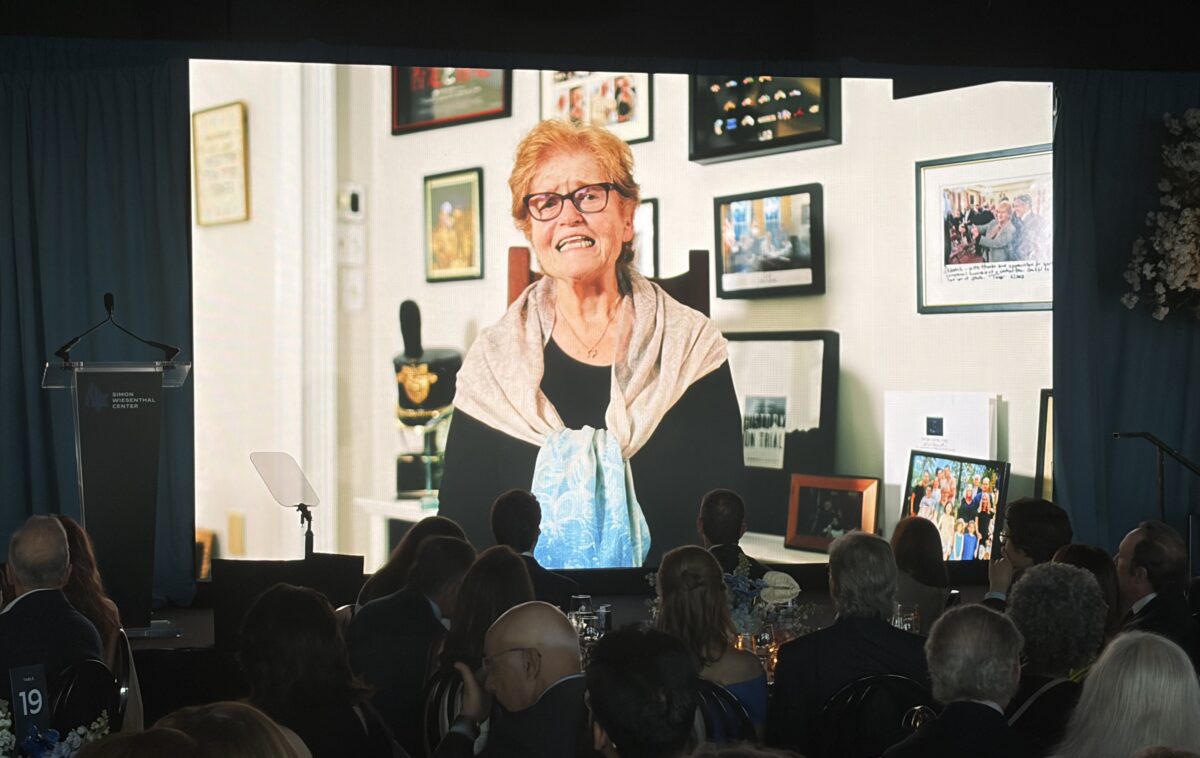
This year’s honorees were Ambassador Deborah Lipstadt, awarded the Simon Wiesenthal Center Medal of Valor for her lifetime commitment to combating antisemitism and defending Holocaust history, and Chicago philanthropist, civic leader and venture partner Sara Crown Star, who received the event’s eponymous Humanitarian Award.
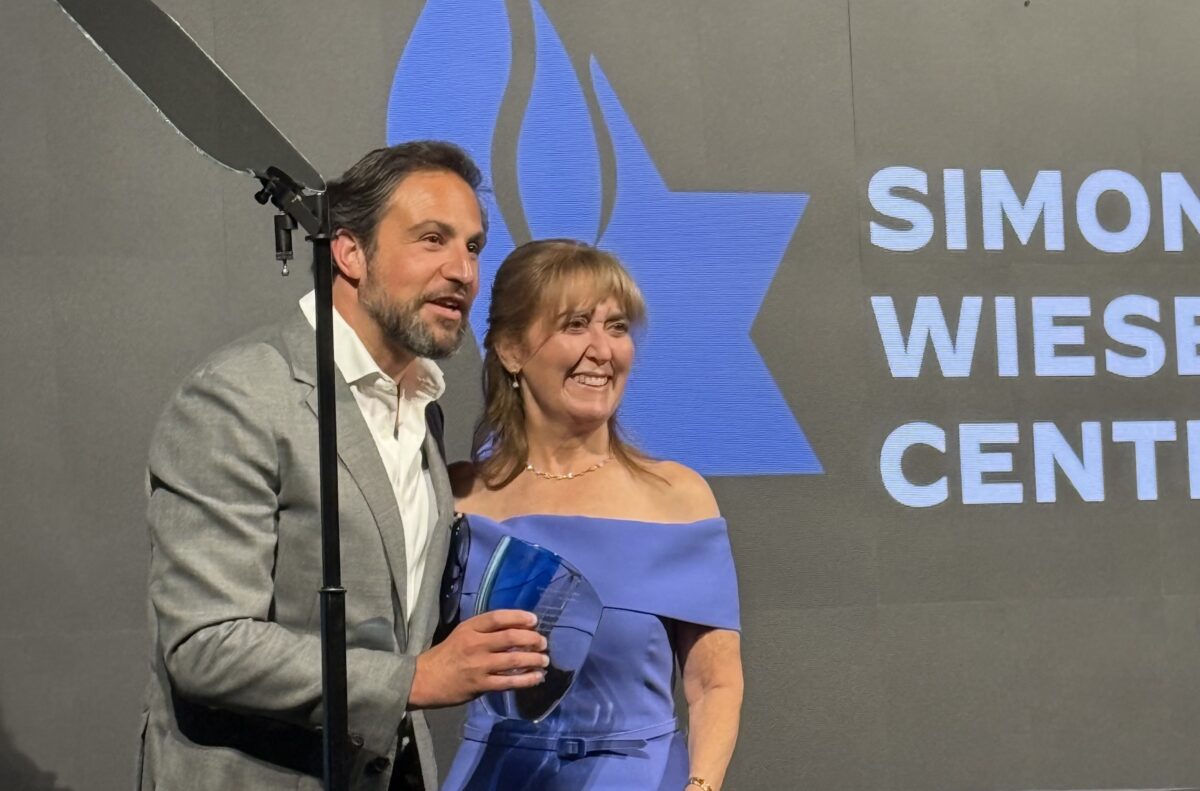
“This award is not about a single accomplishment or single initiative, or even a year or two of service. It’s about a pattern of leadership over a lifetime,” SWC CEO Jim Berk told the gathering before introducing Emmy Award-winning journalist Jim Rosenfield, a longtime friend of Crown Star, to present her with the award. Rosenfield spoke of Crown Star’s decades of civic and philanthropic leadership, spanning education, disability rights, women’s healthcare innovation and the Jewish community of Chicago and beyond.
(Read Crown Star’s acceptance speech here.)
But the other star of the evening was not a person but a vehicle, parked on the venue’s terrace and visited over the course of the evening by many of the 350 attendees who gathered to celebrate the honorees and support the organization’s educational and advocacy work. With the dimensions of a large RV, navy blue and emblazoned with the word “Tolerance” in white along the length of the driver’s side, Illinois’ second Mobile Museum of Tolerance, or MMOT, is the newest to join the organization’s national fleet, bringing the total number of vehicles to 12 and raising their anticipated national reach to 250,000 students over the next year.
The evening included multiple unanticipated reveals as well: the announcement of a new summit for combating antisemitism; the first Chicago cohort of the organization’s NextGen Leaders Program; and a first look at “Lost Paradise,” a miniseries being produced by Morah Media, SWC’s storytelling arm.
SWC’s inaugural MMOT, a refurbished mobile home, was launched in Illinois in February 2021. That original unit is still in use but keeps closer to home in the Chicago area these days due to its age, Jessica Gall-Adediran, the organization’s head of education for the Midwest and Florida regions, told eJewishPhilanthropy. With two MMOTs now serving Illinois, SWC will be able to bring its immersive educational programming — focused on antisemitism, discrimination, media literacy and civic responsibility — to more than 30,000 middle and high school students annually, she said.
Growing up in a farming community in Omaha, Neb., Gall-Adediran learned that “life in rural America can be incredibly rewarding, but it can also be isolating,” she told the audience at the gala. “Many young people in those areas grow up with little exposure to Jewish history, culture or community.” The purpose of the MMOTs is to bring these educational materials and experiences to students and communities that would not otherwise readily access a comparable brick-and-mortar museum.
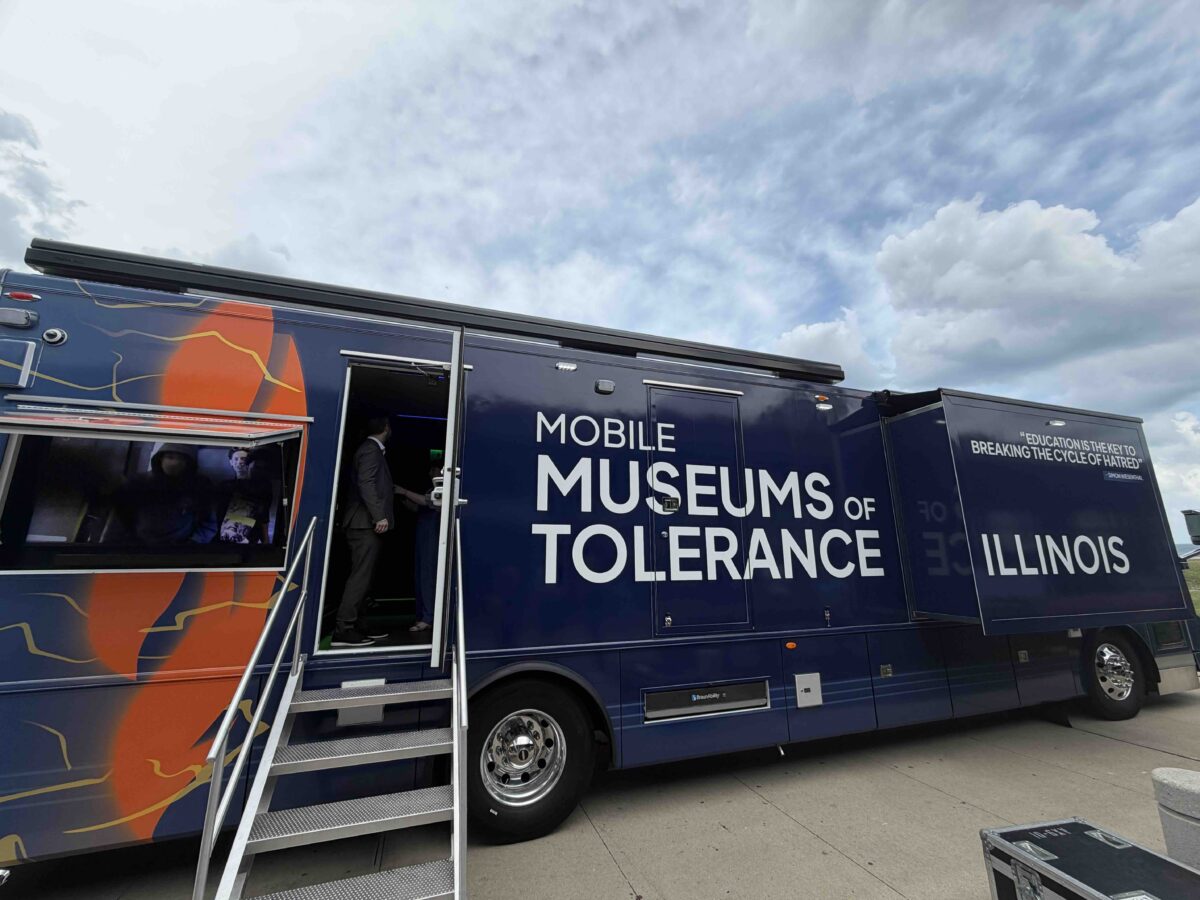
Each MMOT travels with a dedicated educator and each educational session is designed to fit within a 45- to 60-minute window to accommodate standard classroom schedules. Schools choose from a selection of educational modules, and classes rotate in and out of the MMOT throughout the day (the newest vehicle has a 30-person capacity). While the MMOTs primarily focus on visits with middle and high school students throughout the state in which they serve, during non-school hours and when school is not in session, they are used for the organization’s Tools for Tolerance professional educator and law enforcement training programs, as well as community events and deployment to communities dealing with acts of antisemitism and hate.
The new vehicle was fully funded by the state and its Department of Human Rights; the state’s “only mandate” is that the MMOTs are committed to reaching communities throughout Illinois, Gall-Adediran told eJP. While the first unit “started out very humbly” with footage from the Holocaust and civil rights movement, the new one’s programming is more “visceral” and interactive to better engage today’s audiences, she said.
“Emotion and personal stories are what draws us to history more than the numbers. That’s what makes it interesting,” she said. “That’s what we’re trying to do — find the personal that draws people in and develops empathy.”
The evening’s program opened with a video about Simon Wiesenthal’s personal story and the mission that turned into a legacy, which segued into discussion of the resurgence of antisemitism post-Oct. 7 and the changes it fueled for the organization, a “reengineering of global operations, advocacy and education.”
SWC trustee Sandy Teplitzky announced an inaugural regional summit that will bring together leaders from government, business, education, media, philanthropy, faith communities and advocacy organizations.
The Chicago Convening on Antisemitism, scheduled for November, will not be just another meeting or statement, said Teplitzky — who, along with his wife Karen, provided the seed funding for the gathering — but “a real convening of leaders all focused on one urgent question: How can we join together to dismantle antisemitism in our community?”
SWC also took the opportunity to announce the expansion of its NextGen Leaders Program to Chicago. The first cohort of 18 college students, who were present at the event and greeted with enthusiastic applause, will serve in government internships throughout the city while receiving weekly leadership training focused on confronting hate and advancing civic engagement.
SWC’s education and advocacy work is well known, but Berk spotlighted the organization’s storytelling arm, Moriah Media, as well. Moriah Media is designed to produce “mission-aligned” feature films and television series that entertain, inform, inspire and humanize the Jewish experience: “If other people are telling our story, we’ve already lost control of our own narrative,” he told the gathering.
Moriah Media was behind “One Day in October,” the acclaimed series available on Max that spotlights both the horrors of the Oct. 7 attacks and the stories of bravery and resilience.
Berk proudly introduced a first-look clip from one of the new shows in production, a miniseries called “Lost Paradise” that traces the story of Jewish life from the shtetls of Eastern Europe to the birth of Hollywood and the establishment of the modern Jewish state.
The funds raised at the dinner will go toward supporting SWC’s expanding Midwest initiatives. (A representative for SWC said the event raised “a record amount” but declined to disclose a dollar figure.)