Opinion
R-E-S-P-E-C-T
Don’t speak for us — speak with us




 Add EJP on Google
In Short
People with disabilities should have a place at the table in conversations about decisions that affect their lives.
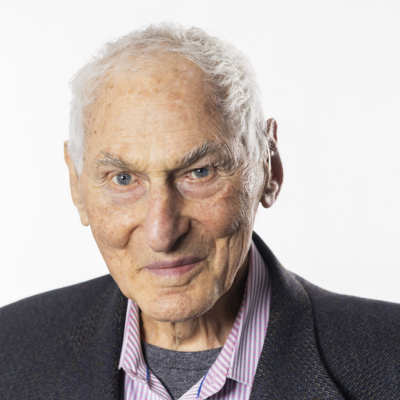
My name is Shai Assulin. I am 39 years old, live in Jerusalem and work in the Jerusalem Municipality’s Special Needs Department, where I plan and coordinate a variety of activities for people with disabilities in the city. I live independently and manage my own life, but like many other people with disabilities, I still find myself having to remind those around me of something very simple: People with disabilities are equal human beings.
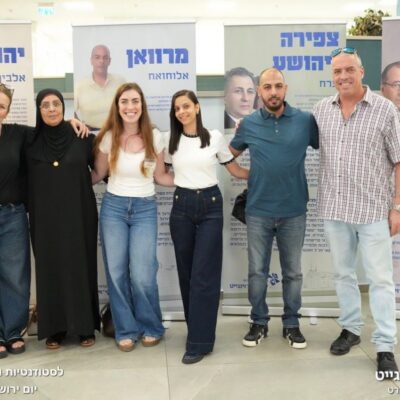
I am a member of Israel Elwyn’s National Self-Advocacy Leadership Group, a group created to ensure that people with intellectual and developmental disabilities can speak for themselves, demand their rights and influence the policies that shape their lives. Originally founded in partnership with Beit Issie Shapiro, the Jewish Federation of Greater Los Angeles and the Ruderman Family Foundation and other ongoing supporters, we work across the country to promote equality, accessibility and true inclusion in the community. For me, this is not just a group — it’s a family: one where I can raise my voice and be heard, feel a sense of belonging and know that we truly have the power to make change.
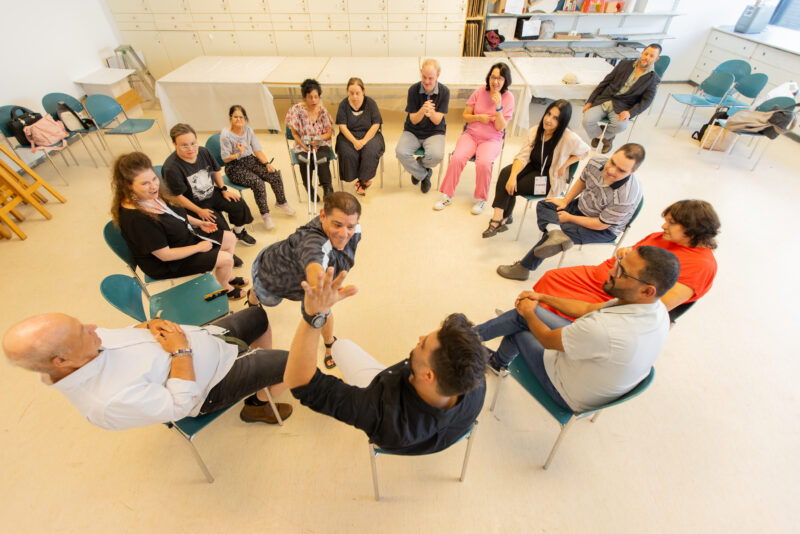
Courtesy/Israel Elwyn
A meeting of Israel Elwyn’s National Self-Advocacy Leadership Group.
This year, we focused on the rights of people with disabilities in the areas of housing, employment and independent living. We discussed what the law promises, but also the gap between the law and daily reality. And we didn’t stop at talking: we took action. We met with representatives of the Ministry of Welfare and Social Affairs and policymakers, sharing our personal stories to demonstrate what these rights truly mean in real life.
I am most proud of our work to advance the Supported Decision-Making Law. We succeeded in bringing our voices directly into the Ministry of Welfare and Social Affairs, and we are now forming an advisory committee made up of members of the National Self-Advocacy Leadership Group. This committee will serve as an official advisory body to the ministry on issues affecting the lives of people with disabilities. It’s not just about having a seat at the table, it’s about being recognized, being heard, and showing that we are not only “service recipients,” but people with lived experience who can improve policy.
Despite progress, there is still a long way to go. Public transit is still not sufficiently accessible, employers are still hesitant to hire people with disabilities, and in the education system, physical and cognitive accessibility are still lacking.
Social barriers remain. Israeli society still does not fully accept us. Sometimes people are afraid of us or speak to us in a condescending way. I believe we must fight this, not only for the right to “be included,” but also for the right to be truly equals.
Equal rights for people with disabilities mean having a real chance at living an ordinary life: accessing services, studying, working and living independently in the community, just like anyone else. For me, it is also about attitude. When I arrive at work or walk into a store, I want people to see me, Shai, not “a person with a disability.”
Equality is not charity; it is a basic right. It means I deserve equal treatment, public access, employment opportunities, independent living options and the same benefits afforded to any other citizen.
To decision-makers I say: Include us in the room where decisions about our lives are made. Don’t speak for us — speak with us.
As for the public, I want them to see people with disabilities as equals. We are your friends, neighbors, co-workers. Don’t be afraid of us and don’t pity us. We are not strange, scary or fragile. We are simply part of society. Anyone can contribute and be part of the change — with a smile, a conversation, a job opportunity or any interaction based on respect.
Today, on the International Day of Persons with Disabilities, I want to remind us all that equality begins with attitudes. When we focus on the person and not the disability, we become a better, more fair and more inclusive society.
Shai Assulin is a member of Israel Elwyn’s National Self-Advocacy Leadership Group.