Opinion
SPEAKING OUT
Can’t Israelis be humanitarians?




 Add EJP on Google
Recently, I have been going back and forth on LinkedIn about which country to list as my location.
I live in Israel. I am Israeli. I am also French, and for the past two decades I have worked in many countries for my humanitarian work, including conflict-affected zones.
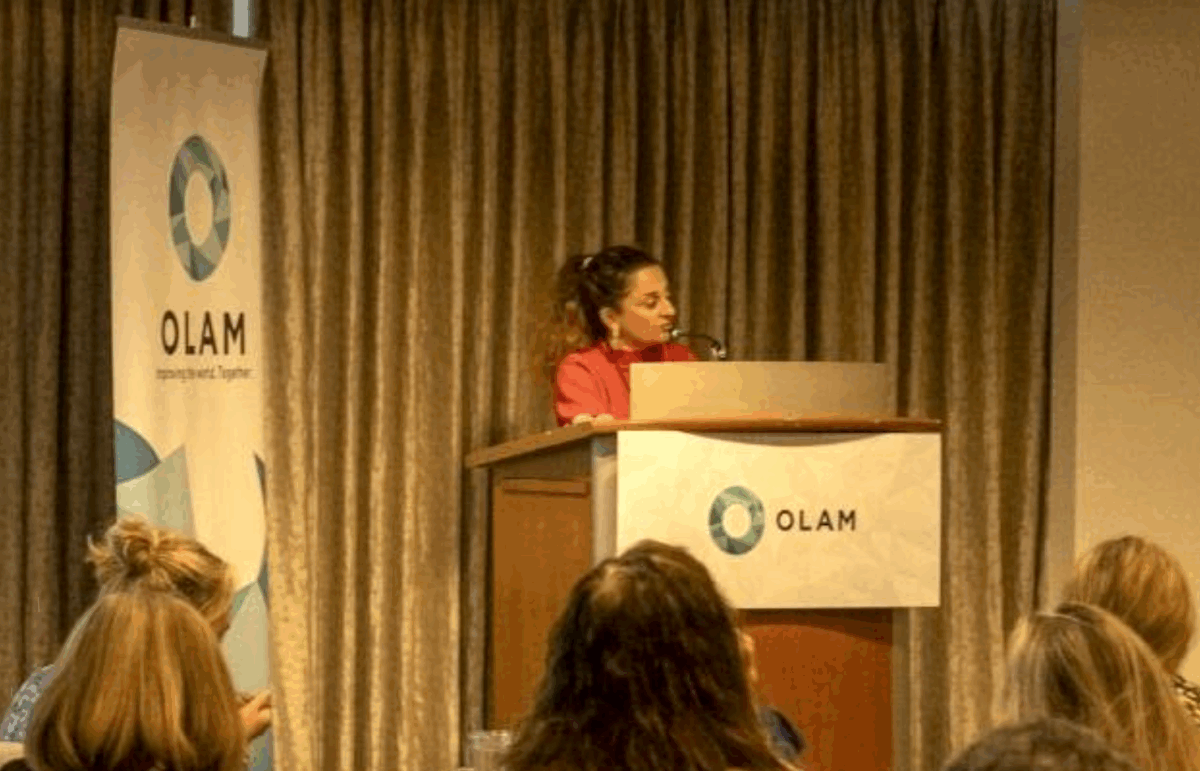
For the past eight years, I have been based in Israel, so I initially listed Israel as my location on LinkedIn. However, with the geopolitical backlash and my very own ideological crisis in the aftermath of Oct. 7, 2023, combined with a clearly antagonistic stance in the humanitarian sector towards everything Israel, I switched my location to France.
But I am not comfortable with that choice. I do not want to hide where and who I am. That was, after all, one of the reasons I chose to make aliyah: to stop feeling I had to hide my identity, as I often did growing up in France.
I feel profound discomfort with how the humanitarian sector reacts to everything Israel. Israel is a government, yes; but it is also many liberal and humanist voices, navigating complex realities on a daily basis and advocating for change from within — often in isolation and without support from the so-called international liberal world.
Few outside our circles abroad are aware of the networks (and many WhatsApp groups) of Israeli and Palestinian humanitarian professionals and organizations working together quietly for humanitarian support in Gaza and the region, from women’s protection to medical procurement and technology transfer. These efforts rarely make headlines, yet they exist and persist.
While a good part of the world is busy criticizing and boycotting “homogeneous Israel,” we focus on pushing for change from within. One initiative at a time, one Zoom meeting between Israel and Gaza at a time.
Some will think we are a minority, maybe not even one worth mentioning. But that is untrue.
Over the past two years, I have seen a strong, resilient, committed, ever-growing civil society mobilized to uphold our shared humanity. I have seen how moral engagement can transcend the boundaries of ignorance; from within the humanitarian space, of course, but not only there. The mobilization for change is seen across sectors: high tech and business people; medical personnel; lawyers; environmentalists; architects, designers and engineers; restaurant and hotel managers; farmers; donors, investors and more.
There is something I struggle painfully to understand. If external elements, who are often very disconnected to our realities, are so eager to see a change here and in the region, why don’t we — the liberal and humanist change makers — get the support we need to push forward? Why do we feel like we have to hide to continue doing our jobs as humanitarians? Can’t Israelis be humanitarians?
Being Israeli and being a humanist is not antinomic.
In fact, many of us should be perceived as allies for change, contrary to some disconnected loud voices in distorting spotlights. So much is happening here that the world does not see, or refuses to see. Gaza is one example, but there are many: whether it is my colleague and friend Stav, who leads a network of Women Champions for Change across the Middle East and North Africa region at a very complex time; or Rebecca, who just a few weeks after Oct. 7, 2023, advanced her civil society exchange program between Indonesia and Israel; or Yotam, who promotes humanitarian diplomacy channels to bring regional humanitarian actors together to tackle our intertwined regional crises; or Clive, who leverages climate-smart innovation to advance economic regional cooperation and reconstruction.
The list goes on. Our numbers are not negligible. In fact, we represent a facet of Israeli society that I am not only proud of but determined to amplify.
Not long ago, amidst the physical, emotional and ideological chaos of life, I tried to leave Israel. I even left a few times. But this Israel — the Israel of change, the Israel of tomorrow — brought me back, each time. I believe in this Israel, the one that exists not only within the humanitarian sphere but in every corner where people still dare to shape a better future.
So here I am. I am an Israeli humanitarian — and it’s not antinomic. It’s my identity, and it’s the identity of so many change makers, advocates, doers and pushers around me.
I will not hide. I will not apologize for my identity. I will continue to push forward.
We would love to get the support from our colleagues globally (or at least not face isolation) to push things here and beyond — for ourselves, our neighbors and humanity as a whole.
Whoever is interested in genuine, context-based change — here, there, and across our sector globally — I welcome you to connect, work with me and explore solutions together. My hope is that we can move forward together, guided by nuance, openness and mutual respect.
But I won’t change my location anymore.
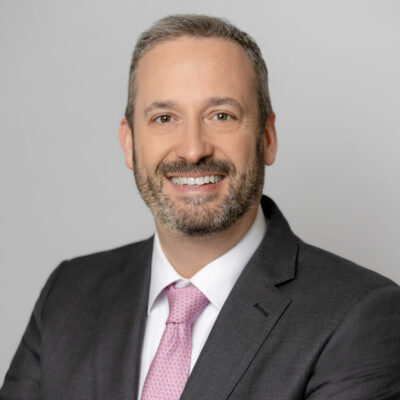
Ophelie Namiech is a humanitarian, a (re)thinker and system change activist. She is the managing director of Mindset-PCS (People-Centered Solutions) and a member of SID-Israel, the umbrella organization of the Israeli professional community in the fields of international development and humanitarian aid.