Opinion
PARTING GIFT
When it comes to legacy giving, success demands a decade




 Add EJP on Google
In Short
Are Jewish organizations structured for successful legacy giving?
Jewish communities across North America are searching for sustainable financial models amid demographic shifts, leadership transitions, and growing competition for philanthropic dollars. Legacy giving, my area of expertise, is often cited as part of the solution.
But here is the hard truth: Legacy success does not align with the short-term culture of Jewish philanthropy.
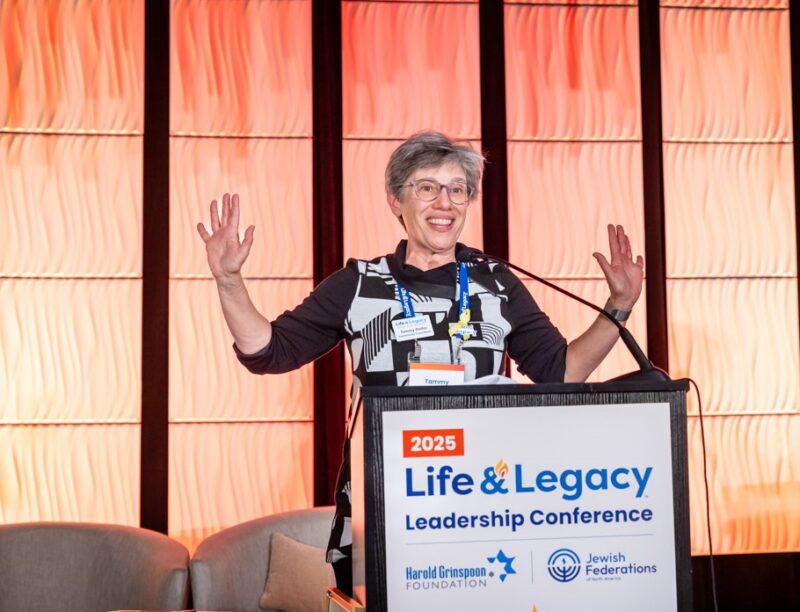
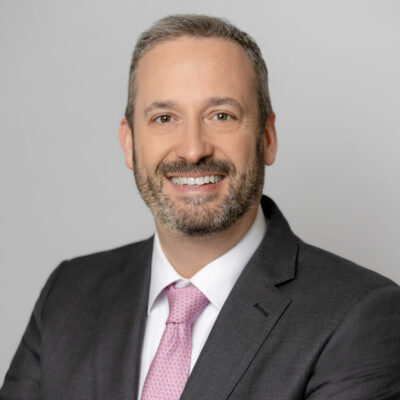
Lynn Graves courtesy of the Harold Grinspoon Foundation
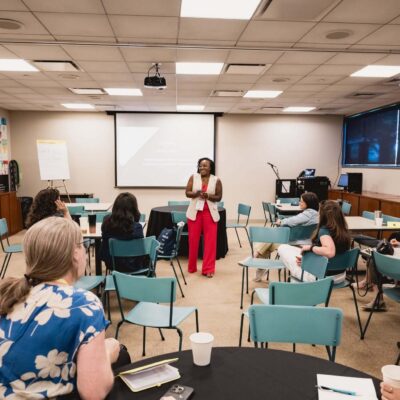
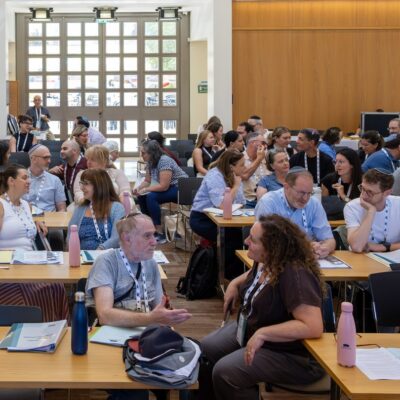
Tamra "Tammy" L. Dollan speaking at the Life & Legacy conference in 2025.
For the past decade, I’ve served as a consultant with Life & Legacy, a Harold Grinspoon Foundation initiative that helps Jewish communities build endowments through legacy giving. I’ve worked directly with 30 communities, part of a growing network of more than 75 across North America. Through matching incentive grants, coaching, training and providing other resources, Life & Legacy is seeing remarkable return on investment.
In looking back on this work as I ready for retirement, one lesson stands out clearly: Durable legacy success takes about a decade.
Not because donors are unwilling. Not because planned giving is overly complex. But because culture change takes time.
Recently, I visited Charleston, S.C., a community that joined Life & Legacy ten years ago and benefited greatly from its partnership. What unfolded there—in an energetically buzzing synagogue room with board chairs, communal professionals and legacy volunteers gathered around four tables—illustrates what happens when leadership is steady, future planning is embraced as strategic, and funding support is sustained.
Today in Charleston, legacy giving has been embraced throughout the community. More than 600 legacy commitments have been secured with an estimated future value of $24 million, while nearly $7 million is already realized and invested in organizational endowment funds that will support the community for generations to come. What’s more, a volunteer-driven endowment fund evolved into the Jewish Endowment Foundation of South Carolina, now a staffed statewide entity serving Jewish institutions and donors. All three South Carolina Federation CEOs now participate in legacy training. And above all else, representatives from nearly every Jewish organization continue to show up to learn from and with one another, strengthening bonds of friendship and purpose.
The room was full — not because of a campaign deadline, but because legacy giving has become part of how the community understands its responsibility to the future.
That did not happen in year one. Or year three. It happened because leadership brought vision, funded the initiative over time, and navigated succession well.
Communities that succeed share common traits: boards lead and model participation; executives integrate legacy into overall development strategy; institutions collaborate rather than compete. When conversations about continuity happen first, then the financial returns follow.
This work is unfolding amid a historic intergenerational wealth transfer — an estimated $18 trillion expected to flow to charities in the coming decades as baby boomers pass away and their philanthropic commitments are realized — even as many Jewish communities face a shrinking donor base.
The opportunity is extraordinary. But I have seen communities lose momentum not because donors disappeared, but because leadership changed twice in three years. Each new leader must learn the job, reassess priorities, and make their mark. If the new leadership doesn’t prioritize future planning, the legacy effort stalls or even stops completely, reducing the chances of the organization ever receiving those gifts.
Jewish organizations live with constant tension between meeting today’s needs and planning for tomorrow. The pressures of today–including annual campaigns, competing priorities, and crisis needs–easily crowd out planning for the future. Legacy giving focuses on those longer-term needs while being rooted in the commitment people feel to their organization today. To overcome this, changes are required in structure, systems and processes.
If we want culture change, we must design our funding models, governance expectations, and leadership commitments to match the horizon of the work. Here are four outstanding examples that illustrate this point:
1.) Navigate leadership transitions
Charleston successfully navigated their leadership transition, carefully putting in place building blocks so that legacy work would continue under their new Foundation. The Federation continues to focus on annual campaigns as well as the longer-term integration of legacy giving and endowment building.
2.) Support consistent leadership
Jewish Federation of Northeastern NY (NENY) has secured 840 legacy commitments with an estimated future value of $26 million, while more than $4 million is already realized and invested in organizational endowment funds. Their leadership has been consistent since beginning Life & Legacy in 2018. ??Coupled with the endowment department as a technical resource, their Life & Legacy coordinator assumes responsibility for relationship building with the community teams. NENY brings a strong contingent every year to our annual conference, where lay and professional leaders gain inspiration, network with others, and share best practices.
3.) Integrate endowment building into all fundraising efforts
The Atlanta Jewish Foundation recently celebrated a milestone of $1 billion in charitable distributions, including $53.9 million granted in 2025 largely to Jewish organizations. In 2022, Jewish Federation of Greater Atlanta initiated a Legacy Society to recognize donors who have made commitments to sustain Jewish life for future generations. A named endowment also established the country’s first permanently funded Chief Philanthropic Officer, integrating the annual campaign and endowment development to better align philanthropy with donor vision. Since launching its legacy initiative in 2018, Federation has secured 727 legacy commitments with an estimated future value of $49 million, while $8.2 million is already realized and invested in organizational endowment funds.
4.) Cultivate a legacy mindset in all messaging
The Jewish Community Foundation of Orange County, Calif., began Life & Legacy as part of our first cohort in 2013. With consistent leadership, they have expanded their team and their work to deepen impact across the community. ??The foundation cultivates a legacy mindset through consistent messaging, regular training sessions, and robust support for partner organizations. Their Endowment Book of Life program guides donors from idea to commitment, giving them an opportunity to inscribe their name and preserve their story for generations. To date, the Foundation has secured 1281 legacy commitments with an estimated future value of $29 million, while more than $42 million is already realized and invested in organizational endowment funds.
If organizations want legacy success, they need to start today. Plan to keep these efforts going for the long-haul — from funding it to leading it for an entire decade and beyond. We know that when communities commit to the discipline of legacy giving are not simply raising future dollars: they are shaping the culture that will sustain Jewish life for generations.
Tamra L. Dollin is retiring this week as a senior consultant after a decade with Life & Legacy, an initiative of the Harold Grinspoon Foundation.